BOSTON -- Companies are getting better at using AI to save time. The harder question is what they do with the capacity it creates.
AI is becoming useful to a broader range of companies, but the gap between those at the leading edge and those in the middle is widening, said Shikhar Ghosh, Harvard Business School professor, at the GAI World 2026 conference.
OneDigital, a large insurance and financial services company, is one of the companies trying to move toward that leading edge. In a panel discussion on real-world AI deployments, Mike Sullivan, the company's co-founder and chief growth officer, described how AI has become his main focus.
"My job's gone from running M&A and leading growth to full-time AI activation inside our company," Sullivan said.
Over the past three years, Sullivan and his team have built what he calls "AI coworkers" for more than 20 jobs, shifting routine work to AI and giving employees more capacity for work that requires human judgment. The company has seen productivity gains from its AI coworkers, but it's still early in determining how those gains translate into business results.
"As we create this capacity dividend, now we have to figure out what we do with it," Sullivan said.
For OneDigital, the real measure of the capacity dividend will be whether it leads to stronger client retention, more new business and greater value for clients.
Building AI coworkers
OneDigital's push into AI transformation started with a concern that the technology could threaten its business model.
"We're approaching life these days like AI represents a systemic risk for our business and someone's going to come knocking at every single one of our clients' doors, saying 'We'll do what they do better and for half the price,'" Sullivan said.
That concern pushed the company to rethink how work gets done. Over the past three years, OneDigital has built AI coworkers for more than 20 of the jobs with the most employees, Sullivan said. The coworkers now handle about 30% of the work across those roles, he said.
The idea goes beyond giving employees access to a general-purpose AI tool. OneDigital builds each coworker around a specific job, using the expertise of top employees to train it.
For example, for its benefits consultants, the company created a coworker called Ben. Rather than giving 1,600 consultants their own generic Claude subscriptions, OneDigital has them work with the same AI coworker that's trained on the knowledge and practices of its best employees, Sullivan told TechTarget.
When all of those employees know Ben, and they all talk about Ben as being part of the team, it creates a continuity.
Mike SullivanCo-founder and chief growth officer, OneDigital
The approach changes the role of the human employee, who can spend more time on the parts of the job that require judgment and client interaction. It also gives employees access to a shared source of expertise.
"When all of those employees know Ben, and they all talk about Ben as being part of the team, it creates a continuity, a team structure, a bonding," Sullivan said.
Adoption was a challenge
Building the AI coworkers was only part of the challenge. Getting employees comfortable working alongside them took time.
Some employees initially felt that using AI was a shortcut or even "cheating," Sullivan said. Concerns about AI hallucinations also made people hesitant to rely on AI coworkers for important work.
Those concerns have eased as the technology has improved and employees have seen the quality of the work it can produce. OneDigital also learned that it needed to change how it talked about AI internally.
Early on the company told employees to "go use AI." Later, it began framing the AI coworkers as talent, or another member of the team. That gave employees a different way to think about the change, Sullivan said. They weren't being asked to learn a new technology; they were being given a resource they could chat with to help them do their jobs, just as they would with a human colleague, he said.
"Had we been talking about it like talent three years ago, I think we would have had a more receptive audience," Sullivan said.
We probably didn't spend enough time helping people understand that there are two different things going on.
Mike SullivanCo-founder and chief growth officer, OneDigital
Sullivan said OneDigital also had to distinguish its use of AI in the workplace from the broader debate over the risks of increasingly powerful AI models.
"When you read headlines like AI is going to end humanity, and we're saying, 'use more AI,' we probably didn't spend enough time helping people understand that there are two different things going on in the world," he said.
One concern is the risk posed by increasingly capable frontier models. The other is using AI to help employees do their jobs better for clients, Sullivan said.
It's how you direct folks to employ that capacity dividend ... That's the actual ROI, and that has little to do with AI.
Vinay GidwaneyChief product officer, OneDigital
OneDigital measures the effectiveness of its AI coworkers in part by comparing employees' job descriptions before and after the technology is introduced, said Vinay Gidwaney, chief product officer at OneDigital. The comparison shows how employees' work changes as AI takes on more of their workload. However, this measures the capacity AI creates, not what the company does with that capacity.
"It's how you direct folks to employ that capacity dividend to create value for your business. That's the actual ROI, and that has little to do with AI," Gidwaney said.
For OneDigital, the test is whether that additional capacity shows up in business results.
"We need to be able to look at the retention of our clients, and we need to look at new business sales, and it has to show up in those numbers. It's just very early in terms of understanding how to do it," Sullivan said.
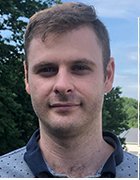
Tim Murphy is a reporter covering IT strategy for Informa TechTarget, with a focus on IT leadership, governance, workforce skills and AI strategy. His enterprise technology coverage has earned multiple Azbee Awards.