Personal AI agents -- including Meta’s Muse, OpenAI’s Dots and new shopping features in SpaceX’s Grok Bot -- landed in the last month. Things already have gotten a little weird.
Exhibit A: "This works well," SpaceX CEO Elon Musk commented Thursday to a Grok Bot user who had purchased an airline flight with it. "If Grok @bot makes a mistake with a purchase or leaks your card (never happened yet), SpaceX will make you whole."
One might wonder why a CEO would volunteer such a blanket liability statement. It didn't come out of the blue: Musk dropped it after a rocky demo earlier in the week in which he accidentally exposed a personal order number, shipping and billing addresses, and the last four digits of an Amex card in an X post showing off how he'd ordered Legos with Grok Bot.
Exhibit B: Later on Thursday, Musk floated starting a competitor to Amazon after Grok Bots were banned from shopping the site.
Exhibit C: Amazon had already blocked Meta Muse from shopping on its site and previously restricted bots from other companies, including OpenAI Dots.
For CIOs and tech buyers, the above might look like Silicon Valley business as usual, with the biggest companies jockeying for position in an emerging, potentially massive market. But people are already using these agents to reach businesses through websites and support channels built for humans.
That leaves contact centers and digital commerce operations with some new questions: How do they tune their IT stacks to accommodate them, identify an AI agent, determine what it is authorized to do and respond to its requests?
One of the key things that we need to do as contact center providers and experience orchestration providers is to get better at identifying whether something is human, or whether it's AI.
Mike Szilagyigeneral manager, senior vice president and head of product, Genesys
"Customers are saying they have AI agents coming in through what I would call human channels -- voice, web chat or web pages -- so they're already here, [but] right now it's hard to tell at what volume," said Mike Szilagyi, general manager, senior vice president and head of product at Genesys.
"One of the key things that we need to do as contact center providers and experience orchestration providers is to get better at identifying whether something is human, or whether it's AI."
Kustomer, a CRM and CX tech company acquired by Meta for $1 billion in 2022 and spun off in 2023, is, like Genesys, building toward a more agentic tech landscape.
"There will be a world in which I believe there will be agents talking to agents. [It] will very much happen," said Brad Birnbaum, Kustomer CEO. "I can't tell you when … and that will evolve. At what pace? I don't know."
New standards for agent access and interfaces
Meta CEO Mark Zuckerberg dropped a 6,400-word manifesto on personal agents in August, before launching Meta Muse agents last month. His overarching theory was that AI should be distributed to individuals rather than centralized.
Shopping agents are part of Zuckerberg's vision; they will operate across many channels, including smart glasses. Meta Muse can shop for deals, monitor price drops, load shopping carts across online sites, and even handle customer service when needed.
"My daughter loves to bake," Zuckerberg wrote, "so my agent plans personalized recipes for us to make together each weekend, orders the ingredients, and then offers suggestions as we're baking."
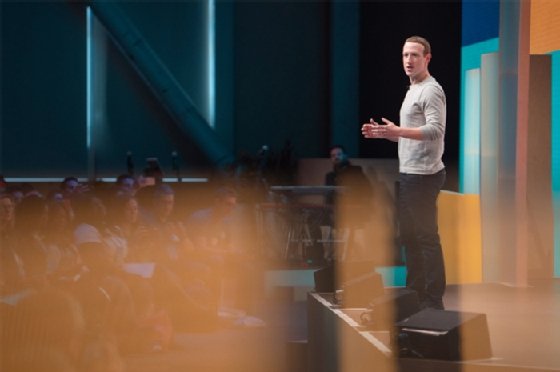
Meta CEO Mark Zuckerberg, pictured at the 2019 Facebook Communities Summit, outlined a vision of personal AI agents that could shop and interact with businesses on consumers' behalf.
OpenAI's Dots are more workplace-focused, although users could potentially configure them to make purchases on their behalf through browser and application access.
So the agents are loose. As with MCP and A2A standards that avail data to agents and coordinate their work together, these automatons need to have a way to communicate with a business's commerce and service teams.
Enter two open standards under development: PAP (personal agent protocol), announced on Oct. 6, and A2UI (agent to user interface), introduced by Google last December. Meta and Sierra are developing PAP with Genesys, Shopify, Walmart and others to define how personal agents identify themselves, obtain authorization and interact with businesses.
A2UI addresses a different problem by allowing agents to send structured interface descriptions that applications can render across mobile, web and desktop channels, without code. In short, A2UI enables agent-driven interfaces generated on the fly.
Genesys is involved with both the PAP and A2UI standards because the company believes personal shopping agents will only grow in usage -- and they can't be flooding communication channels designed for human use.
"We want a channel for AI agents to come in to and talk to another AI agent," Szilagyi said. "They can have their own protocols [where] and they can come in and say, 'I represent [this customer]. This is what he's authorized me to do. This is my task today.' Then our businesses, our customers, can use AI agents to respond. We think that's a more efficient channel."
Future musings: What about consumers?
There's still a long way to go before personal shopping agents become everyday tech for consumers and businesses -- and it's not clear they ever will.
Meta might be an early entrant, but it might not dominate. That's because Facebook is an advertising platform at its core, and the company derives 98% of its revenue from it.
For years, Meta has tried to make inroads into digital commerce and just hasn't made that much headway, said Jordan Jewell, an analyst at IDC.
"They've tried to get into commerce many times in the past with Instagram and with SMBs, and it's always fallen flat because they have the innovator's dilemma and are always focused on advertising," Jewell said. "They have to break the mold of everything they do -- and how they look at the world -- if they want to succeed in commerce.
"That's going to be very hard for them to do because I bet they're thinking about ads. They're thinking, 'We want to win AI so we can present ads to customers.' That's a much more lucrative approach than getting a small cut from merchants, which is what Shopify does."
Ultimately, Zuckerberg misses the point with his grand plan for Meta Muse, said Ali Fazal, Chief Marketing Officer at AI customer experience and agentic commerce platform Gladly.
Fazal cited a quote from science fiction author Joanna Maciejewska on how AI is being pushed for automating everything right now: "I want AI to do my laundry and dishes so that I can do art and writing, not for AI to do my art and writing so that I can do my laundry and dishes," she said.
While Muse agents are a great way for Meta to harvest more data on users, steer their shopping experiences and monetize more of the process, Zuckerberg -- and his ultra-rich peers -- have forgotten a larger point: Regular people like to shop. It's still fun, and isn't to be optimized.
"I think that he's full of crap," Fazal said. "People like Mark Zuckerberg seem to have really lost the plot in terms of what people want. I would say Sam Altman falls into the same category."
Don Fluckinger is a seasoned B2B technology journalist with more than 30 years of experience specializing in enterprise IT, digital experience and content management. As a senior news writer at Informa TechTarget, he delivers award-winning analysis that helps IT and business leaders navigate complex technologies to enhance customer and employee experiences. Got a tip? Email him.