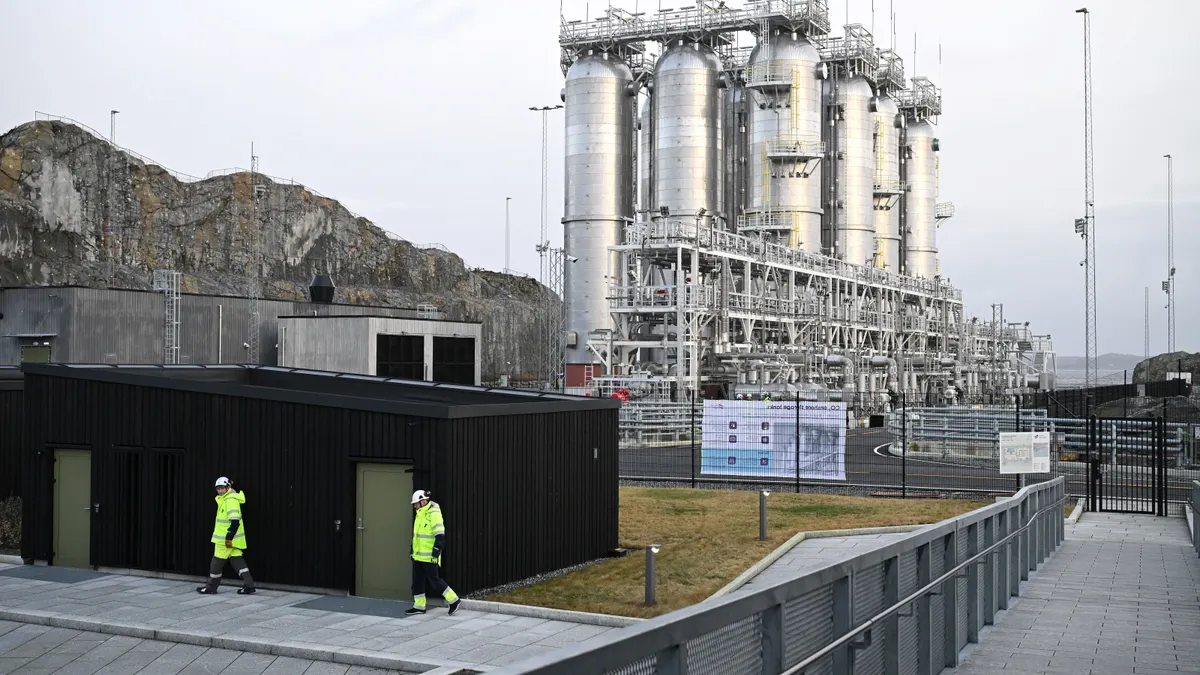



As IT operations expand their capabilities, they also expand their infrastructure and the data centers that house it.
The U.S. Energy Information Administration predicts that servers will consume 446–818 billion kilowatt-hours by 2050. This growing use of resources raises environmental concerns and sustainability challenges. As AI capabilities expand rapidly and data centers require more space, sustainability has become one of the most pressing issues facing organizations today.
A sustainability strategy is essential to every organization's success. The most obvious reason is the need to curb rapidly rising infrastructure costs. Regulatory compliance, social responsibility, competitive pressures and customer expectations are equally important considerations.
The challenge of sustainability has driven the development of practices and processes that lower costs, reduce waste and limit environmental impact. These efforts are commonly known as GreenOps. At a high level, strategies include using serverless functions, archiving data to lower storage costs, identifying and shutting down idle servers, and tracking sustainability metrics.
Although AI's emergence has increased the need for scalable operations and intensified sustainability concerns, it also has the potential to help address these challenges. This potential underpins the rise of GreenAIOps: Using AI to create and implement a more sustainable approach to IT.
This article examines GreenAIOps and how AI is reshaping traditional GreenOps. It explores the environmental impact of conventional IT ops and AI's potential to advance GreenOps, reviews key use cases, and discusses implementation challenges and considerations. It also makes the business case for GreenAIOps and considers AI's future role in sustainability.
The environmental cost of traditional IT ops
Operating and maintaining traditional IT infrastructure comes with considerable environmental costs, some of which are not immediately apparent. The greatest impacts involve electricity, water consumption and gas emissions. Data centers place heavy demands on the electrical grid, increasing costs for all users; water used in cooling systems reduces the supply available for agriculture; and carbon emissions rise. These impacts grow as servers are added and data centers expand. They also increase when legacy systems and less-efficient servers continue running, often around the clock.
Less obvious environmental impacts include the depletion of rare minerals used to produce servers and other hardware, as well as the waste generated when hardware is decommissioned after rapid replacement cycles.
Managing these impacts and costs calls for both strategic and tactical approaches. Tactical management, in turn, depends on up-to-date metrics and real-time adjustments. This is where AI comes in.
How AI enables GreenOps
AI's most important contribution to GreenOps is the real-time management of large-scale workloads and capacity in data center operations. Through predictive analytics, AI optimizes every part of the infrastructure, shutting down components that are not in use. This makes more effective and efficient use of each server while reducing electricity and cooling consumption.
Dr. Anubha Jain, director of the School of Computer Science and IT at IIS University in Jaipur, India, and a leading expert on green software development, said of GreenAIOps: "AI has the potential to transform sustainability from a largely reactive and measurement-driven approach into a proactive, predictive, and intelligent one. Today, many organizations use technology to measure energy consumption, track carbon emissions, and identify areas where resources are being wasted."
AI can identify inefficient hardware for decommissioning, reducing the carbon footprint. Like outage management systems in the electrical grid, which detect and fix outages before they occur, AI can also identify and prevent issues and failures that would increase waste and energy use.
Although predictive analytics, workload, capacity and environmental usage management are important contributions, the true value of AI-enabled GreenOps is in real time. GreenAIOps delivers value through the real-time execution of the tactical sustainability plan.
Key uses of AI in GreenOps
As an organization develops its sustainability strategy, AI can be especially effective in several key areas. One is dynamic resource allocation in cloud environments. By proactively provisioning and assigning the most efficient resources to the highest-priority needs, AI reduces energy use and waste. AI can further reduce waste by optimizing server consolidation and virtualization in real time.
AI can help predict infrastructure maintenance needs by analyzing data from installed sensors to monitor equipment and detect issues before they arise.
"For example, AI can help data centers use less electricity, predict when equipment needs maintenance, and schedule computing tasks when cleaner energy is available," said Dr. Anubha Jain.
One of AI's most important applications in GreenOps is monitoring energy use. It provides detailed, actionable insights that can be put to work immediately, making it an effective way to manage data center electricity and cooling while reducing overall costs.
Finally, AI enables carbon-aware computing, a key part of an effective sustainability strategy because it aligns computing with energy needs and availability. Computing can be shifted to locations with greater energy availability. This approach often relies on renewable energy sources, including solar and wind.
Challenges and considerations
Implementing GreenAIOps brings challenges that organizations should consider when planning for sustainability. A key consideration is the cost of using AI. Developing, training and testing the models used in a sustainability strategy can be expensive, and organizations must also account for execution and maintenance costs. These costs are both financial and environmental, as AI consumes significant amounts of electricity and water. Organizations must weigh the benefits against the impact on their financial and sustainability goals.
"There is another side to this story. AI itself consumes electricity, water, and computing resources, and training and running large AI models can have a significant environmental footprint," said Dr. Jain.
Alongside data and integration planning, it is essential to design reporting systems that accurately measure sustainability outcomes.
Dr. Jain emphasized that "Involving end-users and clearly defining performance benchmarks, data requirements, and computational constraints are essential to avoiding the unnecessary use of resource-intensive models."
The business case
Because implementing GreenAIOps is costly, it is critical to develop a business case that clearly outlines the savings from reduced energy consumption and waste. It should also cover the benefits to the organization's reputation and competitive position, as well as its ability to meet potential regulatory requirements. These benefits are harder to quantify but remain important to the long-term goal.
"The first and foremost question that should be asked before adopting AI is: Is AI really needed to solve this problem, or are there less resource-intensive solutions that can achieve the same outcome?" said Dr. Jain. She further emphasized that "Organizations need to measure AI's net environmental impact rather than assuming that every AI-enabled optimization is inherently sustainable."
"The first and foremost question that should be asked before adopting AI is: Is AI really needed to solve this problem, or are there less resource-intensive solutions that can achieve the same outcome?"

Dr. Anubha Jain
Director of the School of Computer Science and IT at IIS University
Final thoughts
Sustainability is one of the most critical challenges facing IT leaders today. While AI has dramatically increased our carbon footprint, it also has the power to reduce it.
"The future of sustainability is not about using AI everywhere. It is about using AI responsibly and judiciously, ensuring that the environmental benefits outweigh the costs," said Dr. Jain.
Gerie Owen is a QA engineering manager at Roobrik. She is a conference presenter and author on technology and testing topics, and a certified Scrum master.