What it finally takes to make quantum commercially viable
Turns out quantum computing still has several missing links on the road to commercial viability, including better fault tolerance, lower error rates and more qubits per system.
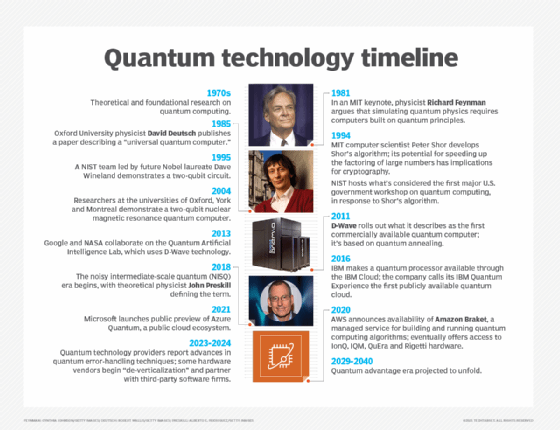
IBM hailed its fully integrated Quantum System One back in March 2019 as the technology breakthrough that would set the pace for advanced computing in the decade ahead. The company tempered that product launch announcement when it said some developers in the scientific and research worlds would jump on board but the real breakthrough will occur only when the quantum system attracts hundreds of creators of commercial applications.
More than seven years later, the industry is still waiting. IBM's quantum effort has made slow but steady progress, delivering important incremental improvements to its quantum systems. The company also has been quick to predict its next set of improvements would be the big breakthrough. But it never seemed to be enough to convince corporate or third-party commercial developers to commit to serious development. And so, the pattern continued.
Overcoming barriers to adoption
For quantum to gain broader commercial acceptance, the most important barriers IBM and its quantum competitors must hurdle include the delivery of fault-tolerant quantum systems, a higher level of error correction and technologies that pack many more qubits into single systems aimed at specific commercial markets. IBM's fault-tolerant quantum efforts, along with those of a handful of top-tier cloud providers, including AWS, Google and Microsoft Azure, represent a quantum leap only for a small circle of users but remain just one small step for the vast majority of IT shops.
Another way to get broader acceptance would be deals such as the multiyear agreement Quantinuum signed with Oracle in August. The two companies agreed to deploy Quantinuum's 98-qubit Helios quantum system inside an Oracle Cloud Infrastructure AI data center. Executives at both companies pledged the combination will result in a managed quantum-classical hybrid service for enterprise cloud users.
The upcoming quantum-based service from Oracle, scheduled to launch later this year, will have a significant impact on drug discovery, materials science, financial modeling and AI optimization research, as well as selected commercial markets, according to company officials. And because Helios only consumes about 60 kilowatts of power, officials believe it can significantly lower users' electricity costs.
Deploying quantum systems within private cloud environments enables organizations to better integrate quantum computing into existing AI and HPC workflows.
Heather WestSenior research lead for global quantum research, IDC
"We see this announcement [with Oracle] as the tip of the iceberg," said Rajeeb Hazra, president and CEO at Quantinuum, during the press conference announcing the Oracle deal. "As the capabilities of quantum computers go up, integrations like this one among cloud service providers give us the ability to reach their customer base and deliver hybrid workflows in a more accelerated and much deeper fashion. There will be much more of this to come."
One analyst sees this deal as a step forward in connecting the quantum and AI worlds and introducing quantum technologies to more commercial markets. "As quantum computing moves closer to enterprise adoption, simplifying how organizations access and integrate quantum resources has become just as important as advancing the hardware itself," said Heather West, senior research lead for global quantum research at IDC. "Deploying quantum systems within private cloud environments enables organizations to better integrate quantum computing into existing AI and HPC workflows." Using familiar cloud infrastructure and development tools, she added, can reduce barriers to adoption and "make hybrid quantum-classical computing a more practical part of enterprise IT."
In a June 2026 IDC study ranking the top 11 quantum computing vendors, West wrote that while the potential for fault tolerant quantum systems hasn't been fully realized yet, a growing body of empirical data validates the long-term commercial direction of the quantum market. Consequently, vendors are "increasingly competing not just as hardware developers," she wrote, "but as providers of broader quantum computing platforms capable of integrating software, HPC, AI, cloud and sovereign infrastructure capabilities."
AI and quantum marriage vows
In the final analysis, seamless convergence of AI and quantum could make quantum computing more front of mind for many more IT shops, but some analysts caution that convergence is still off on the horizon even though many initiatives are now sailing in that direction.
"The work on marrying up AI with quantum, in particular, has begun," said Frank Dzubeck, president of consultancy Communications Network Architects. "It's no longer in the first inning … it's more like the fourth inning, although lately it has been accelerating. When we get some useful AI-based front ends to quantum environments, then we'll see some breakthrough in acceptance."
Over the next two or three years, you'll see the rise of smaller quantum systems as people realize not every problem requires a system with 1 million qubits.
Jack GoldFounder and principal analyst, J.Gold Associates
Since many companies are further down the development and deployment road with AI than with quantum, deals like the Quantinuum-Oracle pact give corporate accounts the chance to more tightly couple the two technologies and further benefit from their AI investments. "One example of this, can be seen in pharma," Hazra said in a Q&A session at the joint Quantinuum-Oracle press conference. "It can be a complex process to discover new molecules as well as understand their behavior and test them. AI is being used now to intelligently look through multiple choices to get to the optimal one faster and more cheaply. But quantum can be an essential way to make that discovery and testing process go even faster and to be more accurate."
A factor holding back wider acceptance of quantum systems from the start was the lack of qubits in most systems shipped. Users engaged in finding solutions for extremely complex problems in areas such as scientific research were often coming up short due to a lack of processing power. But according to some analysts, that problem will eventually resolve itself as many users realize there are ample opportunities where lower-end quantum systems can address a wide range of less complex but nonetheless important issues.
"I'm predicting that over the next two or three years, you'll see the rise of smaller quantum systems as people realize not every problem requires a system with 1 million qubits," said Jack Gold, founder and principal analyst at consultancy J.Gold Associates. "There's going to be other effective alternatives to get around that requirement."
Quantum's commercial viability is still a few years away.
It all comes back to fault tolerance
Fault-tolerant systems are generally considered to be among the top three most important factors that will make quantum computing more pervasive and drive it deeper into corporate accounts. Fault tolerance transitions quantum systems from a specialized research tool to a more easily accessible, enterprise-class technology.
At IBM's financial analyst meeting in July, CEO Arvind Krishna announced his company would deliver its first fault-tolerant quantum system in 2029, code-named Starling. And, in August, Quantinuum's Hazra announced his company would deliver a fault-tolerant system sometime in the 2028-29 timeframe.
Current standalone quantum systems continue to be plagued by high error rates due to environmental noise, temperature fluctuations and electromagnetic interference limiting them to short and specialized computations. Achieving fault tolerance would let computer scientists carry out new research across an array of fields. In chemistry, materials science and theoretical physics, researchers could conduct quantum operations well beyond the scope of modern supercomputers, without excessive errors rendering computations worthless.
No standards body, such as IEEE and ISO/IEC, has designated what an acceptable error rate for quantum computers should be. Instead, mathematical theorems measure what's acceptable. For an error correction code to suppress errors rather than create more, the physical gate error rate must fall below a specific threshold. If hardware operates above that threshold, adding error-correcting qubits makes the system worse, not better.
Researchers estimate that physical qubits working on a superconducting or trapped-ion quantum system is 0.1% errors per operation. But that rate needs to drop to one error per 1 trillion operations for computations to be useful, or about nine to 12 orders of magnitude away from the execution accuracy required for large-scale computing.
Commercial applications likely to benefit short term from fault-tolerant systems include the following:
Drug discovery and financial risk modeling.
Hybrid cloud access so companies can integrate quantum acceleration directly into existing HPC workflows without owning specialized physical hardware.
Standardized software stacks that make it easier for users and developers to write using higher-level software libraries like Python without programming customized error mitigation strategies for unstable hardware.
Ed Scannell is a freelance writer and journalist based in Needham, Mass. He reports on a wide range of technologies and issues related to corporate IT. He can be reached at [email protected].