Numbers tell you how a supplier performed. Relationship data tells you whether the relationship can hold up under pressure.
That distinction matters because supply chain disruptions can happen at any time and for any number of reasons. How well a company recovers depends partly on alternate suppliers, inventory, contracts and logistics options. But it also depends on what the company already knows about its supplier relationships before something breaks.
Supplier resilience depends on supplier relationship data: the structured and unstructured information that shows how supplier relationships actually work. KPIs, scorecards and spend data matter, but they do not show the whole relationship. Companies also need segmentation, communication history, supplier feedback, risk signals, shared goals, internal ownership and insight into whether the buyer is a priority for the supplier.
Data by itself is not insight.
Relationship data is only useful if the company captures it, shares it, reviews it and uses it to make supplier decisions. A company might have supplier spend data, delivery metrics and contract records and still lack a clear view of which relationships matter most when disruption hits. If the organization has not collected, shared and acted on supplier relationship data before a disruption, it will have less to work with when capacity tightens, materials become scarce, a supplier misses a commitment or a new risk appears.
Finding backup suppliers after a disruption is not enough if the company does not already understand the suppliers it depends on now. The more accurate and current that relationship knowledge is, the better prepared the company is to decide which suppliers need attention, which relationships require executive involvement and which risks need action before conditions worsen.
Numbers tell you how a supplier performed. Relationship data tells you whether the relationship can hold up under pressure.
Supplier resilience starts with strategic relationships
A useful starting point is knowing which suppliers are transactional and which are strategic. Transactional suppliers fill a specific need at a particular moment. They might be important, cost-effective or reliable, but they are not necessarily core to the business.
Strategic suppliers are different. They are not simply the suppliers that are expensive, familiar or historically important; they are suppliers whose relationship creates business value that would be difficult to replace.
One test is whether the supplier helps the company gain a competitive advantage in the marketplace. Some suppliers might be important, but the answer to that question is still no. Those suppliers might deserve good management but not the same level of strategic attention. The suppliers that do create competitive advantage belong in a different category.
That distinction matters because the useful information about strategic supplier partnerships goes beyond spend, delivery and contract history. Companies also need to understand shared objectives, supplier intent, internal stakeholder alignment, past relationship history, supplier feedback, trust, due diligence and whether the relationship creates value for both sides.
Those details might seem softer than cost or delivery metrics, but they often determine whether the relationship holds up under supply chain pressure.
Not every supplier relationship deserves the same treatment
While all suppliers have importance, how much attention they require depends on the category they fall into. That is the first layer of supplier relationship data an organization should determine.
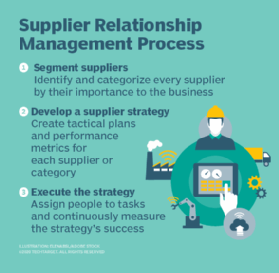
Supplier data should help the company understand which suppliers are strategic, preferred, transactional or basic -- and why. Supplier segmentation can be based on spend, risk, strategic importance and value. That distinction should guide how much attention, governance and collaboration each supplier relationship receives.
A strategic supplier is core to the business. This type of supplier might help the company create a competitive advantage, support a critical product or process, provide hard-to-replace materials or services, or share long-term business goals with the company.
A preferred supplier is important and trusted, but not necessarily strategic. The company might rely on the supplier regularly, have favorable pricing or service terms, and want to maintain a strong relationship, but the supplier might not be central to competitive advantage or long-term business direction.
A transactional supplier fills a defined business need, often around price, availability or a specific product or service. The relationship might be valuable, but it is usually more limited and easier to replace than a strategic or preferred supplier relationship.
A basic supplier provides routine goods or services with limited strategic importance. The relationship still needs oversight, but it usually does not require the same level of collaboration, executive attention or shared planning.
Scorecards are useful, but they are not the relationship
For basic or even transactional supplier relationships, scorecards and KPIs might be enough to govern the relationship and provide useful insight. Scorecards can track delivery, quality, responsiveness and other performance measures, but they should not become the whole relationship -- especially for strategic or preferred suppliers.
Supplier relationship management (SRM) provides structure to this work. It helps organizations evaluate each supplier's contribution, identify suppliers critical to business continuity and build different strategies for different supplier categories. The point of supplier segmentation is simple: Suppliers that are critical to the business deserve more attention than suppliers that provide widely available goods or services.
That distinction is central to strong SRM strategies. Treating every supplier as equally strategic wastes attention. Treating strategic suppliers as ordinary vendors creates risk.
Segmentation and scorecards help companies decide where to focus, but they do not prove that a supplier relationship is resilient. A supplier can meet the company's basic performance metrics and still leave the company exposed if communication is weak, goals are misaligned or the supplier does not see the buyer as a priority customer.
Supplier segmentation is an early step in deciding which supplier relationships require deeper strategy, ownership and collaboration.
Numbers are important.
In many cases, they are essential. KPIs, scorecards and performance metrics can show whether a supplier delivers on time, meets quality requirements, responds quickly and fulfills contractual expectations. But those measures are not the only things that matter in day-to-day supplier management, and they matter even less on their own during a crisis.
Supplier performance management and supplier relationship management are different, even though both are important and complementary. A supplier can look good on a scorecard and still create risk if the relationship behind the metrics is weak. The supplier might meet delivery targets in normal conditions but fail to communicate early when capacity tightens. It might not fully understand the buyer's priorities. It might not view the buyer as a preferred customer. Or the buyer's own internal teams might undermine the relationship because procurement, operations, finance and business stakeholders are not aligned.
Call this a gap between supplier performance data and supplier relationship data. Supplier performance data shows how the supplier has performed against defined measures. Supplier relationship data shows whether the relationship is strong enough to support the business when conditions change. That requires insight beyond numbers. It should include not only the company's view of the supplier but also the supplier's view of the company.
What counts as supplier relationship data?
Supplier relationship data is the structured and unstructured information that shows how a supplier relationship works. Performance data is part of that picture. It can include on-time delivery, quality, responsiveness, pricing accuracy, contract compliance and service-level commitments. These measures help companies see whether suppliers are meeting expectations.
But relationship data also includes supplier segmentation, communication history, escalation patterns, supplier feedback, shared goals, internal ownership, risk signals and whether the buyer is important enough to the supplier to receive early warnings or preferred attention during disruption.
The distinction matters because a supplier can meet performance targets in normal conditions and still leave the company exposed during a crisis. If the supplier does not communicate early, if business goals are misaligned or if internal teams send conflicting signals, the scorecard might look better than the relationship really is.
The buyer's scorecard is only one side of the relationship
Companies also need to understand what they mean to the supplier:
Are they a priority customer?
Are they easy to work with?
Are their forecasts, payments, decisions and communications reliable?
Do their internal teams treat the supplier consistently?
Does the supplier see enough value in the relationship to communicate early, collaborate on solutions and make room for the buyer when capacity, inventory or attention is constrained?
Those questions matter because resilience often depends on information that does not always appear in formal metrics. A supplier might warn a trusted customer earlier. It might share informal insight about capacity constraints, material shortages or delivery risks. It might be more willing to collaborate on alternatives if the relationship has been built before the disruption begins.
That is why SRM challenges are not only procurement problems. A procurement team might own the SRM strategy, but supplier relationships are shaped by the behavior of the whole company. Finance affects the relationship through payment terms and dispute resolution. Operations affects it through forecasts, changes and urgent requests. Business units affect it through shifting requirements. Legal, compliance and risk teams affect it through contract terms, policies and escalation decisions.
If those groups are not aligned, the supplier sees the inconsistency. The company might say the relationship is strategic, while its behavior tells the supplier something else. That weakens resilience before any disruption occurs.
Understanding relationship data is the first step, but supplier segmentation has to change decisions if companies want that data to improve resilience before disruption hits.
A backup supplier might help when something breaks, but resilience starts earlier than that: It starts with knowing which supplier relationships are strong enough to count on.
James Alan Miller is a veteran technology editor and writer who leads Informa TechTarget's Enterprise Software group. He oversees coverage of ERP & Supply Chain, HR Software, Customer Experience, Communications & Collaboration and End-User Computing topics.