Irrelevant emails and advertisements end up in the trash folder. Today, customers expect brands to understand and anticipate their needs, then tailor their experiences to them.
That's why personalization is often a make-or-break factor in customer experience. CX personalization falls into three categories:
- Explicit personalization. The brand knows what services or products consumers are interested in based on users telling the company something about themselves, such as age, geographic location, sports, hobbies, food or vacation interests. Brands collect this data in a variety of ways, including surveys and loyalty program signups.
- Implicit personalization. The brand infers the types of services or products users might be interested in based on their behavior, such as browsing histories. The brand can also rely on other sources of information, such as a CRM system or sales order system that records previous purchases. Inferences can also come from demographic data, assuming the brand can place users in a specific category.
- Contextual personalization. Uses information such as location or time to tailor relevant services or products.
.Computers and smart devices use GPS or Wi-Fi to provide approximate locations. Sensors such as Bluetooth beacons provide more exact location data, enabling a store, for example, to send a personalized message to a consumer walking by its location.
For successful CX, brands must know how to tailor the customer experience effectively.
What is a personalized customer experience?
CX personalization is about designing products and services to meet customers' individual needs and matching those offerings accordingly.
Brands can target advertisements when they understand customers, tapping into previous buying trends and demographic data points, such as age, gender, income level, race, employment, location, homeownership and level of education. Demographic data can encompass all characteristics of the buyer, including preferences, hobbies and lifestyle choices.
A "buy again" link or button is simple personalization. If customers previously bought an item off a vendor's website, they are likely to buy it again. Customers are even more likely to purchase the item again if the product recommendation matches a known buying pattern, such as replenishment cycles of a consumable item. If, say, a customer orders laundry detergent monthly, a well-timed targeted ad a few weeks after the last purchase will hit the mark. Ineffective timing, however, could annoy customers -- unless it is incentivized.
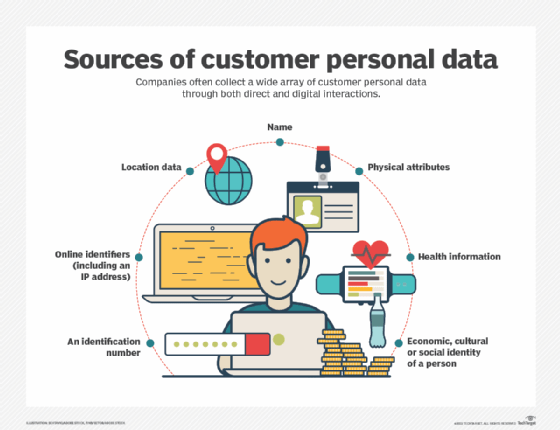
A more complex example of personalization is a teaser ad recommending a pension plan or healthcare product. Here, relevant factors include the customer's age, income, knowledge of preexisting policies and medical conditions.
Why is a personalized customer experience important?
Personalization helps businesses differentiate themselves from competitors to attract and retain customers. Indeed, in an increasingly commoditized world, a brand's CX -- rather than its product or service -- is the differentiator. If at least two suppliers have the same or a similar offering, then each must strive to deliver superior CX. The better the CX, the greater the brand loyalty, which influences customer retention.

“Personalization and personalized experiences are table stakes ... Customers expect to be provided with relevant content, information and recommendations based on their preferences and behavior,” said Mary Schneeberger, director at PwC.
In recent years, personalization has evolved from solely using demographic data to encompassing past experiences, including purchases and content that engages customers.
Effective personalization is a major contributor to positive CX. When it's used correctly, brands increase engagement and retention.
Personalization matters in both face-to-face and online transactions. A customer who walks into a hotel will likely have a better experience if the receptionist knows that person's previous stays, dining preferences, newspaper deliveries or spa reservations.
How AI is transforming customer personalization
Personalization has traditionally been framed as a selection problem. Rules-based systems would pick the closest match from a prebuilt library of content, which capped granularity to what was reasonable with manually curated rules. No company is going to write a thousand different email messages to prospective customers. Generative AI lifts that cap by automatically producing emails that match each user's needs.
“Personalization previously meant sending a targeted recommendation as a follow-up email or providing that personalized, on-site experience when someone returned to the site. But now it's all happening in real time,” Schneeberger said. GenAI, in combination with real-time offer management, delivers dynamic content that creates better experiences.
Segmentation is more granular and timely. Segments were traditionally defined manually at set times or as part of a new campaign. Evolving large-language model-based audience tools tap into emergent behavior to automatically segment customers across more groupings and sub-groupings. Adobe, for example, embedded agentic capabilities directly into audience management in Adobe Real-Time CDP, which flags when a segment's size shifts, explains the cause and cleans up downstream connections that no longer apply. Salesforce offers comparable campaign and segmentation automation through Agentforce Marketing. These products help reduce the gap between changing customer behaviors and marketing strategy.
The advent of agentic tooling recrafts personalization even more. These tools help orchestrate workflows across data, content and decision-making processes. They also require new guardrails to specify what agents can do without human approval, so agents don't accidentally generate offers that are invalid, costly or damaging to the brand.
Enterprise technologies that enable personalization
Companies can use a variety of tools, among them CRM systems, personalization engines, link tracking and analysis, survey engines and data analytics, to support their personalization initiatives. Vendors are expanding their personalization stacks across these categories even as they build support for best-of-breed applications for each one. Among the options:
CRMs. The CRM holds the known relationship: accounts, contacts, orders, service history. Major CRM vendors, among them Salesforce, SAP, ServiceNow and Oracle, are starting to position these platforms as a grounding layer for agents that is optimized for various personalization workflows.
Customer data platforms. A CDP curates a customer profile by resolving identity across multiple channels and sources such as web, mobile, contact center engagements, CRM and third-party sources. Examples include Adobe Real-Time CDP, Salesforce Data 360, Twilio Segment and Microsoft Dynamics 365 Customer Insights.
Data warehouses and lakehouses. Analytics stores and databases help map transactional and behavioral history into a format that can be used for segmentation, personalization and recommendation models. A recent trend has been zero-copy approaches that reduce management and governance overhead. Examples include Databricks, Snowflake and Google BigQuery.
Marketing automation and journey orchestration. These capabilities help manage the sequencing, channel selection and timing in implementing a marketing strategy. Examples include Adobe Journey Optimizer, Salesforce Marketing Cloud, Braze and HubSpot.
Each layer of the stack is undergoing rapid innovation, with efforts to support better AI models and new agentic workflows. More consolidated platforms that support the whole stack may streamline many personalization workflows. At the same time, major vendors are enhancing support for emerging agentic protocols like Model Context Protocol (MCP) that could simplify the use of best-of-breed components where appropriate.
12 steps for customer experience personalization
To properly personalize CX, collect and segment customer data to understand current and potential customers. Then act on that knowledge.
Start building a CX personalization strategy with these 12 steps:
1. Build, manage and maintain customer profiles
Source data from a corporate CRM system and make it easy for customers to create and maintain their own profiles. Review and clean profile data to refine profiles at every touchpoint.
2. Define and implement customer segmentation
Divide current and potential customers into groups, each with defined characteristics. Those might include comparable demographics and geolocation; communication methods, like email, social media, text and voice; and relevant targetability. Don't define a segment if no target product or service applies to it. Segments should have longevity, with slowly changing characteristics that continue to generate revenue.
3. Catalog product and service characteristics
Define product or service characteristics that match customer profiles. For example, customers who hike might be interested in small-dimension, lightweight equipment, such as chairs, tents and stoves. Customers who attend open-air festivals could also be searching for the same products. If the online store doesn't let customers search and compare those products easily, they might give up in frustration.
4. Create a personalization rule base
Marry the characteristics of the customer segment with characteristics of the product and service, such as matching the aforementioned hikers with appropriate hiking equipment.
5. Establish loyalty programs
Determine how to encourage customers to complete their profiles, return for repeat business and be incentivized to respond to offers. Loyalty programs can check all those boxes.
6. Plan the messaging strategy
Personalized messages can help brands cut through the clutter that customers receive daily. Brands should use a customer's name in communication and refer to previous activities, such as holiday destinations or purchased goods and services. This reminds customers of how they felt when making a prior purchase and acts as a segue to new service or product offerings.
7. Enable self-service options
Self-service channels let customers change their preferences and behaviors easily and quickly. For example, customers can use self-service channels to change the reordering schedule for household items. This gives brands a more accurate view of consumers' behaviors. Self-service options also let customers -- and, by extension, brands --maintain and update addresses and contact details more easily. Helping customers service themselves without requiring a call to customer support offers a faster turnaround.
8. Integrate with social media
Personalization is critical at every customer touchpoint, including emails, phone calls and online chat. Each touchpoint provides more information to refine a customer's profile, thus improving personalization. Social media platforms offer additional interactions. Brands can use these platforms to gain more insights and improve customer profiles.
9. Incorporate and support customer feedback
Make it easy for customers to provide feedback, which generates more accurate personalized experiences. Act on this feedback and refine segments to personalize marketing content further.
10. Align the organization around the customer
Centralize and analyze customer data and interactions, such as feedback, social media posts, contact center conversations, transaction history and review ratings. Define a corporate strategy to support CX personalization initiatives and align it with business goals.
11. Analyze customer behavior trends to adapt to changes
Brands that treat customer preferences as static find their messaging can quickly become irrelevant as trends change. Don't assume past approaches to loyalty will drive future customer growth.
12. Consider profile personalization
The industry has traditionally focused on supporting 1:1 personalization. However, many successful personalization programs achieve good results without the scaling headaches and privacy challenges associated with individual personalization.
Don't assume past approaches to loyalty will drive future customer growth.
7 common pitfalls of personalization efforts
Personalization can benefit both customers and businesses, but it also produces challenges, among them:
- Legislation. Personalization relies on collecting and manipulating personal data. Concerns over privacy and data use are increasing and reflected in new legislation. Organizations must consider certain regulatory requirements, such as GDPR, when collecting customer data.
- Third-party cookies. Third-party cookies formed the mechanical backbone for many personalization approaches over the years, but their future role is uncertain. Consumer-facing platforms stewarded by Apple and Google are changing rapidly as they adapt their strategies to simultaneously protect consumers, enhance moats and support new revenue models, particularly in the face of their AI strategies. For example, Google has gone back and forth on support for third-party cookies, while others, including Apple's Safari, block them by default. Consider evolving personalization strategies toward first-party, opt-in data.
- Distributed and disconnected systems. Data silos make it difficult to aggregate personalization data for analytics. Companies that lack strategic data warehouse initiatives should consider this approach to support the CX team's personalization efforts.
- Organizational silos and unclear roles. All departments must work together to fully understand customer touchpoints and determine how personalization can benefit each stage in the customer journey. Silos prevent brands from gathering the right customer data. For example, if the e-commerce team works independently from the brick-and-mortar sales team, or if sales and marketing teams have disjointed communications, personalization efforts become more complex--from technology integration to company and brand integration.
- Waterfall project mentality. Tackling large personalization projects with a Waterfall approach -- a rigid, structured methodology -- rather than a smaller, iterative Agile approach can create challenges. Consistently work to improve personalization techniques and validate the best approaches with A/B testing.
- First-time customers. During the initial touchpoint with a new customer, a brand knows nothing about that individual. Its goal is to create a customer profile and retain that customer, so it should enable customers to start profiles on their own. For example, at checkout, a simple consent checkbox can enable companies to harvest address details and preferences around contact mechanisms.
- Poor data quality. The quality of customer data defines the effectiveness of the personalization. The best data comes directly from the customer, according to Colson Hillier, senior vice president at iQor, a CX outsourcing company. This data includes buying patterns, preferences and interests. If the information is not from reliable sources or comes from a third-party vendor, it can be misguided or completely off target.
Real-world examples of CX personalization
Measure personalization's success by determining if customers find it assistive or intrusive.
Netflix's recommendation engine, for example, is assistive personalization. Two key Netflix strategies are the landing cards -- images users view when they scroll through content -- and the "because you watched" recommendations. The landing cards offer an easy, simple way to view content and entice customers to watch a program. The ease of scrolling through these landing cards creates an intuitive UX. The "because you watched" recommendations leads users to enjoy shows and movies more often, generating a positive CX.
Netflix uses two major components to feed the recommendation algorithm: customer profiles and product data. The customer profile can include viewing history, personal movie ratings, the time of day movies are watched, the devices used and how long a customer watches a program. Product data includes movie or TV show characteristics such as genre, category, actors, release year and similarities with other products. Netflix has begun experimenting with replacing its large set of specialized recommendation engines with consolidated foundation models to streamline its backend and improve its CX.
Another form of assistive personalization is discounts or rebates found in customer loyalty programs--popular among grocery stores and consumer goods organizations. This approach can bring in repeat business by encouraging customers to spend a certain amount or buy a certain item to receive the discount. It also helps brands understand purchase frequency and spend thresholds so they can craft appropriate messaging and discounts across channels.
Another example is rewards programs, which airlines and hotels often use to encourage returning customers. Rewards can include points customers can use to pay for a hotel room or flight, or exclusive membership opportunities like Delta Sky Club, which offers VIP benefits to members.
Most consumers don't mind relevant ads but can feel overwhelmed, interrupted and stalked by too much personalization. Intrusive personalization can start to feel creepy and actively drive consumers away from a brand’s product or service. It's important to remember that personalization is effective when done right, but if it makes consumers uncomfortable or annoyed, improperly managed CX personalization can quickly become a marketing burden.
Editor's note: This article was originally written by Jonathan Bordoli and expanded in 2023 and 2026 by George Lawton.
Jonathan Bordoli is an experienced technical project manager and solution architect. He has more than 25 years of experience defining, designing and managing technology delivery across the full project lifecycle, with particular emphasis on delivery and adoption of content, collaboration and process improvement solutions.
George Lawton is a journalist based in London. Over the last 30 years, he has written more than 3,000 stories about computers, communications, knowledge management, business, health and other areas that interest him.