


Knowing which type of storage to deploy when using containers is important. We look at the storage architectures enterprises are using, the features preferred and more.
Containers have become a standard part of today's enterprise infrastructure. As a result, container use is increasingly having a direct effect on storage.
When enterprises first deployed containers, applications were stateless and persistent storage wasn't an issue. Today, however, container use and container-based applications are more complicated, and developers want persistent storage with the containers they deploy.
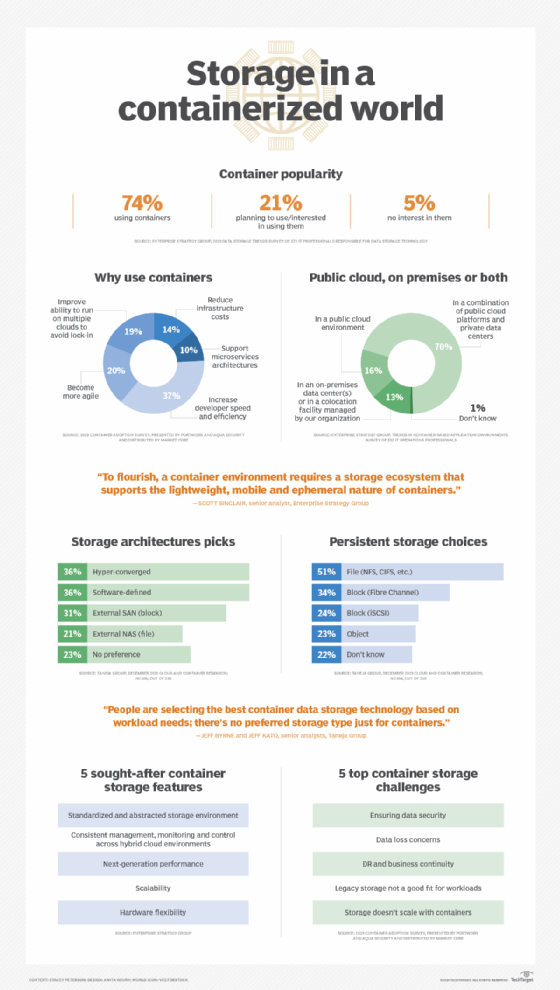
An Enterprise Strategy Group survey found 74% of respondents said they're using containers for production applications or dev/test and preproduction work. Another 21% planned to use containers within the next year or are interested in using them. Those making use of containers expressed a keen interest in several types of persistent storage, particularly storage embedded in hyper-converged infrastructure and software-defined storage.
This infographic examines container use and the implications containers have for storage architectures and the type of persistent storage deployed. It includes insight into the most sought-after storage features for a containerized environment and the storage challenges organizations encounter when they try to maximize the potential of their container-based applications.