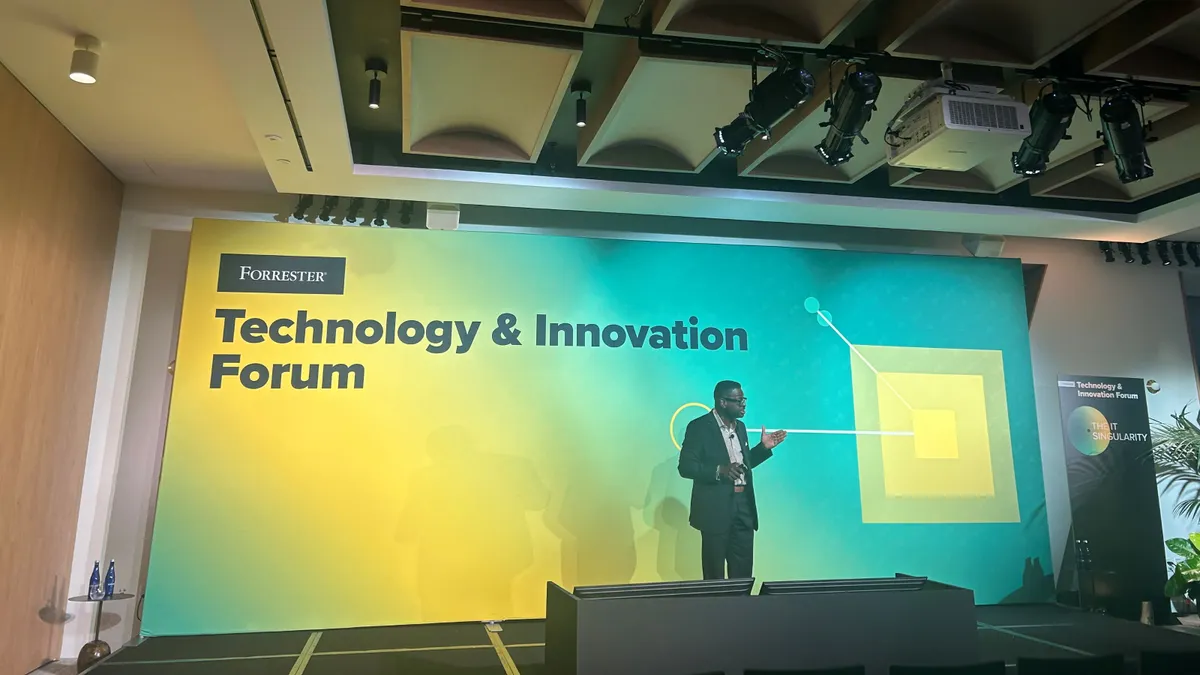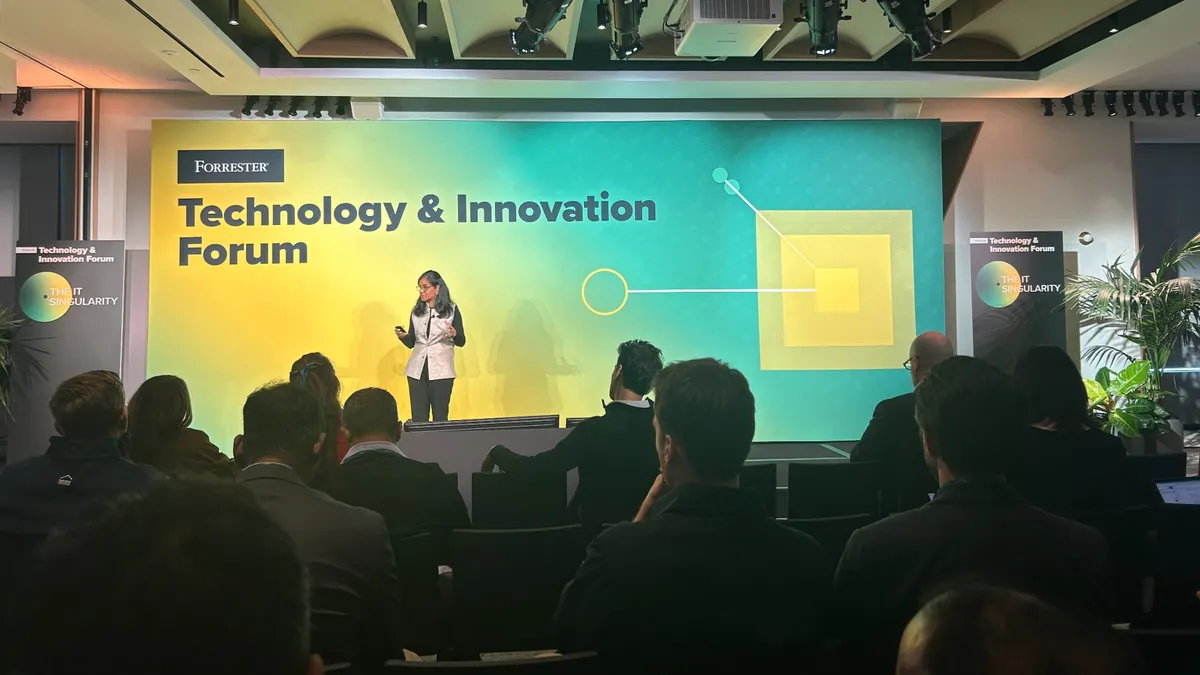



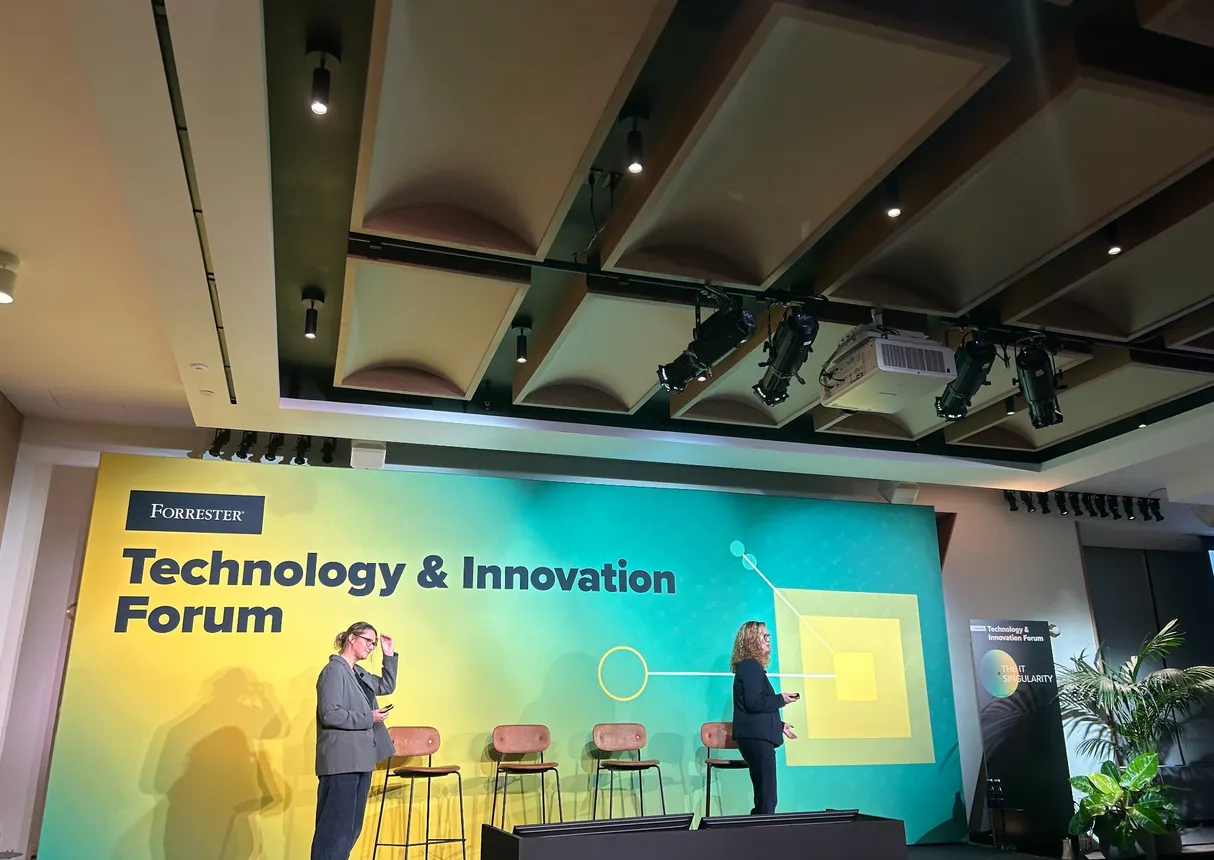
NEW YORK CITY — AI is speeding up IT work — and creating more work to check. Technology leaders need to rethink processes, roles and skills as AI shifts employees' responsibilities from producing output to judging its quality, Forrester analysts said at the firm's Technology & Innovation Forum East. Principal analysts Fiona Mark and Jess Burn discussed how organizations structure teams, assign work and prepare employees for new responsibilities.
During the session, Burn cited Google's 2025 DORA research showing that more than 80% of technology professionals believed AI had increased their productivity. But she also pointed to a 2026 Faros AI engineering report that found a 54% increase in bugs per developer associated with higher AI adoption, highlighting the need for developers who understand and can check AI-generated work.
“We’re more productive. It’s not necessarily our best work, and so we need to think about how we check and validate the output before sending it off,” Burn said.
Burn cited consultancies and law firms that have faced scrutiny for passing along work containing errors. That need for oversight also shapes staffing decisions. Forrester's 2026 State of AI survey found that 65% of AI decision-makers did not plan to let employees go, Burn said. Organizations still need people to validate AI-generated work, she noted.
Keeping employees, however, doesn’t mean keeping their jobs unchanged. Mark described AI as a fundamental change in the nature of work — one that requires IT leaders to reconsider how they organize teams, assign responsibilities and develop talent.
Redesign processes, not just individual tasks
Making employees faster with AI won’t necessarily help the business deliver better results. IT leaders also need to rethink how work moves across teams, where it gets held up and what the full process should accomplish, Mark said.
Many organizations have focused on providing individuals with copilots and other tools to complete tasks more quickly. But those gains can leave existing bottlenecks intact — or create more work for the people who review and act on the output.
Mark described the frustration she hears from organizations that have taken that approach.
“We’re putting investment in these tools, but we’re not really seeing an ROI or a productivity gain,” she said.
Rather than start with a tool and look for places to use it, leaders should start with the goal of the work.
"It's an absolute accelerant on your operating model, for better or worse."

Fiona Mark
principal analyst, Forrester
Mark described an organization whose IT leader worked with business partners to consolidate more than 200 processes into seven workflows. They examined what they wanted to achieve, then decided where AI could accelerate the work or improve efficiency.
That kind of redesign also requires clear responsibilities. Employees need to understand who makes decisions, how teams work together and what success looks like. AI can help organizations move quickly when those foundations are strong, but it can expose weaknesses when they aren’t, Mark said.
“It’s an absolute accelerant on your operating model, for better or worse,” she explained.
Mark also sees renewed interest in product and platform operating models. Product teams bring employees with different skills together to build and improve a product or service, sharing responsibility for its results. Platforms give those teams common technology and controls, such as access to AI models and rules for using company data.
AI makes both approaches more relevant, Mark said. Teams need to coordinate work toward shared goals, while common tools and guardrails help them expand AI use without each team building its own foundations.
IT roles shift toward judgment and oversight
As organizations redesign processes around AI, employees will take on more responsibility for checking results and managing work that crosses traditional job boundaries. Burn described a shift toward roles that combine technical skills with judgment and ownership of the outcome.
In application development, generating code becomes only one part of the job. Developers also need to coordinate AI agents, validate their output and troubleshoot errors before the software reaches users.
“Everyone can do the generation part. It’s the actual refining and working with the results where folks need to really spend their time now,” Burn said.
Security teams face a similar change. AI can help analyze files and create tickets, but employees still need to connect findings and investigate threats that lack a clear explanation. A spike in AI token consumption, for example, could reflect an employee’s heavy use or indicate theft by an outside party. Security staff need the skills and context to distinguish between them.
In cloud infrastructure, work shifts from manual scripting toward establishing guardrails. Employees need to control where agents can operate and which data they can access. Those responsibilities make governance part of everyday technical work, with employees accountable for both security and the quality of AI output.
The changes also broaden individual roles. Burn described employees taking responsibility for building an application, creating its UI, maintaining it and rolling it out, rather than handling just one stage.
“We’re also seeing a lot of role merges. People will be owning processes from start to end,” she said.
That creates new training needs. Someone who writes governance, risk and compliance policies, for example, could learn to translate those policies into code that enforces the rules, Burn said.
Other responsibilities require closer collaboration across teams. In vulnerability management, security, application development and IT staff need to assess findings, prioritize fixes and deploy patches together. Speed depends on understanding the organization’s systems and dependencies well enough to make changes safely.
For CIOs, workforce planning therefore extends beyond teaching employees to use AI tools. It also requires preparing them to evaluate results, take on related responsibilities and work across functions.
“We’re seeing freezes in the hiring of early career talent."
Jess Burn
principal analyst, Forrester
Keep hiring to build the next generation of IT talent
The shift toward broader roles creates a longer-term challenge: Employees need experience to develop the judgment those jobs require, even as AI takes over routine tasks that once gave them a starting point. Burn said demand for some entry-level support work is declining as organizations automate repetitive tasks.
“We’re seeing freezes in the hiring of early career talent,” Burn noted.
Cutting early-career hiring could leave companies without enough employees prepared to take on more complex responsibilities. If experienced staff leave for higher-paying jobs, organizations that haven’t developed junior talent will have fewer people ready to replace them. They could then face the same salary premiums — or higher ones — to recruit outside talent, Burn warned.
CIOs need to plan for that future workforce alongside the changes they make today, according to Burn. Rather than eliminate the entry point, they should find ways to bring early-career employees into the hybrid roles and cross-functional teams emerging across technology work. Training and skills development can help build that internal pipeline.
“Think about your workforce strategy in terms of building a bench across IT, security, application development, and think about how you can create these cross-functional teams and hybrid roles from scratch,” she said.
Tim Murphy is a reporter covering IT strategy for Informa TechTarget, with a focus on IT leadership, governance, workforce skills and AI strategy. His enterprise technology coverage has earned multiple Azbee Awards.