

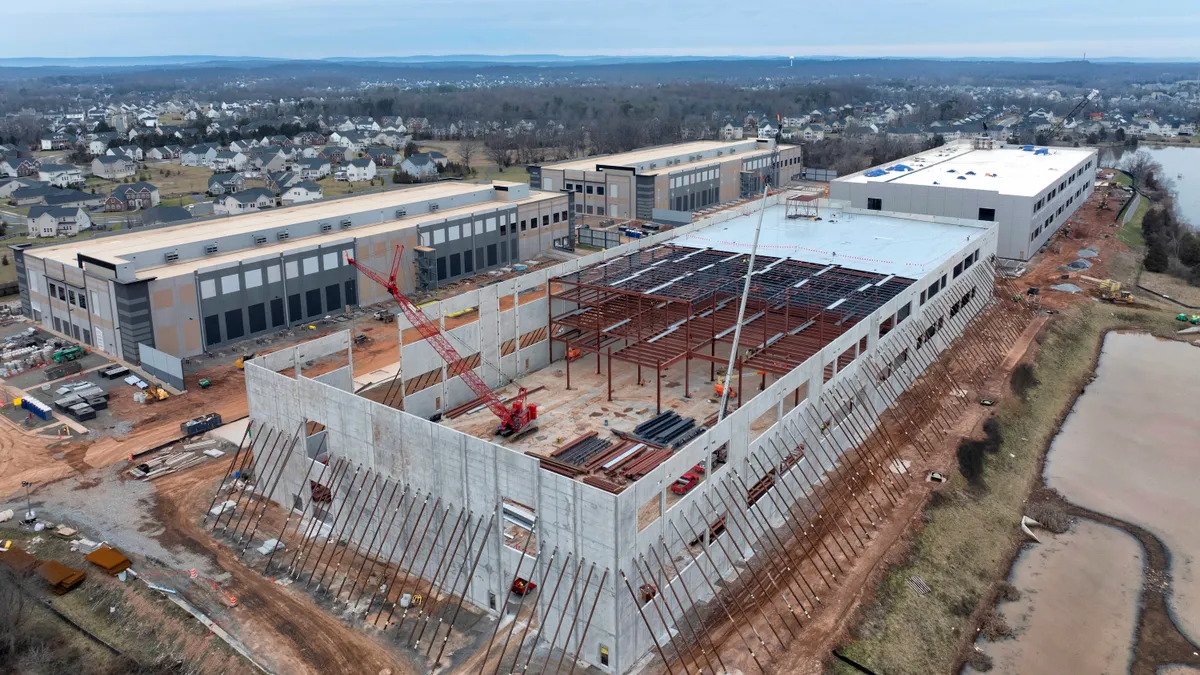
Business is booming for companies supplying the AI infrastructure buildout. For CIOs trying to buy or upgrade the technology their own organizations need, the picture isn't quite so rosy.
Hyperscalers were enormous infrastructure customers long before the AI boom. Supply chains were already under pressure, too. But the rapid expansion of AI data centers is intensifying some shortages and shifting manufacturers' priorities toward high-volume, higher-margin products.
The consequences aren't confined to companies building AI systems. Rising prices and uncertain delivery times are making ordinary IT purchases harder to plan — and sometimes raising new questions about where workloads should run.
The AI boom reaches the rest of the supply chain
In Shane Snider's recent analysis of infrastructure supplier earnings, AMD's data center revenue nearly doubled year over year, Arista's networking revenue rose 58.5% and Eaton's electrical equipment backlog grew 46%.
Those results cover different markets and aren't attributable entirely to AI. But they show the scale of demand reaching processors, networking and power infrastructure — and the capacity constraints accompanying it.
"For silicon delivery, the bottleneck sequence is still memory, then packaging, then everything else," Stephen Sopko, semiconductor and deep tech practice lead at HyperFrame Research, told Snider.
Memory and storage shortages give a more immediate view of what that means for enterprise buyers. In an Omdia survey discussed by principal analyst Simon Robinson, 87% of respondents said rising memory and storage prices had moderately or severely affected their IT budgets. Nearly three-quarters said shortages were slowing their ability to deploy AI infrastructure on-premises, while 80% were looking for greater infrastructure efficiency.
The shortages aren't necessarily new. But the scale of the squeeze is changing assumptions about what equipment will be available, when it will arrive and what it will cost.
"Cloud and SaaS providers can absorb some of the supply-side shock, but they don't remove the cost."

Jeff Groom
director of engineering, AI at Acre Security
Purchasing problems become infrastructure decisions
Some IT organizations are delaying nonessential purchases, keeping equipment longer or finding ways to use existing capacity more efficiently. Others are reconsidering where they run workloads.
The pressure extends beyond data center equipment.
At educational testing organization ETS, CIO Steve Santana told InformationWeek that Lenovo laptop prices had risen about 25%. Faced with higher replacement costs, ETS extended its laptop refresh cycle from four years to six. That can ease immediate budget pressures, but keeping equipment longer may also increase maintenance costs and operational risks.
Public cloud can offer another way around a hardware purchase or delivery delay. Omdia’s Robinson noted that some organizations are using cloud storage as a temporary solution to supply shortages, while others are reconsidering broader public cloud adoption.
That doesn't make cloud an automatic bargain.
"Cloud and SaaS providers can absorb some of the supply-side shock, but they don't remove the cost," Jeff Groom, director of engineering, AI, at Acre Security, told TechTarget's Everett Bishop.
Beth Pariseau's reporting on private AI also shows why workload placement isn't a one-way decision. Enterprises still have reasons to keep particular systems in-house, including cost, control, security and the flexibility to run models on their own terms. A shortage can change the calculation without deciding it for every workload.
And the effects can extend beyond the IT budget. A delayed infrastructure purchase might postpone a modernization project or force employees to work longer with aging equipment. Customer-facing improvements may have to wait as well.
Forecasting for conditions CIOs can't control
CIOs were already balancing AI investments, inflation, security, aging systems and modernization needs. Forrester analyst Brian Hopkins told TechTarget’s Kinza Yasar that enterprise software spending is growing more slowly than inflation, eroding purchasing power just as other demands increase.
No IT department has an unlimited budget. When the numbers no longer support every planned investment, there isn't always a good option. There may only be a least bad one.
That makes the organization's own data the starting point. CIOs need to know the condition of existing infrastructure, how long it can reasonably last, what maintaining or replacing it will cost and which business operations depend on it. Those findings belong alongside forecasts of prices, availability, delivery schedules and other market pressures.
Rather than abandon normal refresh cycles, IT leaders can use them to build a tiered set of options: what cannot be postponed, what can be adjusted and what risks each delay creates. Business leaders should be involved early, but with enough information to understand the choices and help determine the priorities.
Some organizations may bring purchases forward. Others may extend equipment lifecycles, change vendors or move selected workloads to public or hybrid cloud.
AI didn't create every shortage, and CIOs can't control the global supply chain. But they can make better decisions about what the business needs — and which consequences it can afford to live with.
James Alan Miller is a veteran technology editor and writer and Lead Editor for CIO News at Informa TechTarget. He directs coverage of enterprise technology strategy, AI, software, data, infrastructure and the decisions shaping how CIOs manage increasingly complex IT environments.