A week of outages across the tech, aviation, banking and government sectors led to widespread speculation of a coordinated cyberattack. But as security experts dig into the details, a different pattern is emerging — not a single hacker or hostile nation-state, but a system under strain. Experts say the incidents share a common thread: brittle legacy infrastructure, compounded by the speed and pressure AI now places on how quickly flaws are found and patched.
For cybersecurity leaders, the incidents raise a question beyond attribution: whether critical services can remain secure when identity, monitoring and recovery tools depend on systems that fail together.
The Microsoft 365 outage that began Nov. 12 disrupted communications and some security functions. The company’s preliminary findings traced the spreading networking failure to a software defect introduced in July, traffic shifts and reduced gateway capacity. Its automated recovery processes were not designed for failures on that scale.
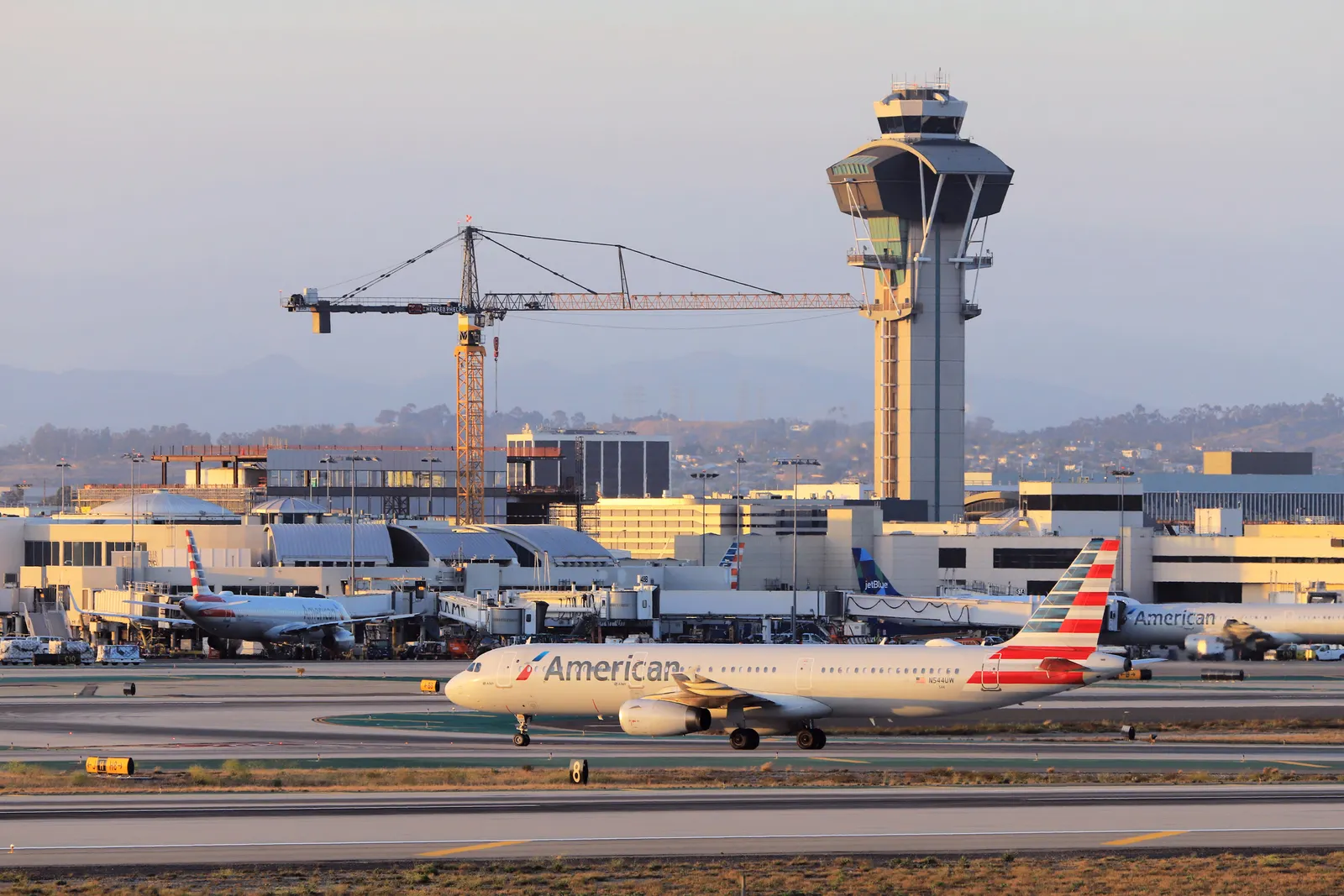
The FAA’s Nov. 13 ground stop followed excessive network traffic during telecommunications work. Seventeen of its 22 air route traffic control centers experienced instability. AWS reported connectivity problems on Nov. 15. On Nov. 16, United Airlines, JPMorgan Chase and other financial services organizations reported disruptions. The NSA reported network degradation during maintenance Nov. 17. Apple similarly attributed service problems that day to an internal update.
Dave McCarthy, group vice president for cloud and data centers at IDC’s enterprise infrastructure, said the failures exposed weaknesses in change management and resilience.
“Seeing commercial cloud, banking, aviation and classified government systems falter in the same week points to an industry-wide collision between rapid software change and low infrastructure resilience,” he told TechTarget.
Officials point to coincidence, not conspiracy
At a Nov. 18 congressional hearing, Director of National Intelligence Jay Clayton attributed the outages to separate maintenance and technical changes, stating they were “not a coordinated or state-sponsored attack.”
DHS Secretary Markwayne Mullin confirmed he had been in contact with CISA regarding the string of incidents and said the agency was not seeing any traffic indicating a cyberattack.
McCarthy said a coordinated attack would likely leave forensic traces such as unauthorized access or malicious payloads, while operational faults trace back to routine change logs, misconfiguration pushes or overloaded hardware.
“Shared-provider outages knock organizations offline and bring them back in lockstep, whereas divergent root causes and independent recovery timelines confirm separate failures,” he explained.
Justin Beals, CEO and founder of Strike Graph, a compliance management company, said investigators should compare the timing and technical characteristics of the outages. A shared provider failure typically results in simultaneous disruptions with the same fault signature, as was seen in the July 2024 CrowdStrike outage.
“These failures were spread across nearly a week, and each looked different,” Beals said.
Change records provide another test: whether the disruption followed an approved router replacement or maintenance window, or was preceded by unauthorized activity.
“An attack shows up as activity with no ticket behind it: new accounts, altered configurations, unfamiliar outbound traffic in the days before,” Beals said.
Investigators should also look for shared tooling, credentials or infrastructure across affected organizations.
“No operator or agency has reported any of that publicly,” Bealshe said.
Travis Rosiek, public sector CTO at Rubrik, said uncertainty also affects restoration decisions.
“When mission-critical systems’ behaviors, performance or trust come into question, it’s typically safest to shut down and analyze in an abundance of caution,” he said.
Rosiek added that safely resuming operations requires more than bringing a device back online.
“IT, OT and security teams must work together to recover from a known-clean baseline to avoid restoring the same bad state or introducing a new issue,” he explained.
Faster exploitation puts safe deployment under pressure
Beyond the forensic question of what happened this week lies a harder structural one: whether the pace of AI-driven threats is now outrunning the safeguards meant to contain them.
Charles Carmakal, CTO of Mandiant Consulting, said recent high-profile outages highlight pressure on security teams managing legacy systems.
“As defenders confront a significant increase in agentic intrusion activity, the risk of significant downtime grows,” he said. “That disruption comes from two fronts: directly from adversaries targeting operations, or indirectly when teams rush patches or take critical systems offline.”
Carmakal said to keep patching safe and avoid emergency shutdowns, teams need to lock down admin control planes enforcing short-lived credentials, isolate legacy systems through network segmentation and monitor for high-velocity anomalies.
Beals said he recommends setting patch speed based on exposure, with a named person supervising production changes, whether a developer or an agent executes them.
“Every production change needs a record with an owner, a tested rollback and a check that confirms it worked,” he said.
Matt Hartman, chief strategy officer at Merlin Group, pointed out that availability remains part of security.
“The irony is that the race to make systems more secure can inadvertently make them less reliable,” he said. “We’re already seeing attackers use AI to speed up intrusions, but organizations still need time to properly test, patch and understand the consequences of changes.”
The Electronic Frontier Foundation’s AI cybersecurity policy framework calls for established development and testing safeguards, including network isolation, least privilege, logging and incident response, backed by enforceable standards and liability.
An available dashboard does not prove defenses work
A service outage can leave some security controls operating independently and others dependent on the failed provider.
“During an incident, directly verify that key controls are working: MFA, privileged access, endpoint, audit logs and isolation actions,” explained Alka Tandon, general manager of cloud at Rubrik. “A dashboard could remain available while the controls behind it are not.”
After restoration, investigators also need to reconstruct telemetry gaps. Dan Schiappa, president of technology and services at Arctic Wolf, recommended reviewing authentication, privileged actions, network traffic and endpoint records.
“From there, they can determine whether any alerts failed to trigger and whether critical systems operated without expected security controls,” he said. “Threat actors are increasingly opportunistic and will attempt to exploit confusion, reduced monitoring or delayed response during outages.”
Recovery plans share the same points of failure
That verification burden is only growing heavier. Security dynamics are shifting faster than legacy defenses can adapt. Google recently warned that AI threats have crossed a significant threshold, with attackers now fully automating vulnerability research and exploitation with zero human intervention.
In response, tech giants such as Google and Anthropic announced they are slashing coordinated vulnerability-disclosure timelines — compressing traditional 90-day embargoes down to as little as 30 days.
Jeanette Manfra, global head of risk, privacy, and compliance for Google Cloud, said interconnected critical systems often retain brittle legacy architectures, in which a vendor misconfiguration, hardware failure or cyberattack can trigger cascading failures.
“Security needs to evolve beyond perimeter walls and annual compliance checks,” she said.
Manfra recommended CISOs and public-sector leaders engineer systemic resilience in three ways.
The first is to map critical systems to eliminate single points of failure through multi-cloud and out-of-band redundancy, followed by running realistic stress tests on primary vendors.
“The third step is migrating to a secure-by-design cloud using automation to accelerate remediation across core and open-source dependencies,” she said.
Recovery plans must also remain usable without normal communications, data and management tools. The Microsoft outage interrupted contact with customers and partners even where organizations’ own systems remained operational.
Aron Brand, CTO of data management platform CTERA Networks, said investigation and restoration must proceed together.
“In the first hour, an outage and an attack look the same. Run both tracks in parallel and preserve evidence while you restore,” he said. “Keep an out-of-band way to communicate in case your main tools are what's down.”
Brand said he recommends mapping external dependencies and establishing known good states. Exercises should prove that applications restart and employees can resume essential work, rather than merely confirming that backups exist.
Looking back to the recent spate of high-profile outages, the question of attribution may be the wrong one to focus on. Officials have ruled out a coordinated attack, and the forensic evidence — scattered root causes, routine change logs, divergent recovery timelines — backs that up. At this stage, the more useful question for security leaders is whether brittle, interconnected systems can continue to absorb the compounding pressure of faster AI-driven exploitation, compressed disclosure windows and rushed patching cycles without more weeks like this one.
As Brand put it, resilience isn’t about ruling out worst-case scenarios but about being ready regardless of which one materializes.
“You should know exactly how fast you can get back because you rehearsed it,” he said.
In a week when recovery took days and answers came even slower, that kind of operational certainty may matter more than knowing who, if anyone, was to blame.