Security Operations
-

 Getty Images
The 2027 CISO playbook: Govern AI agents and prepare for vendor failures
Agentic AI raises the stakes inside the network, while vendor concentration is becoming a systemic risk. CISOs are preparing for both in 2027.
By James Walker , Alissa Irei , Richard Livingston • Nov. 13, 2026 -
 Olemedia via Getty Images
Security teams are losing the vulnerability patching race
Analysts at the Forrester Security & Risk Forum presented a more dynamic, exposure-focused security approach for the AI era.
By Richard Livingston • Nov. 12, 2026 -
 Getty Images
Expert Advice
How to select an MDR security service
Managed detection and response shifts security tasks to a third party. Explore MDR benefits and capabilities and how to select a provider.
By Sean Michael Kerner • Nov. 9, 2026 -
 Getty Images
Expert Advice
Top 18 IT security frameworks and standards explained
Compare 18 IT security frameworks and standards, from NIST CSF to PCI DSS, and find the right fit for your security, compliance and risk needs.
By Paul Kirvan • Nov. 5, 2026 -
 Getty Images
Government uses open-weight AI to control costs and meet mission needs
At the Red Hat Government Symposium, experts shared how they’re balancing the capabilities of frontier AI models and the economics of open-weight alternatives.
By Richard Livingston • Nov. 5, 2026 -
 Getty Images
Non-human identities pose big risks, cybersecurity pros warn
At ISC2 Security Congress 2026, security pros from Southwest Airlines warned that non-human identities are increasingly on attackers’ radar. Learn how CISOs can manage the risks.
By Alissa Irei • Nov. 4, 2026 -
 Getty Images
Expert Advice
What CISOs should know about SaaS security in the age of AI
SaaS security was hard before AI. Now agents can act, not just view. Discover the emerging risks and how to update your security program.
By Dave Shackleford • Nov. 3, 2026 -
 Getty Images
Expert Advice
Supply chain risk: Strategies to manage third-party exposure
Enterprises face numerous security risks from their suppliers, cloud providers and other vendors. Learn how to limit third-party risk exposure in your operations.
By Damon Garn • Nov. 2, 2026 -
 Getty Images
Why Black October signals a new era of cyber-risk
Experts unpack Black October 2026, a wave of cybersecurity incidents that show how AI accelerates exploitation of old vulnerabilities. Read their insights to get ahead of the next storm.
By Sharon Shea • Oct. 30, 2026 -
 Getty Images
Google’s ACE offers cloud alternative for agentic isolation
Google steps into the infrastructure-based agentic security fray with Agent Compute Engine, rooting sandboxes in its TPUs.
By Agam Shah • Oct. 30, 2026 -
 Getty Images
What FBI breach tells CIOs about outsourced IT oversight
A missed patch at the FBI shows why CIOs need more than provider reports. Here's how to verify critical outsourced work without checking every task.
By Liz Hughes • Oct. 28, 2026 -
Getty Images
Wave of PHP2Shell-style flaws coming, Nvidia security exec predicts
Brace yourselves, CISOs. On the heels of the PHP2Shell disclosure, Nvidia's head of cybersecurity policy predicts things will get better – but first, we're in for a bumpy ride.
By Alissa Irei • Oct. 28, 2026 -
 Getty Images
Federal AI security guidance misses real-world enterprise threats
Federal AI incident response guidance leaves enterprise security teams to bridge critical gaps around rogue agents and prompt injection.
By Nathan Eddy • Oct. 27, 2026 -
 Yong Teck Lim via Getty Images
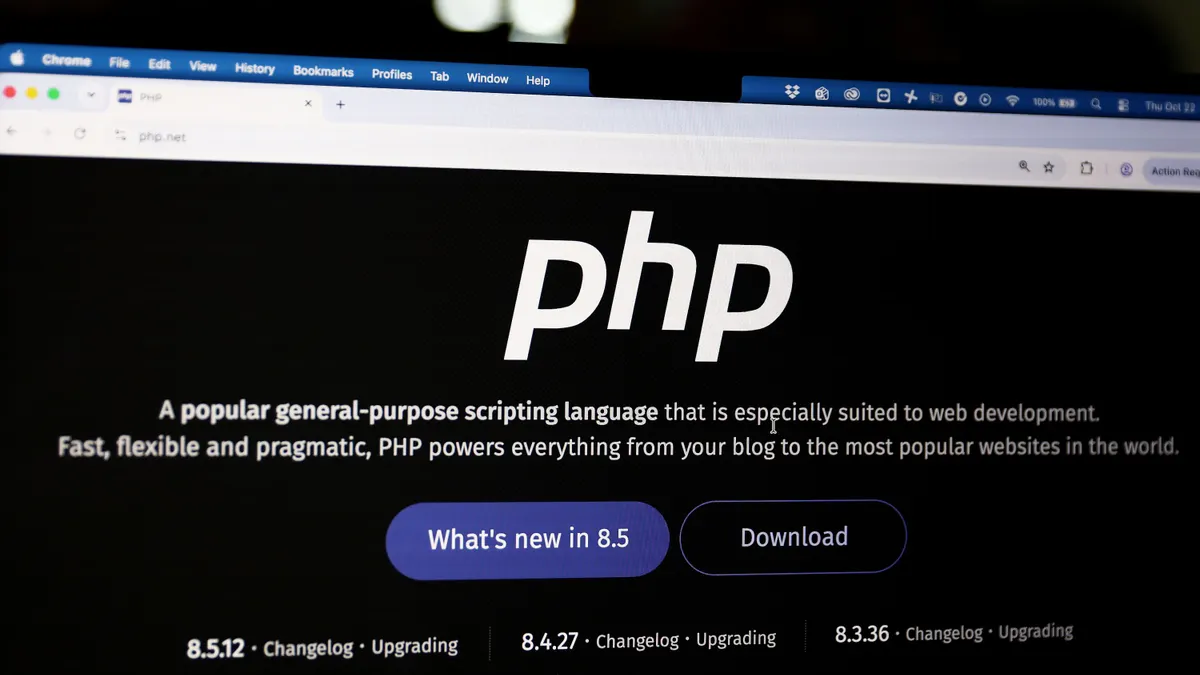
PHP2Shell explained: Timeline of the global vulnerability crisis
Two critical PHP RCE flaws, dubbed PHP2Shell, triggered mass patching worldwide. Here's the timeline, the technical details and what CISOs should do.
By Sean Michael Kerner • Updated Nov. 6, 2026 -
 Getty Images
Some businesses are pulling back from AI. CISOs can’t afford to
Some businesses are pulling back from AI amid low ROI, but CISOs can’t afford to lose it. Here’s how to protect AI in security operations.
By Richard Livingston • Oct. 27, 2026 -
 Getty Images
Welcome to TechTarget Cybersecurity
Our expanded reporting, deeper analysis and sharper enterprise security coverage will help CISOs cut through the noise, assess emerging risks and make informed decisions that strengthen their security posture and business resilience.
By Sharon Shea , James Walker • Oct. 27, 2026 -
 Brand Experience Team/TechTarget
Max-severity GitLab flaw lets attackers run code on servers
A high-impact GitLab flaw lets unauthenticated attackers run code on self-managed servers. Every release since 2014 is affected.
By Alissa Irei • Oct. 22, 2026 -
Brand Experience Team/TechTarget
Expert Advice
Just-in-time access: A CISO’s guide to reducing standing privilege
Adopting just-in-time access helps companies better control who is accessing corporate resources, dovetailing with other key strategies such as PAM and zero trust.
By Damon Garn • Oct. 22, 2026 -
Brand Experience Team/TechTarget
Cloud repatriation: What CISOs need to know
Moving workloads off the public cloud can offer greater control over costs and data, but it also brings new security responsibilities and operational demands.
By Jaikumar Vijayan • Oct. 20, 2026 -
Brand Experience Team/TechTarget
AI agents risk blind spots without shared security data, experts warn
Building a common, continuously updated view across security tools raises practical questions about data ownership, freshness and resolving disagreements.
By Nathan Eddy • Oct. 20, 2026 -
Brand Experience Team/TechTarget
Expert Advice
AI in the SOC: 5 high-value use cases for enterprise SOCs
AI helps enterprise SOCs prioritize alerts, speed up investigations, improve threat hunting, streamline incident response and reporting, and manage risks with human oversight.
By Damon Garn • Oct. 19, 2026 -
Brand Experience Team/TechTarget
Crest CEO: ‘Basics shouldn’t be abandoned in the race to deploy AI’
Crest's Nick Benson breaks down new AI testing standards, human oversight and the rapid shift toward mandatory security compliance.
By James Walker • Oct. 16, 2026 -
Brand Experience Team/TechTarget
5 cybersecurity training program mistakes most companies make
Companies need to reassess their cybersecurity awareness training programs to ensure they deliver the right information to the proper employees.
By Mary K. Pratt • Oct. 15, 2026 -
Getty Images
How AI threat detection is transforming enterprise cybersecurity
AI-powered threat detection transforms cybersecurity by analyzing network traffic, user behavior and security data to identify evolving threats in real time.
By Stephen Bigelow • Oct. 15, 2026 -
Brand Experience Team/TechTarget
CIRCIA reporting deadline puts OT data integrity under the microscope
As CISA's incident reporting rule advances, critical infrastructure operators must prove the data and commands driving operations are authentic -- even when networks seem secure.
By Richard Livingston • Oct. 15, 2026