

I first noticed the Microsoft outage in the most ordinary way possible. I was standing in my garage, trying to send a photo of a nonworking power station to the manufacturer. The photo did not send. I tried again. Nothing. I tried again. Still nothing.
When this happens, I usually try one of two things: reboot my phone, which is annoying but harmless, or reboot my network, which takes about three minutes and usually fixes the problem. I tried both. Neither worked.
Then I did what every IT silverback does when trying to figure out what is really going on. I used ChatGPT to look for signs of an outage. Sure enough, the answer came back from an aggregation of sites that monitor cloud performance and outages. There was an issue.
At first, I assumed it was one of those familiar cloud hiccups. We have all seen them. A service gets flaky, messages fail, someone posts a status update, and after 10 or 15 minutes the system comes back. People complain about it for a bit, then everyone moves on.
Not this time.
This was not just a service glitch
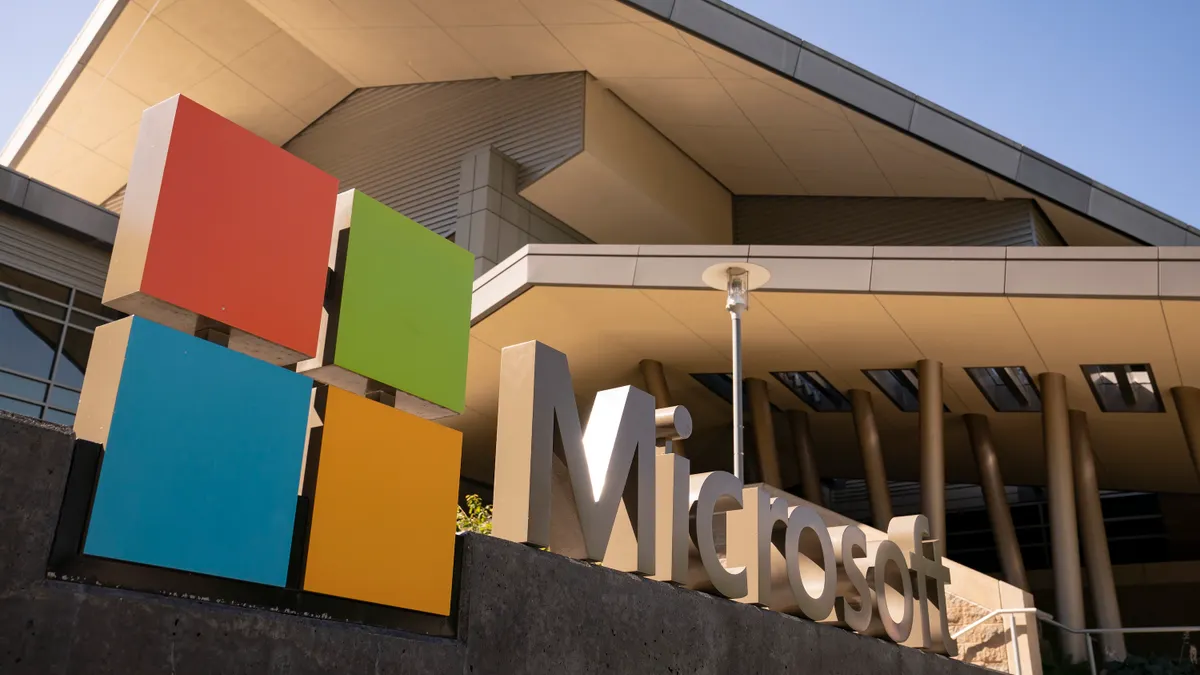
Further investigation revealed a widespread Microsoft 365 outage on Nov. 12 and 13.
Exchange Online and Outlook were hit hardest, with mailbox access and email delivery disrupted for many users. Some Exchange-dependent features in Teams, OneDrive, SharePoint and Copilot also faltered, although much of those services stayed available. I can't say whether the outage caused my failed photo upload, but the problem was certainly bigger than my garage.
Every provider has failure modes. Every platform has dependencies. Every architecture has a blast radius.

The impact was immediate for affected Microsoft 365 customers. Calendar invites couldn't always be updated. Emails failed or were delayed. Some collaboration and file-related features also faltered when they depended on Exchange Online. Business processes that appeared independent suddenly turned out to be tied to shared Microsoft infrastructure.
Microsoft's preliminary Nov. 15 post-incident report traced the outage to a latent defect in networking gateways that surfaced amid increased load and reduced capacity. Automatic traffic redirection then spread the overload across servers rather than containing it. That's a pretty good demonstration of why dependency mapping matters.
I suspect the business impact — lost productivity, delayed decisions, stalled customer interactions, missed meetings and operational drag — will be substantial, even if no one can reliably calculate it. Of course, the companies affected should not expect Microsoft to send apology notes with bags of money. That is not how cloud risk works. Most companies will simply absorb the loss.
Then came the second wave. My phone started ringing with two types of calls. The first were reporters seeking quotes and quick appearances on cable television. That is normal during a major cloud event. The second group was more concerning. Clients were calling not only to understand what was happening but to discuss next steps to remove Microsoft completely from their ecosystem.
That was new.
After earlier outages, people discussed resilience planning for Microsoft. They discussed better backup communications, contingency processes and a more disciplined cloud architecture. This time felt different. There was a visceral anger I have rarely seen in 25 years of working with enterprises and cloud-based systems.
The wrong lesson: Panic
The easy response is to say, “We need to get off Microsoft.” I understand the emotion behind that reaction, but it is not a strategy. It is a reflex.
The issue is not simply Microsoft. The same kinds of risk exist with AWS, Google Cloud, Salesforce, ServiceNow, Oracle and every other major cloud or software provider that becomes deeply embedded in enterprise operations. Every provider has failure modes. Every platform has dependencies. Every architecture has a blast radius.
The real lesson is that many enterprises do not understand their own dependency chains. They know the systems they buy directly, but they often do not know the scaffolding those systems rely on underneath. That's the kind of blind spot an outage can expose. A company may use Google for office automation, for example, while a critical software-as-a-service platform still depends on Microsoft services. The business may discover that dependency only when a workflow fails.
That is a failure of visibility, not merely a failure of cloud operations.
Lesson one: Calculate your real vendor risk
The first thing CIOs should do is calculate their real vendor risk. Every major system tied to a single cloud provider needs to be assessed for what happens if that provider becomes unavailable for 15 minutes, 1 hour, 8 hours, or a full business day.
This requires more than listing obvious Microsoft services. Yes, Outlook, Exchange, Teams, Copilot, OneDrive, SharePoint and Azure need to be on the map. But the more important work is identifying second- and third-order dependencies. Which business applications depend on Microsoft identity services? Which vendors host on Azure? Which workflow tools use Microsoft APIs? Which security systems, file repositories, reporting tools and customer portals stop working if Microsoft has a bad day?
Most organizations discover that the blast radius is larger than they expected. The uncomfortable part comes when the outage reveals how deeply cloud platforms are woven into business operations, often in ways that procurement, security, and even architecture teams don't fully see.
CIOs need to make these dependencies visible. They need a dependency map that shows which systems depend directly on Microsoft, which depend indirectly and which business processes fail when those systems become unavailable. Without that map, resilience planning is mostly guesswork.
Map your cloud dependencies before the next outage
A cloud failure can disrupt applications and business processes that don't appear to depend on the affected provider. CIOs should answer four questions:
• Direct dependencies: Which critical applications rely on the provider's infrastructure, identity services, storage or APIs?
• Indirect dependencies: Which software vendors and connected services rely on that infrastructure?
• Business impact: What stops working after 15 minutes, one hour, eight hours or a full day?
• Accountability: Who owns each affected process, its recovery plan and the decision to activate alternatives?
Lesson two: Build a plan to create the plan
The second step is to put a plan in place to create the real resilience plan. That may sound bureaucratic, but it matters. Resilience planning is complex. It takes time. It requires people who understand the architecture holistically, including applications, data, identity, integrations, networks, operations, vendors, contracts, support paths and business priorities.
You are not going to AI your way through this one. AI can help with documentation, analysis, and scenario planning, but it cannot replace people who understand how your systems and business actually work.
The first phase should be discovery. What systems do we run? Where do they run? Who owns them? Which cloud services do they depend on? Which software providers do they rely on? Which identity systems, APIs, storage platforms, collaboration tools and data services do they require to function?
The second phase should be classification. Not every system warrants the same level of resilience investment: some applications can be down for a few hours with limited business impact, while others cannot be down for even 10 minutes without creating real financial, operational or regulatory exposure.
The third phase should focus on architecture. For critical systems, CIOs need to determine where redundancy, alternate workflows, secondary communications, backup access, and provider diversification are justified. The goal is not to create maximum redundancy everywhere. That becomes unaffordable and unmanageable. The goal is targeted resilience, with the business impact justifying the cost.
You have a dependency problem wearing a recovery plan costume.
Lesson three: Change operating practices
The third step is to change operating practices. This is where many organizations fail. They will hold meetings, write a post-outage report, and then drift back into the same habits that created the exposure in the first place.
Procurement needs to change. Any new software-as-a-service purchase should include a clear disclosure of underlying cloud dependencies. If a vendor runs on Microsoft, Amazon, Google, or some combination of providers, that should be documented. If key features depend on Microsoft identity, storage, messaging or AI services, document that as well.
Architecture reviews need to change. Critical systems should not move into production without a resilience review. That review should ask what happens when the provider fails, which business processes stop, what workaround exists, how users communicate, how data is accessed, and who owns recovery.
Communications planning also needs to change. If Outlook and Teams are down, employees need a known alternative. That might be another collaboration platform, a crisis communications tool, text messaging trees, voice bridges or a separate status page. The specific tool matters less than the fact that it exists outside the failed ecosystem and it was tested before the outage.
Identity planning needs to change as well. Centralized identity is efficient, but it can also be a single point of enterprise failure. Critical systems may require break-glass access, carefully controlled secondary authentication paths, or offline procedures to keep the business functioning during a major provider outage.
Backup planning also needs to become more realistic. If your recovery plan, project files, customer commitments and operating procedures are all stored in the same ecosystem that just went down, you do not have a recovery plan. You have a dependency problem wearing a recovery plan costume.
Finally, there is always a learning curve of unintended consequences with new technology. Unlike past game-changing technologies, we can rarely run AI or cloud in a vacuum or silo those systems from other systems. Do not assume something like this outage will never happen again, or that it will be a rarity. We must do more groundwork and install more guardrails across all our systems — or the next outage will expose the same blind spots.
David Linthicum is a globally recognized thought leader, innovator and influencer in AI, cloud computing and cybersecurity. He has more than 30 years of experience in enterprise technology and, until early 2024, served as managing director and chief cloud strategy officer at Deloitte Consulting LLP.