

Infrastructure changes can disrupt enterprise services, even after proposed updates pass routine checks. The challenge is understanding how a change may affect other systems before deployment.
Infrastructure as code (IaC) and automated pipelines have made the process faster. AI agents can accelerate it further by suggesting and implementing changes with less human oversight. However, syntax checks and IaC plans can't always predict how interconnected production systems will respond.
Digital twins provide an additional layer of validation. Teams can use these continuously updated infrastructure models to evaluate potential impacts before making changes.
Building a digital model of production infrastructure
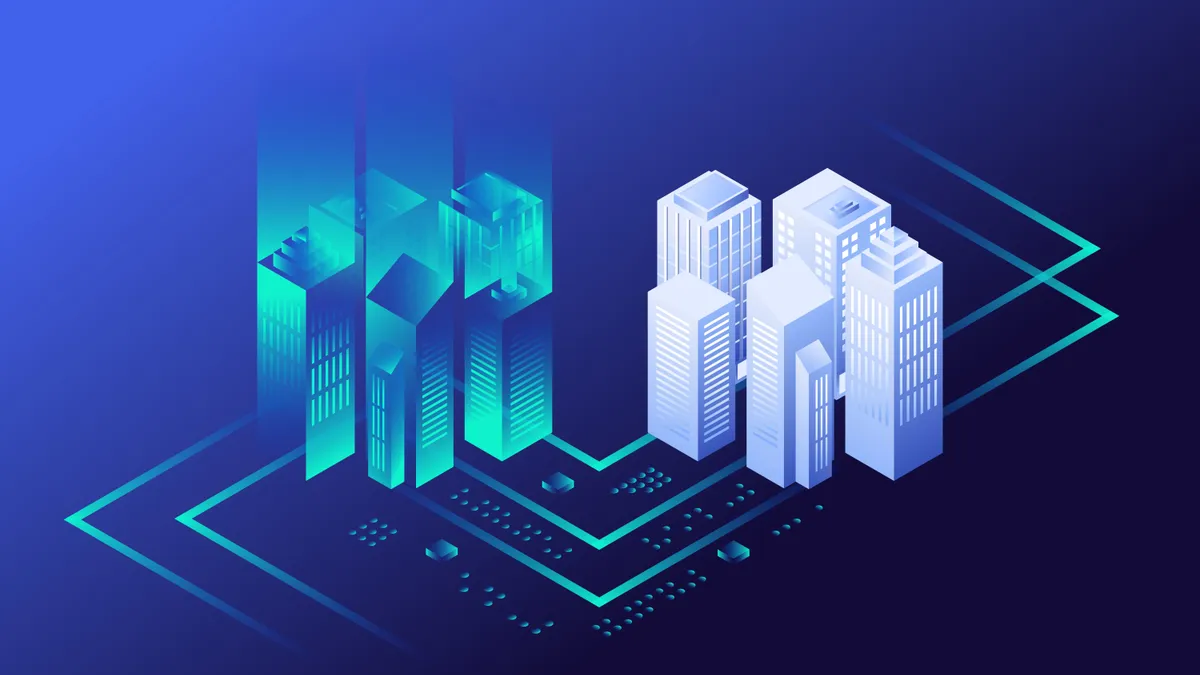
An infrastructure digital twin is a virtual model of a production environment that shows how physical and cloud resources are connected and configured, and how those relationships affect system behavior.
Building this model requires information from the existing infrastructure. Discovery tools gather network and resource details, configuration repositories and IaC files provide system settings, and monitoring platforms supply operational data.
The model must remain aligned with production as configurations and operating conditions change. Otherwise, teams could evaluate a proposed modification based on outdated information and overlook its real-world consequences.
Unlike static topology maps, which show connections but don't analyze behavior, IaC plans describe deployment changes without necessarily showing their impact on dependent services. Staged environments run workloads in isolation, while digital twins simulate some aspects of the production environment.
The level of detail varies by implementation. Some tools can check network connectivity and security policies, while others model specific system behaviors. Even detailed models can't reliably predict every application performance problem.
Testing infrastructure changes before deployment
The test uses the current infrastructure setup as its baseline. Teams then implement the proposed change in a separate model and compare the results with the current state. This helps them identify potential problems without affecting the production system.
For example, a firewall change intended to let an application communicate with a database may enable the required connection but unintentionally create an access path from another network. It may also affect other services, since applications often share network connections.
Tools like Batfish can compare current and proposed network configuration snapshots. Its differential reachability analysis reveals which traffic a change will allow or block. Teams can also confirm that traffic follows required network paths and that existing security policies remain in effect.
Infrastructure teams can integrate these checks into automated deployment pipelines. If a proposed change violates a security policy or disrupts required connectivity, the pipeline can flag it for review so teams can resolve the issue before production services are affected.
The limitations of infrastructure digital twins
A digital twin model is only as accurate as its resemblance to the production environment. It can become outdated when configuration changes bypass approved workflows. Missing devices or incomplete dependency information can also cause validation to overlook potential problems.
Keep in mind that an updated model cannot reproduce every operating condition. Network traffic fluctuates throughout the day, and temporary congestion in computing resources can affect service performance. External system dependencies add further uncertainty, since their behavior is not always modeled.
This creates a gap between checking configuration changes and predicting application performance. For example, a network model can show that communication remains possible after a firewall change, but it may not predict whether application response times will stay acceptable during peak demand.
There are operational costs to keeping models accurate as well. With infrastructure configurations changing frequently, hybrid environments and multiple cloud providers require ongoing discovery and synchronization.
Digital twins can reduce uncertainty about the conditions they are designed to evaluate. However, production monitoring, staged deployments and recovery procedures remain important for identifying and containing problems that simulations cannot predict.
Integrating digital twins into deployment workflows
Digital twins should be integrated into existing IaC and CI/CD pipelines as an additional verification step. If a configuration change is proposed, the pipeline can update the infrastructure model, apply the planned modifications and test the changes against operational data.
The results can be attached to the change request to show reviewers any unintended changes to connectivity or security. If a test fails, the pipeline can flag the issue and block deployment until it's resolved.
Organizations should begin with critical network components or shared infrastructure, where one configuration error can affect multiple services. This approach reduces the effort needed to build and maintain the model.
After deployment, teams can compare actual operating data with predicted results. Differences may reveal outdated information or gaps in the model, helping improve future validation.
For IT leaders, adoption depends on the infrastructure the platform supports, the changes it can test and how often it synchronizes with production. Organizations should also consider integration and ongoing maintenance costs.
Final thoughts
When configurations and dependencies can be modeled reliably, digital twins can help infrastructure teams identify risks before changes go into production. Their effectiveness depends on accurate infrastructure data and models that reflect system behavior.
Infrastructure failure risks can be reduced by using digital twins alongside automated testing, staged deployments, production monitoring and rollback procedures.
Abhishek Jadhav is a technology journalist covering AI infrastructure, semiconductors and advanced computing systems.