

A federal judge has rejected xAI’s argument that trailer-mounted gas turbines powering its Colossus 2 data center qualify as mobile sources exempt from stationary-source air-pollution rules, allowing a Clean Air Act lawsuit against the company to proceed.
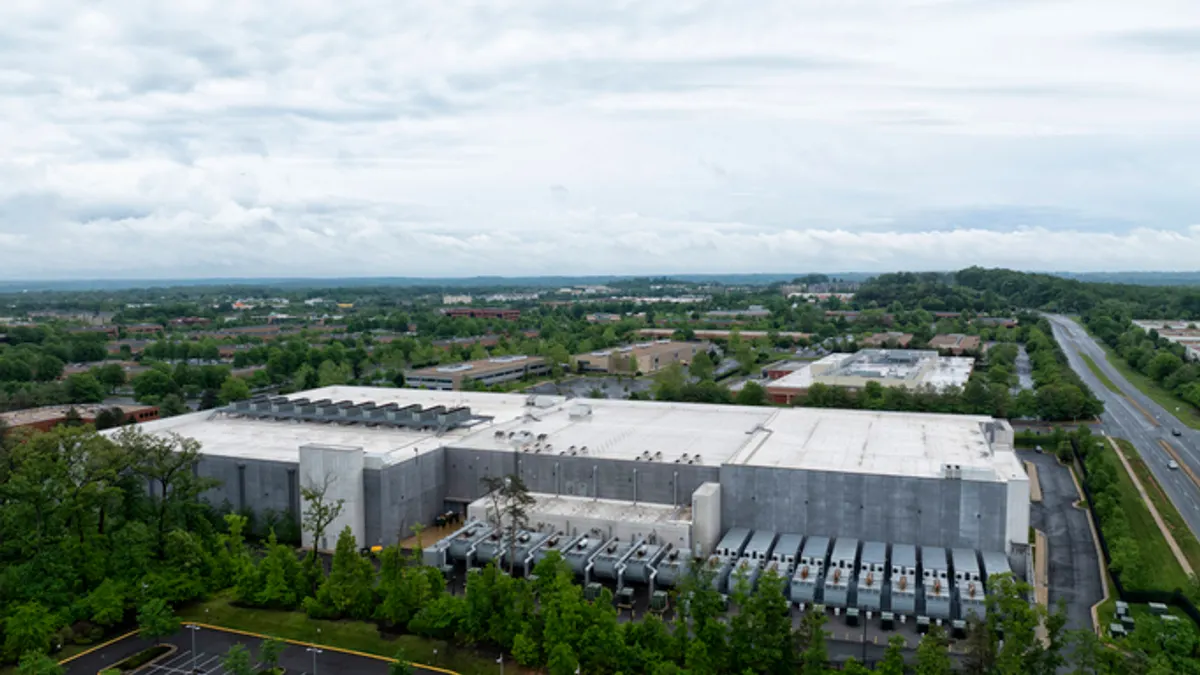
Judge Debra Brown of the U.S. District Court for the Northern District of Mississippi issued the ruling Oct. 30. The lawsuit targets 27 gas turbines at the Colossus Gas Plant in Southaven, Miss., which supplies power to xAI’s Colossus 2 data center in Whitehaven, Tenn., near Memphis.
The ruling puts a regulatory question facing data center operators into sharper focus: Companies using on-site gas generation to get around utility delays still must account for air-permitting requirements. Mounting turbines on trailers or calling them temporary does not automatically exempt them from stationary-source rules. Those requirements can affect when operators bring generation online, what emissions controls they install and how long they can rely on a temporary power arrangement.
“Just because they avoid utility roadblocks by using on-site power doesn’t mean those sources aren’t subject to the same requirements they would be if they were part of the utility’s fleet,” said Elizabeth K. Whitney, managing principal at Meguire Whitney.
Trailer-mounted turbines face stationary-source rules
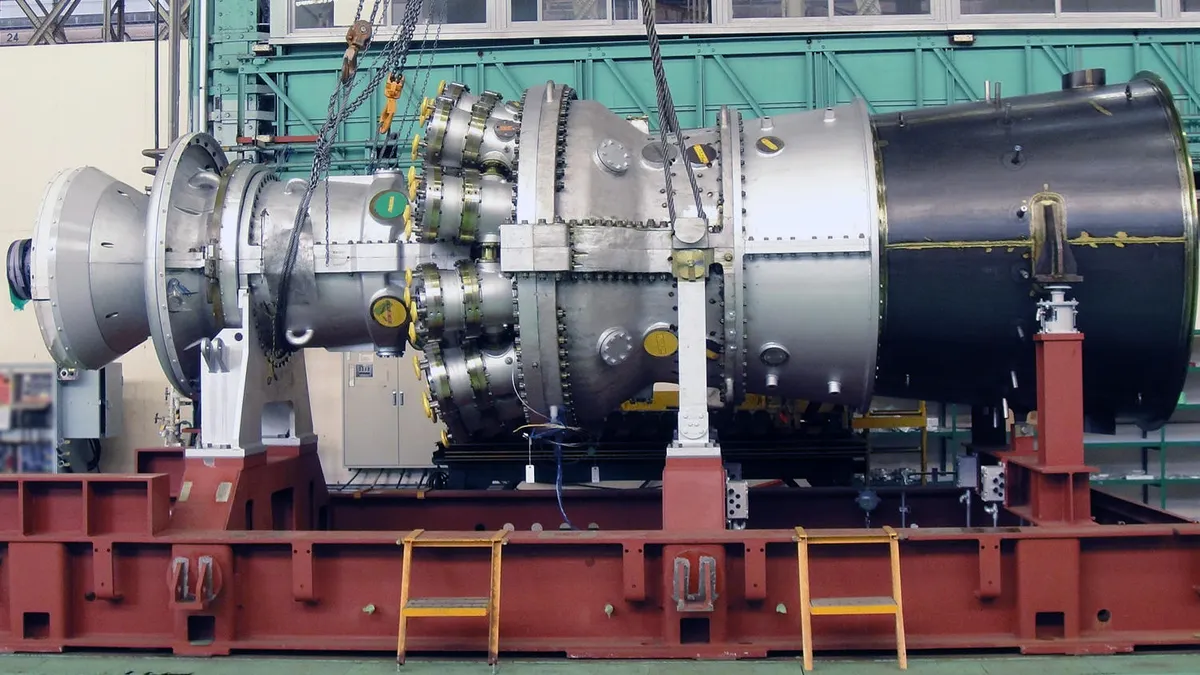
xAI argued that its turbines qualified as mobile sources because they sat on flatbed trailers and were intended to remain at the site for less than 12 months. Brown rejected that interpretation.
The federal definition incorporated into Mississippi’s State Implementation Plan classifies a combustion turbine as stationary if it is not self-propelled, or intended to be propelled, while performing its function. The definition allows stationary equipment to sit on a vehicle for portability.
Brown concluded that the turbines’ ability to move did not remove them from stationary-source requirements. She also rejected xAI’s reliance on a July 2025 letter from the Mississippi Department of Environmental Quality.
MDEQ wrote that it understood the turbines would remain affixed to flatbed trailers and at the site for less than 12 months. The agency said a permitting exemption could apply if those conditions remained valid.
But Brown found that the letter did not bind the court’s interpretation of the law. She also rejected xAI’s fair-notice argument. The judge said that concern could arise if MDEQ itself later sought penalties after changing its interpretation. In this case, private plaintiffs brought the lawsuit.
The NAACP and other plaintiffs allege that the Colossus Gas Plant operates 27 gas-fired turbines with combined capacity of at least 495 megawatts. Their complaint identifies 14 SMT-130 turbines, one M35 and 12 GE TM 2500 units across several generations.
The plaintiffs estimate that the turbines could emit about 1,700 tons of nitrogen oxides (NOx), 19 tons of formaldehyde, 580 tons of carbon monoxide and 180 tons of fine particulate matter annually. Those figures represent potential emissions cited in the complaint, not measurements of the plant’s actual emissions.
The plaintiffs say xAI installed and operated the turbines without required federal and state air permits or best available control technology. They seek an injunction, emissions controls, mitigation or offsets, civil penalties and legal costs.
The Justice Department also entered the dispute. In June, DOJ moved to intervene and asked the court to dismiss the lawsuit. The department argued that the case could interrupt power to an AI facility important to the economy and the Department of War. It warned that the requested relief could cut off critical power during an energy emergency and hinder the department’s use of AI for national defense. DOJ also challenged the role of private plaintiffs in enforcing federal law.
The NAACP’s complaint places the Southaven plant within a broader fight over gas generation for xAI data centers in the Memphis area. It alleges that xAI and a subsidiary previously built and operated gas turbines without Clean Air Act permits to power the nearby Colossus 1 data center. The complaint also says the company planned a third facility, Colossus 3, closer to the Southaven plant. Brown’s Oct. 30 ruling did not resolve those allegations.
The ruling allows the plaintiffs’ claims to proceed. It does not establish that xAI violated the Clean Air Act, determine the plant’s actual emissions or order the company to install pollution controls.
EPA rule sets conditions for temporary turbines
EPA addressed temporary combustion turbines in a separate January 2026 final rule. The rule created a temporary-turbine subcategory with alternative NOx limits and reduced testing and recordkeeping requirements for qualifying equipment.
The alternative NOx limits are 25 parts per million for natural-gas-fired turbines and 74 parts per million for turbines burning other fuels. The subcategory covers qualifying turbines rated at no more than 850 million British thermal units per hour.
EPA set a 24-month residence limit. A turbine that remains at one location longer than that loses temporary status for its entire period of operation. The rule also makes clear that mounting a turbine on a vehicle for portability does not exempt it from stationary-source standards.
EPA’s rule and Brown’s ruling address separate regulatory questions. The judge interpreted the definition of a stationary combustion turbine under Mississippi’s air-quality plan. EPA established specific requirements for qualifying temporary stationary turbines. Neither creates a blanket exemption for trailer-mounted generation.
Whitney said the ruling should prompt companies to examine whether temporary generation arrangements comply with the requirements that apply to stationary sources.
She also suggested xAI may have believed national security considerations surrounding the facility would outweigh the Clean Air Act’s requirements. DOJ did raise national-security arguments in its own filing, although Brown’s Oct. 30 opinion did not decide that separate issue.
Permitting could affect data center power plans
For data center developers, permitting can affect more than emissions-control costs. Requirements might determine when generation can operate, whether a project meets its energization schedule, how much operators spend on fuel and compliance, and what happens if temporary generation cannot continue as planned.
Neil Osnato, founder of Persistence Analytics Group, said developers should evaluate temporary generation against a data center’s expected operating life and the timeline for its grid connection.
“A trailer can make a turbine portable. It does not necessarily make its regulatory obligations temporary, and it certainly does not make the data center’s dependence on that power temporary,” Osnato said.
Brown’s ruling leaves the ultimate permitting and liability questions unresolved. But it rejects a central argument in xAI’s effort to dismiss the case: A combustion turbine does not become a mobile source simply because an operator puts it on a trailer.