

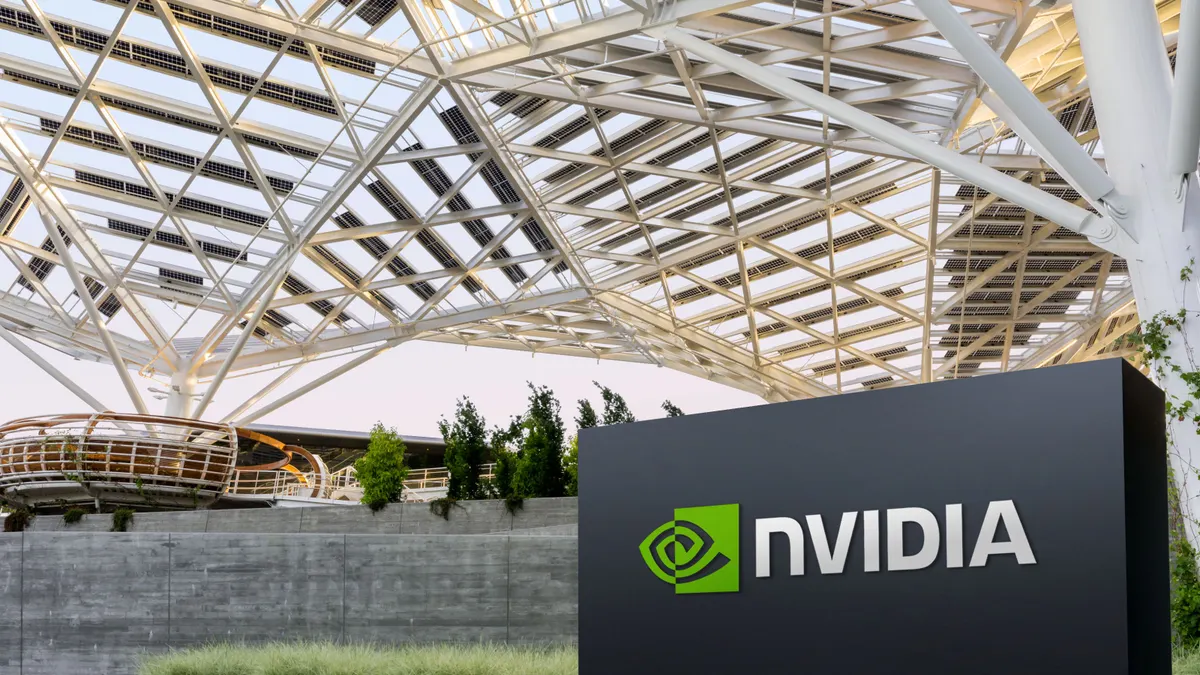
Reports that Nvidia's board is preparing to remove the company’s influential CEO without a clear successor raises questions about the tech supplier's future ability to execute and innovate, according to analysts. The stakes are high for Nvidia, which has an overwhelming share of an exploding AI infrastructure market.
The Wall Street Journal reported Wednesday that the Nvidia board was preparing to oust founding CEO Jensen Huang following a New York Times report earlier in the day that Huang had an extramarital affair with an Nvidia employee who reported to him. This news came three days after Huang confirmed an extramarital affair with a person outside the company suspected of being a Chinese intelligence asset, raising potential national security and economic concerns.
Huang's future was already clouded as the Nvidia board conducted an investigation into the first affair, but an affair with an internal employee "makes this a conduct issue," said Patrick Moorhead, an analyst at Moor Insights & Strategy.
In the near-term, not much would change for IT buyers should Huang be forced out, but trouble could lie 12 to 24 months out, Moorhead said.
"Nvidia is built around one person with no named successor," he said. "The risk is that the future roadmap hasn't been defined and that executing the current roadmap requires many command and control decisions that Jensen provides."
Nvidia is among the world's most valuable publicly traded companies, with a $4.08 trillion market capitalization, according to Yahoo Finance. It held nearly 90% of the overall GPU market share across consumer and data center markets as of February, and 80% of the data center AI accelerator market share as of April, according to Silicon Analysts reports. In June, it also reached No. 1 in market share for data center Ethernet switching.
The question of succession
Huang, who founded Nvidia in 1993, has been an iconic public face for the company as it set the pace for AI infrastructure over the past four years. His two children also hold leadership roles at the company; his wife is a cotrustee to more than 500 million of Huang's Nvidia shares.
"It would be very tough to replace him … I'd be surprised if they could find someone internal," said Rob Strechay, an analyst at VB Intelligence. "[With] the web he has woven internally, there is a ton of loyalty [and] a lot of autonomy."
With no obvious successor, "that limits flexibility [for Nvidia] if this develops the wrong way," said Steven Dickens, founder and CEO at HyperFrame Research. "From a corporate governance perspective, that is something the board needs to address in short order."
That said, while difficult, replacing Huang isn't impossible, according to Strechay. "I'm not sure … that someone [else] couldn't build the relationships across the ecosystem that Jensen has."
A company as large as Nvidia "probably has a deep bench who are unknown at this time," said Larry Carvalho, principal consultant at RobustCloud. "At worst, they could go outside and find somebody to replace him. The main thing is, like Larry Ellison, he was the face of the company, but he's not irreplaceable."
An opportunity for competitors
Nvidia's nearly unchallenged dominance in GPUs had likely already peaked, according to Silicon Analysts' February report. In addition, this year has seen a strong trend toward chip diversification as AI inference and agentic orchestration, which have different infrastructure requirements, supersede model training, the report said.
"My feeling is with [OpenAI's] Jalapeno coming out on Oracle Cloud Infrastructure and [Google] TPUs by next year in Q3, Nvidia could be in a tough spot," Strechay said.
Potentially, the effect of a less effective successor to Huang at Nvidia could echo Steve Ballmer's succession of Bill Gates at Microsoft in 2000, which resulted in lost ground to competitors in consumer devices and falling stock prices despite strong revenue growth, according to Strechay.
"If it is a Ballmer situation, things become tough for Nvidia as they are going from fighting the GPU wars to the CPU wars," Strechay said. "It could also hasten consolidation in AI-specialized neoclouds."
Ideally, a healthy market should have multiple strong competitors, but "the reality is that Nvidia has locked in a tremendous amount of capacity, so even if people wanted to switch, they couldn't," Moorhead said.
Beth Pariseau, lead editor for infrastructure news at TechTarget, is an award-winning veteran of IT journalism. Have a tip? Email her or connect on LinkedIn.