Technology is changing at breakneck speed and it’s changing how we work, too. Business workers are more technologically savvy than ever before, and they’re using their know-how to do their jobs more efficiently and effectively -- with or without IT’s approval.
The consumerization of IT is one of the most disruptive forces in enterprise IT, and this list highlights the technology vendors that lead the charge. Some primarily target consumers, who find their products so useful that they bring them to work. Some market to businesses, whose employees then find new ways to use the products. Other vendors are disruptive because of the trails they blazed and the ideals they represent.
We hope this list of the top 10 disruptive technology vendors spurs lots of discussion. Let us know what you think about the companies that did and didn’t make the list by using the hashtag #disruptIT on Twitter.

Devices and operating systems get all the attention in the mobile world, but smartphones and tablets would be useless without connectivity.
With the advent of 3G and now 4G networks, business users can do much more than access email on their mobile devices. Video, apps and even full desktop images are available in the cloud, opening up new possibilities for working more effectively and efficiently.
On the downside, these high-speed networks enable exponentially more data consumption, which can lead to higher bills -- a problem for companies that assume those costs. And thanks to carriers’ portable Wi-Fi hotspots, users don’t have to rely on corporate networks for Internet access, which means they can get around any of IT’s restrictions. Wireless carrier security risks are also a concern.
Photo (cc) by LearningLark on Flickr and republished here under a Creative Commons license. Some rights reserved.
We know what you’re thinking: “Microsoft? They’re the most traditional IT vendor out there!”
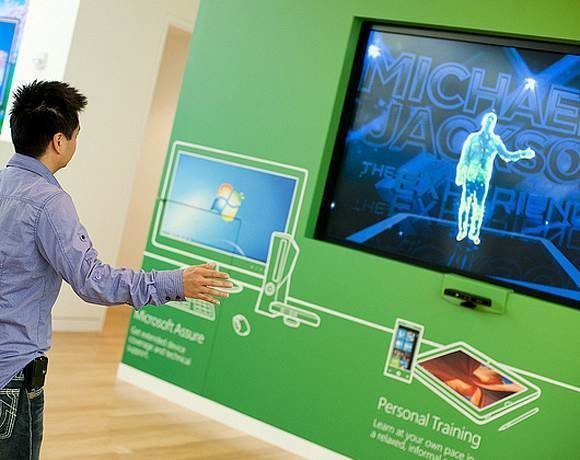
Sure, that’s the case when you talk about Windows PCs and legacy apps such as Office. But the folks in Redmond also have some pretty disruptive technologies. Atop that list is Kinect, the voice- and motion-controlled technology originally developed for Xbox 360. In February, Microsoft released Kinect for PCs, which could lead to a whole new style of enterprise applications.
Experts don’t expect Kinect to make its mark in the business world for years, so if you’re looking for a Microsoft product that’s disrupting IT today, look no further than Skype. Microsoft acquired the Internet phone service in 2011. Thanks to free videoconferencing, screen-sharing and instant messaging capabilities, Skype is now a popular alternative to desk phones.
Photo (cc) by ImagineCup on Flickr and republished here under a Creative Commons license. Some rights reserved.

Document management is always a challenge for business workers. Where’d I save that file again? Should I email it to myself so I won’t have to use the VPN? Many cloud storage services address this problem, but Evernote Corp. takes a different approach that stands out.
With Evernote, users save documents and other files as notes that can be organized into notebooks, with a tagging feature for easy sorting and finding. It syncs these via the cloud, enables access on any device and lets users edit notes directly.
Evernote is disruptive because it frees users from traditional file storage and document management -- and the oversight IT has over those systems. The company boasts nearly 30 million users and recently announced plans for an enterprise service.
Photo (cc) by James Whatley and republished here under a Creative Commons license. Some rights reserved.
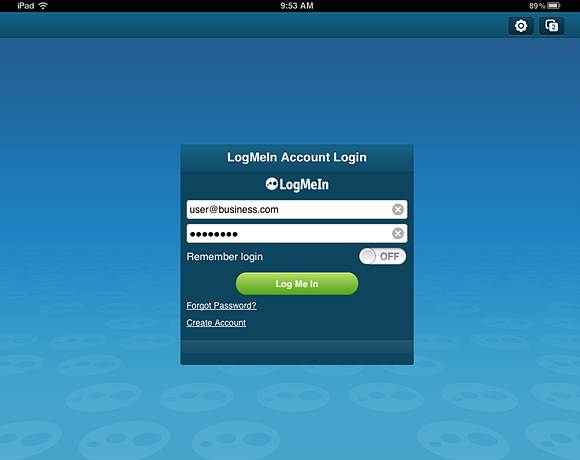
There’s no shortage of remote desktop tools out there, but LogMeIn is consistently one of the most popular and highest-rated.
Anyone who downloads LogMeIn Inc.’s desktop client and mobile apps gets PC access from smartphones, tablets and even the Mac. In the business world, that means users can access the corporate network from outside the firewall without going through the virtual private network or other IT-approved systems. It raises users’ expectations about how easy mobile access to corporate systems should be.
In addition to its remote desktop products, LogMeIn also offers tools IT can use to backup PCs and even troubleshoot PCs, Macs and mobile devices remotely.
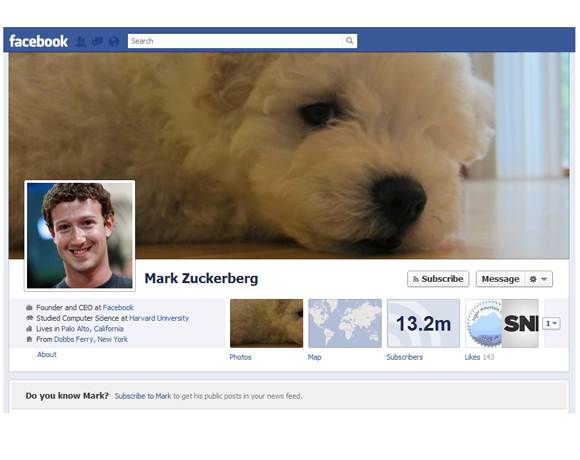
Facebook’s combination of status updates, information sharing and instant messaging is changing the way we communicate, and that’s trickling down into the business world. The rise of social enterprise collaboration platforms is a direct response to this popular social media platform.
Facebook is also disruptive because it’s another platform through which sensitive corporate information can escape into the wild (even inadvertently, thanks to its complex privacy settings and the potential for social engineering attacks).
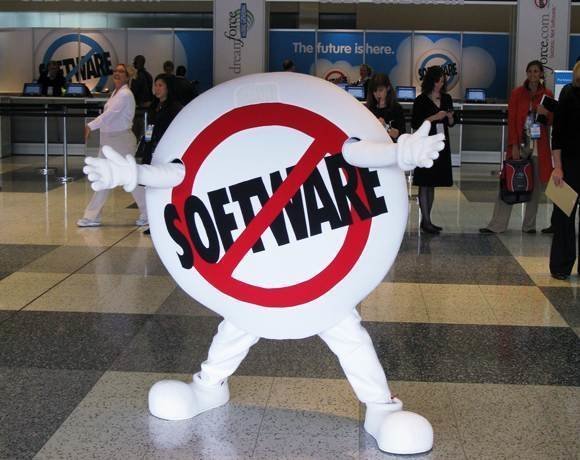
Salesforce.com is a Software as a Service (SaaS) pioneer. Its success in the customer relationship management (CRM) market showed that SaaS could work for user-facing applications handling sensitive information.
Salesforce.com offers IT an alternative to traditional application management, simplifying deployment, patching and licensing. It also helped usher in the era of cloud computing, which is changing how IT develops and delivers applications, distributes computing power and stores data.
The individual accounts available through Salesforce.com are disruptive as well. They let salespeople run CRM systems independently of their employers, keeping IT and management out of the loop when it comes to controlling corporate data. When those employees leave the company, they can take their contacts with them.
Photo (cc) by Jon Mountjoy and republished here under a Creative Commons license. Some rights reserved.

The biggest name in cloud computing, Amazon has transformed the way organizations consume computing power.
Customers of Amazon’s Web-based Elastic Compute Cloud (EC2) can purchase computing power on an hourly basis, which is ideal for development projects and production workloads whose capacity needs spike at certain times. The company’s Simple Storage Service (S3) offers the same model for cloud-based storage.
EC2, S3 and other Amazon Web Services (AWS) are disruptive enough in this context, but when you realize that anyone can sign-up, you’ll understand why Amazon is so high on this list. It’s not uncommon for IT pros to bypass management and set up their own AWS clouds.
Amazon also makes the Kindle Fire, the most popular Android tablet.
Photo (cc) by NEXT Berlin on Flickr and republished here under a Creative Commons license. Some rights reserved.

Whenever a new cloud storage and file-sharing service hits the market, a DropBox comparison is inevitable. Founded in 2007 by CEO Drew Houston (pictured) and chief technology officer Arash Ferdowsi, the company boasts 50 million customers, who are drawn to the service because of its simplicity. Users just sign up, download a desktop client and mobile apps, and then any file saved in the Dropbox folder on one device shows up on all the others.
The popularity of Dropbox has serious ramifications for IT. It raises questions about the usability of traditional network file shares and it emphasizes the importance of identifying, managing and securing mobile data.
Dropbox’s 2011 security breach left user accounts open to the public and should also give IT pause, although the company now focuses more on businesses with its Dropbox for Teams service.
Photo (cc) by Financial Times and republished here under a Creative Commons license. Some rights reserved.

More than any other product or service, Apple’s iPhone opened the consumerization floodgates.
Its release in 2007 changed users’ expectations of mobile technology, and the opening of the App Store put high-powered, user-friendly business apps right at their fingertips. Apple, Inc. followed the iPhone up with the iPad in 2010, which sparked the bring your own device trend. By 2011, the iPhone had overtaken BlackBerry, the enterprise stalwart, as the most popular smartphone among business users.
For a long time, Apple focused solely on consumers, making enterprise support and management a challenge for IT. The company has warmed up to the enterprise as of late, however, releasing Apple Configurator and improving iOS device management capabilities.
Photo (cc) by Steve Rhodes and republished here under a Creative Commons license. Some rights reserved.

Google is the most disruptive technology vendor in the enterprise because it has its hands in all areas of consumerization and cloud computing, from mobile and communication to collaboration and storage.
Android has emerged as a viable alternative to Apple iOS, and the typically lower prices of Android devices helped spur smartphone adoption among a whole new set of business users. But Google made waves long before Android hit the market.
Gmail revolutionized email, the most common form of business communication. Its threaded conversations, seemingly unlimited storage, powerful search and built-in instant messaging make for a more user-friendly and efficient interface -- so much so that some business users now forward their work email to Gmail. Similarly, Google Voice lets users get around corporate phone systems.
Google Docs, the free, online Microsoft Word competitor, lets users create and store documents outside the corporate firewall, and its real-time collaboration features go above what traditional productivity software can do. And with the new Google Drive service, users can store and edit any type of document in the cloud.
Photo (cc) by TopRank Blog and republished here under a Creative Commons license. Some rights reserved.