Databricks intros new Genie, data management tools to aid AI
Features address context for agents, readying data for AI, cost control, security and flexibility to help users overcome problems that prevent pilots from reaching production.
Databricks on Tuesday introduced an array of new capabilities, including new Genie features such as a unified context layer for AI agents, aimed at helping enterprise customers more effectively build and manage agents.
Genie Ontology is Databricks' new knowledge layer for agents, while Genie One is an AI-powered assistant, and Genie Agents is a tool that enables users to easily create domain-specific agents capable of taking autonomous action based on reasoning gained from both structured and unstructured data.
Beyond the new Genie capabilities, Databricks unveiled a data processing architecture that unifies analytical and transactional data within its Lakebase database, an evolution its data lakehouse that enables users to run real-time workloads on governed data. The vendor also added governance tools, such as cost management capabilities, and unified management of AI assets, such as models and agent skills.
Collectively, the new Databricks capabilities are significant for users because they address problems many enterprises are facing as they attempt to modernize with agents, according to Mike Leone, an analyst and Moor Insights & Strategy.
"The significance is in how coordinated it all is," he told TechTarget. "The pain they're speaking to is the plumbing tax anyone running this at scale already feels, all the copying and syncing and stitching between systems, analytical systems and the separate fast datastore you stand up when neither one is quick enough."
In addition, Databricks is directly addressing the trouble many organizations face trying to get agents to understand their business and the high cost of AI development, Leone continued.
Stephen Catanzano, an analyst at Omdia, a division of Informa TechTarget, similarly noted the potential value of the new Genie capabilities along with the other features Databricks unveiled.
"Databricks [has] its finger on the pulse of what customers need to effectively manage their data to drive the outcomes they desire," he told TechTarget. "The announcements focus on meeting the needs of clients. … Each addresses the challenges customers are struggling with to operationalize AI."
All of the new capabilities were revealed during Data + AI Summit, Databricks' user conference in San Francisco. In addition, Databricks revealed an agreement to acquire San Francisco-based Panther to add an AI security operations center platform to remediate threats. Financial terms of the deal were not disclosed.
Progress toward problem solving
Despite enterprises investing heavily in developing agents and other AI applications, vendors creating environments designed to enable customers to build agents using an organization's proprietary data, and advancements in AI model capabilities, most AI initiatives fail.
Databricks [has] its finger on the pulse of what customers need to effectively manage their data to drive the outcomes they desire. The announcements focus on meeting the needs of clients. … Each addresses the challenges customers are struggling with to operationalize AI.
Stephen CatanzanoAnalyst, Omdia
The results of surveys examining the success rate of AI initiatives vary.
A 2025 study by MIT found that 95% of organizations were getting no return on their investments in AI development, while a 2026 study by Deloitte found that 25% of companies are now putting agents into production. Though the findings are different, they each show that most AI initiatives still don't move past the pilot stage.
One of the main contributors to the high failure rate is that organizations struggle to connect agents with the context -- the situational awareness that comes from data and business logic -- they need to properly perform.
Without appropriate context, agents will fill in gaps with an inference based on what information they do possess, which can lead to incorrect and misleading outputs that could prove costly for organizations.
The new capabilities unveiled by Databricks are designed to help customers organize, discover and deliver relevant context to agents precisely when they need it, according to Ali Ghodsi, co-founder and CEO of Databricks.
"Getting the perfect enterprise context is elusive, and this is the problem we're focused on at Databricks," he said during Data + AI Summit's keynote address. "Context … means getting all the data you have in your organization and connecting it to the AI."
To do so, data needs to be AI-ready, governed and secure, cost-effective to operationalize, and the workflow needs to be executed in a flexible manner so organizations can make choices as technologies evolve, so they don't get locked into an inflexible AI stack, Ghodsi continued.
"We're making steps on how to solve these four," he said. "I'm not going to say we've completely solved context, but at least we're making some big leaps. We want you to have choice, we want to provide security and cost control and get the context to the AI."
Of all the capabilities Databricks unveiled during its conference, Genie Ontology most directly addresses connecting agents with appropriate context.
Genie Ontology is an automated context layer that finds and delivers relevant information from tables, dashboards, pipelines and applications. Once Genie Ontology extracts relevant information, it organizes it into a knowledge graph that enables agents to understand what information means within the context of an enterprise.
Genie Ontology then provides situational awareness to other new Databricks features such as Genie One, an AI-powered coworker that includes connectors to provide insights from across an organization's data estate, and Genie Agents, which are domain-specific agents that use the same tools as Genie One, but autonomously execute business processes rather than work in conjunction with humans.
Michael Ni, an analyst at Constellation Research, noted that Genie Ontology -- in conjunction with Lake Transactional Analytic Processing (LTAP), which is the architecture in Lakebase that unifies data types -- addresses one of the main problems enterprises face during AI development.
"Those two capabilities address the two biggest barriers to enterprise AI, which are making it easier to give agents trusted business context that learns with every transaction, and real-time operational data that is ready to be acted upon," he told TechTarget. "Everything else … builds on those foundations."
Leone likewise highlighted the value of Genie Ontology, if it performs in production as Databricks intends.
"The hard part of letting everyone talk to their data has always been getting the system to understand what a company actually means terms like 'active customer' or 'margin,'" he said. "If they've genuinely cracked that, a business user can act on the answer without stopping to verify it, and most conversational tools still can't promise that."
Keeping pace with competitors
In addition to the new Genie features, the following new Databricks capabilities help provide agents with proper context:
LTAP, a processing architecture within Databricks' PostegreSQL database, readies data for AI by unifying transactional, analytical, streaming and operational data in a single location without having to duplicate or move data.
Lakehouse//RT, an evolution of Databricks' data lakehouse powered by the vendor's new Reyden compute engine that enables customers to run real-time workloads, also prepares data for AI.
Cost control capabilities in Unity AI Gateway, a governance control plane for AI assets within the Databricks Unity Catalog, that improve spending visibility, intelligently route workloads and allow organizations to set hard spending caps.
Integrations with AI security, identity governance, data protection and threat detection platforms that add to the openness of the Databricks ecosystem.
Extension of the Unity Catalog to govern assets beyond models, including agents, agent skills and Model Context Protocol servers.
AI monitoring and investigative capabilities to provide visibility into agentic workflows.
Beyond capabilities aimed at connecting agents with context, Databricks introduced CustomerLake, an agent-powered customer data platform that marks Databricks' first foray into the marketing industry.
Leone highlighted the importance of Unity AI Gateway given that cost concerns contribute to the high failure rate of AI initiatives. However, he noted that Genie Ontology and the other new features Databricks unveiled are largely in step with those that other vendors are offering rather than differentiated or inventive.
"Most of it is in line with where the whole market is heading," Leone said. "Everyone right now wants to be the governance, context, and cost layer over all of a customer's tools and distributed data, so that ambition isn't what sets Databricks apart. Where they're genuinely different is how open they stay underneath it all."
Ni similarly noted that where Databricks distinguishes itself is with its architectural designs rather than individual features.
"Most major platform vendors now offer agents, copilots, governance and AI development tools," he said. "What's differentiated is the architecture. Databricks is tackling some foundational challenges and redesigning the data platform itself for an agentic world. ... Whether that architectural vision becomes a competitive advantage now depends on execution."
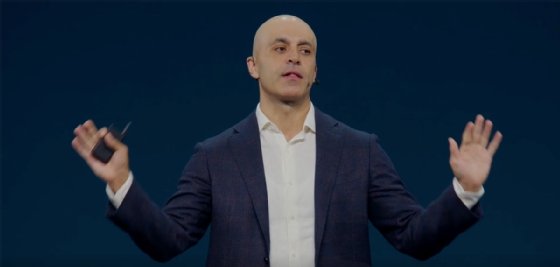
Databricks co-founder and CEO Ali Ghodsi delivers the keynote address during the vendor's Data + AI Summit user conference in San Francisco.
Beyond the Summit
After addressing context for agents with Genie Ontology and its latest array of new features, Databricks still has an opportunity to make its many data management and AI development capabilities easier for customers to operationalize in conjunction with one another, according to Ni.
"Over the last several years, Databricks has simplified the data and AI stack by unifying [capabilities] on a common foundation," he said. "As organizations move beyond platform adoption to enterprise transformation, they need proven implementation blueprints, governance models, training, and change management that reduce deployment risk and accelerate time to value."
Catanzano likewise suggested that Databricks address simplification, though rather than focus on the ease-of-use of its own platform, he advised the vendor to address the data isolation problems many enterprises struggle to overcome.
"There is still a major challenge of data silos where the data you need for an AI solution is spread out everywhere," he said. "These and other announcements move toward breaking that down with the Lakhouse being the central repository. Executing on this is not easy and likely the focus for a while."
Eric Avidon is a senior news writer for Informa TechTarget and a journalist with more than three decades of experience. He covers analytics and data management.