CIO Strategy: Page
-

 Brand Experience Team/TechTarget
AI agents know what to do -- but should they have authority to do it?
AI agents are gaining access to enterprise systems, but moving from reading data to making changes requires new rules about authority, permissions and human oversight.
By Liz Hughes • Sept. 24, 2026 -
Brand Experience Team/TechTarget
CIOs must rethink third-party risk as AI creeps into tools
AI creep is making point-in-time vendor checks less reliable. IT leaders need continuous oversight of the added AI capabilities vendors are putting in place.
By Tim Murphy • Sept. 24, 2026 -
Brand Experience Team/TechTarget
When AI has permission to act, who gives it authority to decide?
Giving AI permission to take an action is different from letting it decide when that action should occur. CIOs need explicit boundaries for when AI can act autonomously.
By Pam Baker • Sept. 24, 2026 -
Brand Experience Team/TechTarget
Capability risks rise with layoffs: What CIOs should know
Layoffs can lead to significant capability risk -- the loss of expertise and tacit knowledge. These hidden costs affect productivity, innovation and long-term efficiency.
By Andy Patrizio • Sept. 24, 2026 -
Brand Experience Team/TechTarget
Gartner sees CIOs becoming AI ‘evidence custodians’
A conventional log may not be enough. CIOs could need end-to-end evidence showing what AI did, why it was allowed and what changed as a result.
By Liz Hughes • Sept. 23, 2026 -
Brand Experience Team/TechTarget
Persistent AI memory adds another layer to enterprise data
Persistent AI memory is spreading across enterprise platforms, adding a data layer that must be mapped and validated against authoritative systems.
By James Alan Miller • Sept. 23, 2026 -
Brand Experience Team/TechTarget
ERP access control debt can turn old roles into current risk
ERP access control can drift far from the business roles and responsibilities it was designed to reflect. CIOs need to treat authorization as an ongoing governance discipline.
By Pam Baker • Sept. 23, 2026 -
 Don Fluckinger/TechTarget
Opinion // The Digital Experience
More Salesforce ICE protests at Dreamforce; buyers remain unmoved
At Dreamforce, Silicon Valley reality distortion is hard to miss as Salesforce celebrates nonprofits and NGOs inside while protesters outside demand it cut ICE ties.
By Don Fluckinger • Sept. 22, 2026 -
Brand Experience Team/TechTarget
Is AI really paying off for companies? CIOs weigh in
AI is delivering measurable value for some companies, but most are struggling to turn productivity gains into meaningful business returns.
By Tim Murphy • Sept. 22, 2026 -
Brand Experience Team/TechTarget
Opinion
AI slowdown: Do we really need it?
Don't stop AI development, but slow deployment. The risks lie in lax regulations and human misuse, showing the need for appropriate security controls, testing and human oversight.
By Nihad Hassan • Sept. 22, 2026 -
Brand Experience Team/TechTarget
Why CIOs should invest in agent harnesses
As AI agents access data and take autonomous actions, agent harnesses provide essential security and governance controls, enabling CIOs to scale AI safely across the enterprise.
By Rosa Heaton • Sept. 22, 2026 -
 Getty Images
Column // And Then There’s Reality
The quiet rise of AI technical debt
AI technical debt can hide in prompts, data, models and workflows. David Linthicum explains why CIOs need production discipline before pilots scale.
By David Linthicum • Sept. 21, 2026 -
Brand Experience Team/TechTarget
AI agent autonomy puts CIO controls to the test
As AI leaders warn capabilities are advancing faster than safeguards, CIOs face a more immediate question: how much authority to give enterprise agents.
By Liz Hughes • Sept. 18, 2026 -
Brand Experience Team/TechTarget
SMBs face AI governance reckoning
Alliant's Arun Sahu discusses why "AI psychosis" affects SMBs more than large enterprises because they lack the governance and human oversight buffers to deal with AI mistakes.
By Jim O'Donnell • Sept. 18, 2026 -
Brand Experience Team/TechTarget
Gartner warns traditional IT controls won’t keep up with AI
Autonomous AI agents have outpaced traditional IT controls. CIOs must strengthen access and accountability and build controls to stop agents before they cause damage.
By Tim Murphy • Sept. 17, 2026 -
Brand Experience Team/TechTarget
CLARITY Act stalls in Senate: What crypto uncertainty means for CIOs
A failed Senate cloture vote stalled the CLARITY Act, leaving CIOs to make digital-asset vendor, custody and contract decisions without a broader market-structure framework.
By Sean Kerner • Sept. 17, 2026 -
Brand Experience Team/TechTarget
HubSpot adds AI CRM intelligence layer, marketing AI
With AI automatically entering data into the systems of record, there remains a need for humans in the loop.
By Don Fluckinger • Sept. 16, 2026 -
Brand Experience Team/TechTarget
AI control is becoming an architecture problem for CIOs
CIOs face multiple AI control layers across orchestration, models, data, identity and governance. The challenge is understanding how those layers work together.
By James Alan Miller • Sept. 15, 2026 -
 Getty Images
Column // And Then There’s Reality
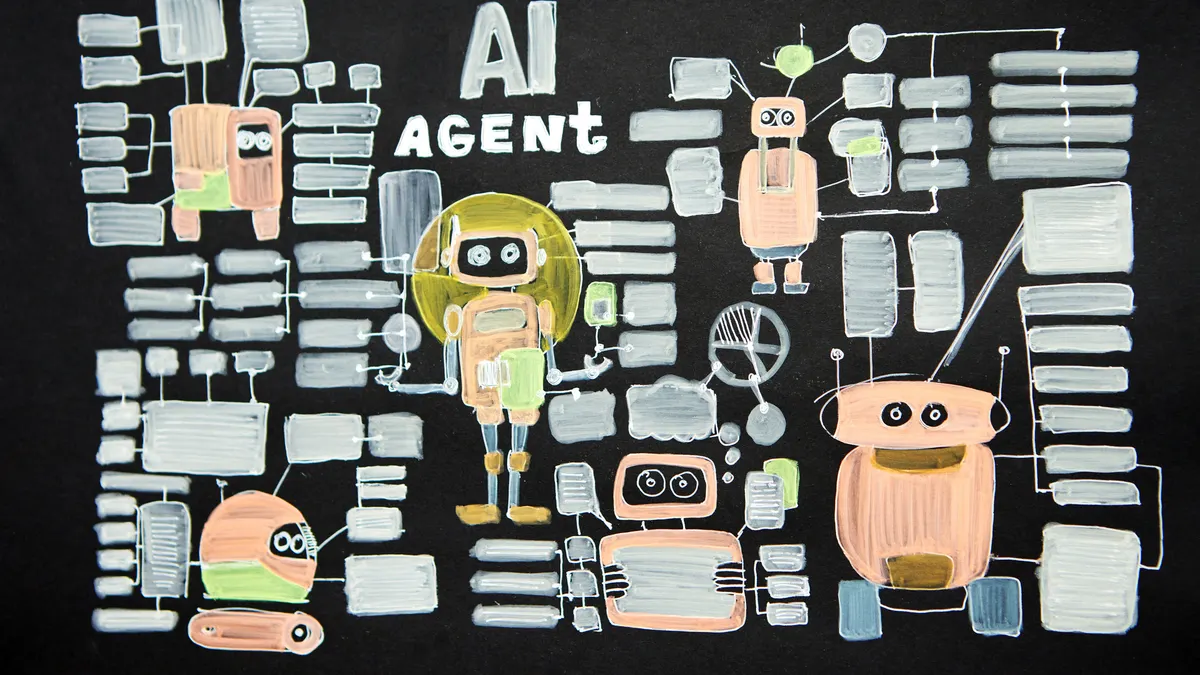
Why enterprise AI fails at the org chart, not the model layer
AI models are easy to access. Organizational authority is not. David Linthicum explains why the org chart -- not the model layer -- keeps enterprise AI from delivering.
By David Linthicum • Sept. 15, 2026 -
Brand Experience Team/TechTarget
Opinion
Private AI: Not a fix for enterprise AI issues
Private AI infrastructure secures data but doesn't solve enterprise issues. CIOs must build an orchestration layer that handles state, authorization and execution logic separately.
By Eugina Jordan • Sept. 15, 2026 -
Brand Experience Team/TechTarget
Salesforce Enterprise AI Harness latest salvo aimed at ServiceNow
Salesforce battling ServiceNow, AWS and a cast of thousands for the soul of agentic AI management.
By Don Fluckinger • Sept. 11, 2026 -
Brand Experience Team/TechTarget
Why hope is a CIO leadership skill
CIOs need to inspire teams as well as manage technology. Futurist Nikolas Badminton explains how hope can help leaders build vision, empower teams and drive action.
By Tim Murphy • Sept. 10, 2026 -
Brand Experience Team/TechTarget
Expert Advice
How to build an experience-level agreement
Properly built experience-level agreements prioritize UX over traditional metrics, focusing on business outcomes and employee productivity to enhance performance.
By Damon Garn • Sept. 8, 2026 -
Brand Experience Team/TechTarget
Expert Advice
14 need-to-know tips for digital transformation success
What separates a successful digital transformation implementation from a recipe for disaster? These 14 tips will help ensure your DX efforts result in business improvement.
By Paul Kirvan , Grant Hatchimonji • Sept. 8, 2026 -
Brand Experience Team/TechTarget
Slopsquatting explained: When AI code turns malicious
AI coding assistants are accelerating development --but they're also creating a dangerous new attack vector that security teams aren't prepared to detect.
By Sean Kerner • Sept. 4, 2026
 Previous