

NEW YORK CITY — Companies leading in AI adoption have more than the technology in place. They have the leadership, data and workforce to put it to use — and a greater focus on customers.
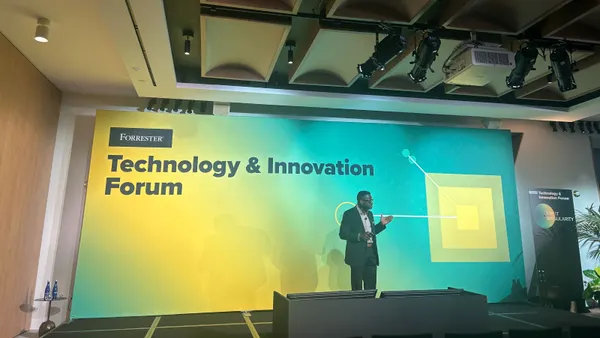
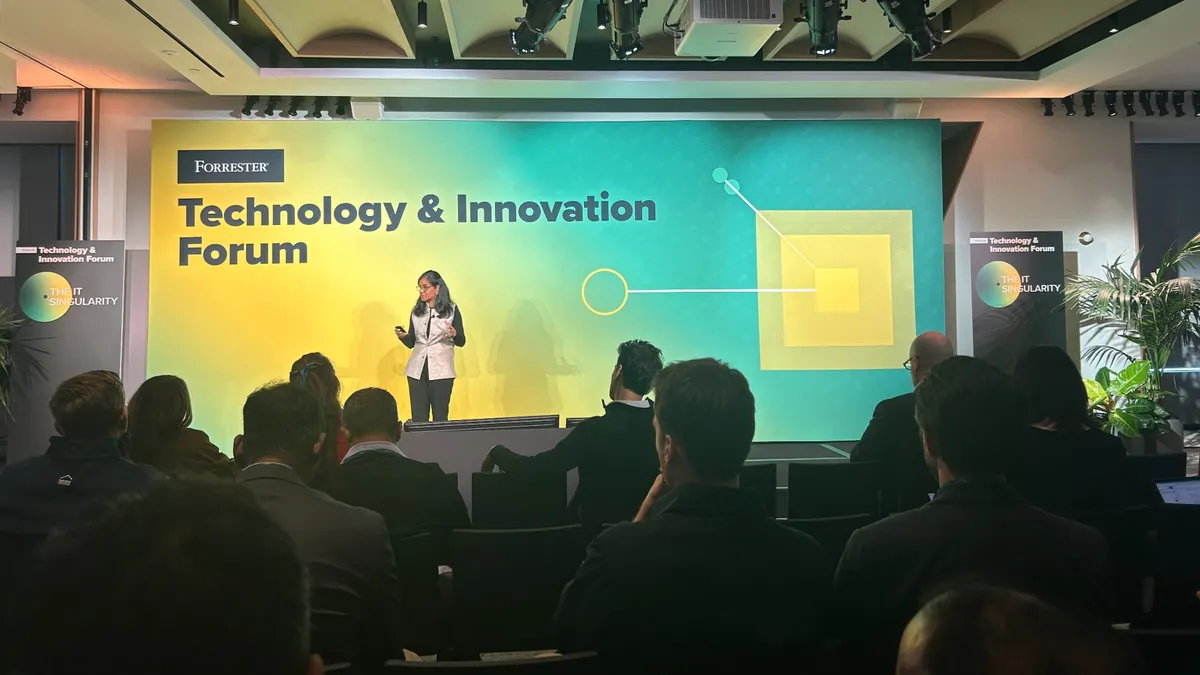
At Forrester’s Technology & Innovation Forum East in New York on Wednesday, analysts urged CIOs to prepare their organizations to scale AI. Drawing on Forrester’s April report, Accelerate Your AI Voyage, Srividya Sridharan, vice president and group director at Forrester, outlined four traits that distinguish high AI adopters: customer focus, CEO leadership, data and platform readiness, and workforce AI skills. The report draws on a survey of 1,500 AI decision-makers and company interviews.
These traits put organizational change at the center of AI adoption. That echoes a lesson from earlier technology shifts, including the internet and cloud computing, said Mark Moccia, who leads technology executive research at Forrester.
“The winners of those races reinvented work before investing substantially in the technology,” he said in his portion of the keynote.
“It’s time to look up and out towards your customer.”

Srividya Sridharan
vice president and group director, Forrester
4 traits of high AI adopters
The first trait is a focus on customers. High AI adopters are 1.3 times more likely than lower adopters to focus on customer experience, Sridharan said in her keynote talk.
What sets high AI adopters apart
Forrester's research identifies four distinguishing characteristics:
1. Customer focus: Prioritize customer experience and value.
2. CEO leadership: Establish shared goals and commit resources.
3. Data and platform readiness: Build the infrastructure and context AI needs.
4. Workforce AI skills: Invest in employee training and AI literacy.
Yet many companies measure AI’s value through internal gains. Some 76% of AI decision-makers justify investments with productivity metrics, Sridharan noted. Those metrics can help measure employee productivity, but not whether customers receive better service or more useful information.
Sridharan cited Singapore-based DBS Bank as an example of using AI to benefit customers and build trust. The bank offers personalized financial guidance, such as suggestions for reducing debt or managing retirement contributions. Customers can indicate whether those suggestions help them, giving the bank feedback on how well its AI serves their needs.
The second trait is CEO leadership. Scaling AI across the business requires teams to work toward shared goals and secure funding for needs that span departments, such as data infrastructure. CEOs can set that direction and commit resources, helping individual AI projects become part of a companywide strategy, Sridharan said.
Those investments support the third trait: data and platform readiness. Scaling AI requires more than access to structured records. AI agents also need the knowledge and context to interpret information and act within a business, she said. Companies need to prepare those foundations as they expand their AI use.
The fourth and final trait is a workforce ready to use AI. High adopters are twice as likely to ask job applicants to demonstrate AI skills, Sridharan said. They also invest in AI literacy and training for existing employees.
Forrester's measures of workforce AI readiness improved only slightly between 2024 and 2025, underscoring how much work companies still have to do to prepare employees for AI.
To assess their customer focus, Sridharan recommended that companies divide the number of AI use cases that create customer value by those aimed at internal gains, such as cost cutting. She described a 1-to-1 ratio as conservative but acceptable, while a ratio of 1.5-to-1 or higher signals a stronger customer focus.
“It’s time to look up and out towards your customer,” she said.
Tim Murphy is a reporter covering IT strategy for Informa TechTarget, with a focus on IT leadership, governance, workforce skills and AI strategy. His enterprise technology coverage has earned multiple Azbee Awards.