

Executive summary
- Gartner predicts 22% of CIO roles may vanish by 2030, but the bigger trend is transformation. CEOs want one leader overseeing all of IT, data and digital transformation -- not multiple tech chiefs.
- CIOs who claim this broader strategic role will shape business direction; those who don't risk losing it to the CFO or COO.
- Success now demands less technical coding and more strategic skills: storytelling, collaboration, change management and prompt engineering.
- A key challenge ahead: developing teams' judgment and expertise as traditional ways of building technical experience fade.
The CIO's role is changing, and they need to be prepared to move with the times.
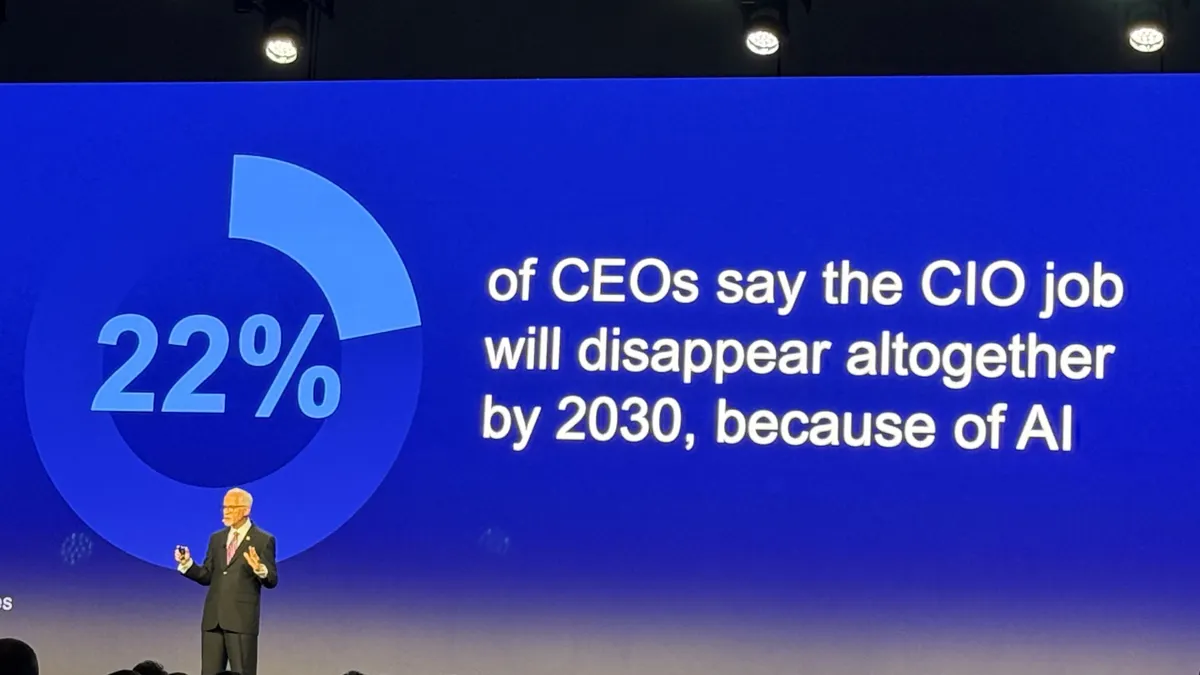
Twenty-two percent of CEOs say the CIO job will disappear completely by 2030 due to AI, according to the 2027 Gartner CEO Survey. While the role may be at risk in some instances, a job transformation is the bigger story.
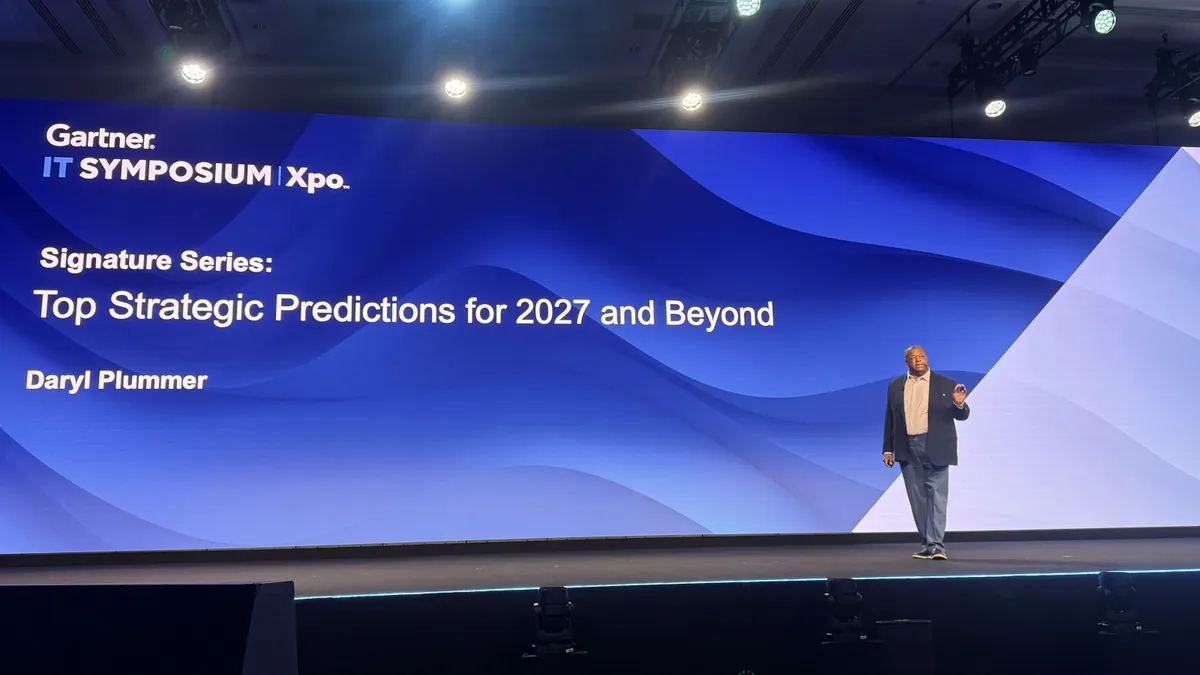
"The real story is what happens to the other 78%," said David Furlonger, vice president and analyst at Gartner, during a session at Gartner's IT Symposium in Orlando, Fla. "They aren't really thinking about whether the job survives. They're thinking about what it turns into."
Furlonger said CEOs want to consolidate all of IT, data and digital transformation under one executive leader: someone who's responsible for all of IT, operational design, digital workers and enterprise transformation initiatives.
"Over time, we've created many roles: CIOs, CTOs [chief technology officers], CEOs, chief digital officers and now chief AI officers," Furlonger said. "But many CEOs are telling us they don't want five technology chiefs."
CEOs are convinced CIOs will automatically claim that role.
"If you don't step into that space, someone else will -- the CFO, the COO, another role," Furlonger said. "CIOs who own that role will be the ones talking about how technology is driving competitive advantage -- not models, not tech roadmaps, not platforms. That's ultimately what the CEO wants from you -- not a head of technology, but a leader who can help shape the future of business."
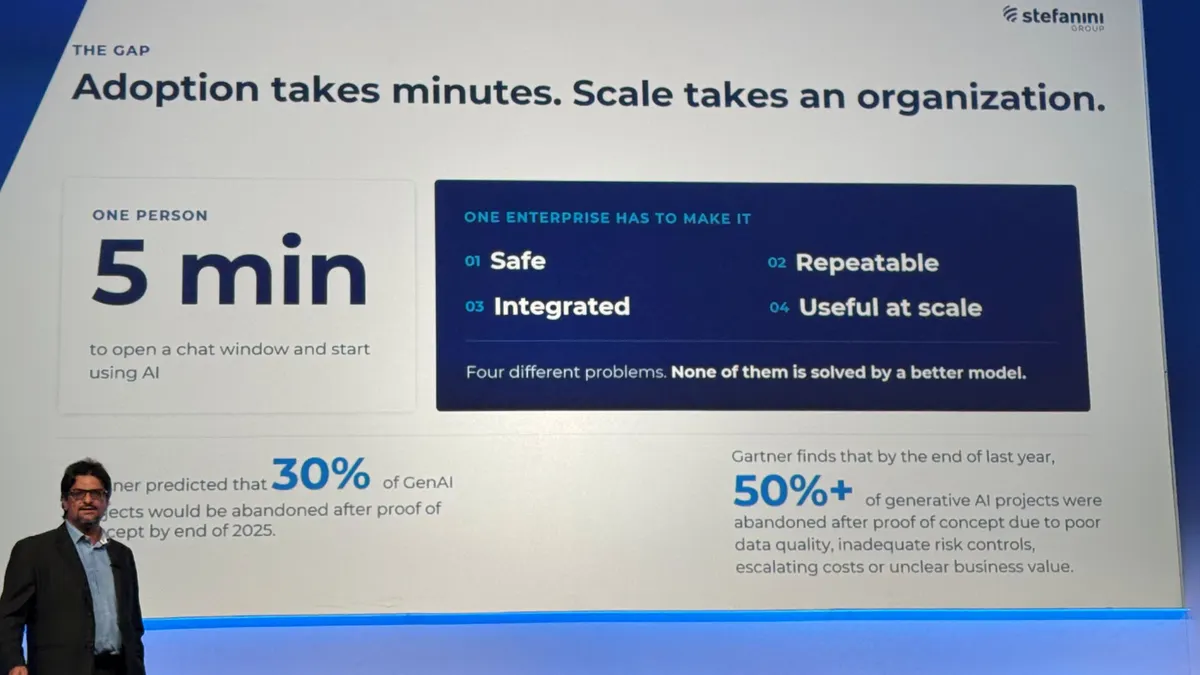
Fabio Caversan, CTO at Stefanini Group, thinks the CIO role will change but not disappear.
"That is the same as saying that developers will go away. I think the CIOs will still need to be there because when these applications get attacked and hacked, who's going to fix it?" said Caversan in an interview with TechTarget. "[But] I agree -- we created too many C-levels. You just need one guy using AI properly -- one guy with a good technical background and an open mindset."
Necessary skills for the future
Tech has always been the core of the CIO role, said Shanna Grafeld, senior principal analyst at Gartner, in an interview with TechTarget.
"But I think there's been increasing pressure on CIOs to also be business leaders," Grafeld said. "This pressure to also be a strategic executive leader, and be able to lead cross-functional teams and be able to address some of the AI anxieties? I think the ask and the amount of pressure [CIOs] are under is actually higher than ever."
In fact, 68% of IT leaders said they're struggling with the rapid pace of change required to roll out generative AI tools, according to Gartner's 2025 Assessing the Impact of Generative AI and Agentic AI in Enterprise Applications survey.
But it's not just the scope of the role that will change. It's the skillset that goes with it.
"The place I think a lot of people start when they think about the CIO role is they think about the technical skills. And yes, having a technical understanding is part of it. But for me, it's also been the humility to realize I will never be the smart person in the room if I hire well," said Michael Cato, CIO at Bowdoin College, in a conference session. "It's not really my job to understand technology better than my team does. My job is about storytelling and strategy and relationships, likely outside of IT as well."
Ryan Downing, CIO at Enterprise Business Solutions at Principal Financial Group, agrees that technology remains an important aspect of the CIO role, but said change management and adaptability are also important.
"[But] it's not traditional change management," Downing said in an interview with TechTarget. "I'm seeing real examples where when we're working through change management, we're hitting an important target and very meaningful outcomes. But now there's another target because something has changed. … Now we have even further to go. So, how do we restart that change management process and build that organizational adaptability? I think that's a really important skill set for leaders."
Another important skill? Prompt engineering.
"At the end of the day, it's all a bunch of prompts," Caversan said. "Prompt engineering is ultimately just a fancy name to know how to interact with tools [such as agentic AI and AI agent harnesses]."
Tech aside, human-centric skills are at the top of IT leader lists -- including bringing people together, driving collaboration, breaking down silos, leading and developing people.
"All of those have been really important things for us for decades, and a lot of that doesn't change. But I think for technology leaders, the important skills were those soft skills, and the technology pieces were table stakes," Downing said. "The most effective technology leaders are those who can really engage with all their stakeholders to bring together the technology to drive outcomes."
Storytelling, collaboration and connecting investment in technology to strategic outcomes are a few skills that Grafeld believes are also necessary.
"The most important right now is the ability to reach out of the technology silo and collaborate with other C-suite leaders," Grafeld said in an interview with TechTarget.
Kapil Vyas, CIO at Automation Anywhere, agrees that soft skills matter more than ever.
"Change management, AI adoption, communication and bringing people along on the journey are increasingly important," Vyas said in an interview with TechTarget. "But ultimately, the CIO's job is to translate AI into measurable business value, closing the autonomy gap and delivering real impact to the P&L."
Now-defunct skills?
IT leaders have chimed in on which skills they need more as their careers progress. Here are some skills they find they no longer need.
Memorization
One such skill IT leaders find themselves leaning less on is memorization.
"Think about mobile phones. Years ago, most of us knew dozens of phone numbers by heart. Today, we simply ask Siri to call someone. The value no longer comes from remembering information. It comes from knowing how to use it," Vyas said. "The same thing happened in IT. I used to know every server, every system and often every mailbox owner by name. We had the patience to work through a 40-minute password reset process because that was part of the job."
What replaced memorization was judgment.
"The most important skill today is challenging assumptions and deciding what should be automated, what should remain human and where the guardrails belong," Vyas said. "I used to be the person who knew where everything was. Today, I'm the person who defines the job description for the AI agent that knows where everything is and determines when it must stop and hand the work back to a human."
Coding
"I coded for 28 years and had my come-to-Jesus moment," Caversan said.
Caversan said he used to be able to write code without looking at anything, look up code when there was a bug and identify where the problem was.
"I was highly valuable in the market because of that. That's worth barely anything today," Caversan said. "[But] let's not underestimate that. Because I have a growth mindset, and I'm using that paired with these tools, I think I'm doing well. But just [coding] is not worth anything anymore."
Downing agreed.
"If you think about the actual writing of code, it's not a meaningful part of the job anymore, and certainly not a part of my job as a CIO, day in and day out," Downing said. "As we think about the workforce of the future, the ways that folks like myself developed their skills and learned -- and the experiences they gained in their career -- we need to think about how we develop the skills that people need going forward. That's a new challenge for us because the way we learn just will not exist as it has in the past."
Meghna Punhani, chief people officer at Eightfold AI, agreed that developing the next generation will be a challenge.
"Every CIO right now, when they look at their teams, needs to be thinking about what process they're going to use," Punhani said in an interview with TechTarget. "What do I need to do as a leader to help my people develop that judgment without going through that experience? Otherwise, people will just lose the opportunity."
Sarah Amsler is lead editor for editorial's Reader Engagement and Outreach team at TechTarget.