

Whether contact centers are ready or not, here come the personal agents.
Vendors are scrambling to build communications, data, authentication and authorization standards to prepare for what they expect will be an influx of Meta’s Muse, OpenAI’s Dots, Grok Bot, Gemini Spark, Claude Duet and other AI agents for personal and B2B use. But customer service leaders at the ICMI Contact Center Expo last month said they're already hitting contact centers' human-monitored channels, albeit slowly so far.
Large companies such as United Airlines, eBay, Amazon, Target, JPMorgan Chase and Charles Schwab have already restricted certain actions by unauthorized personal AI agents. Walmart, meanwhile, is taking a different approach with Agent Gateway, now in beta, which would permit authorized third-party agents to shop on behalf of customers.
But for many other B2B and B2C companies, what to do with personal agents is still under consideration.
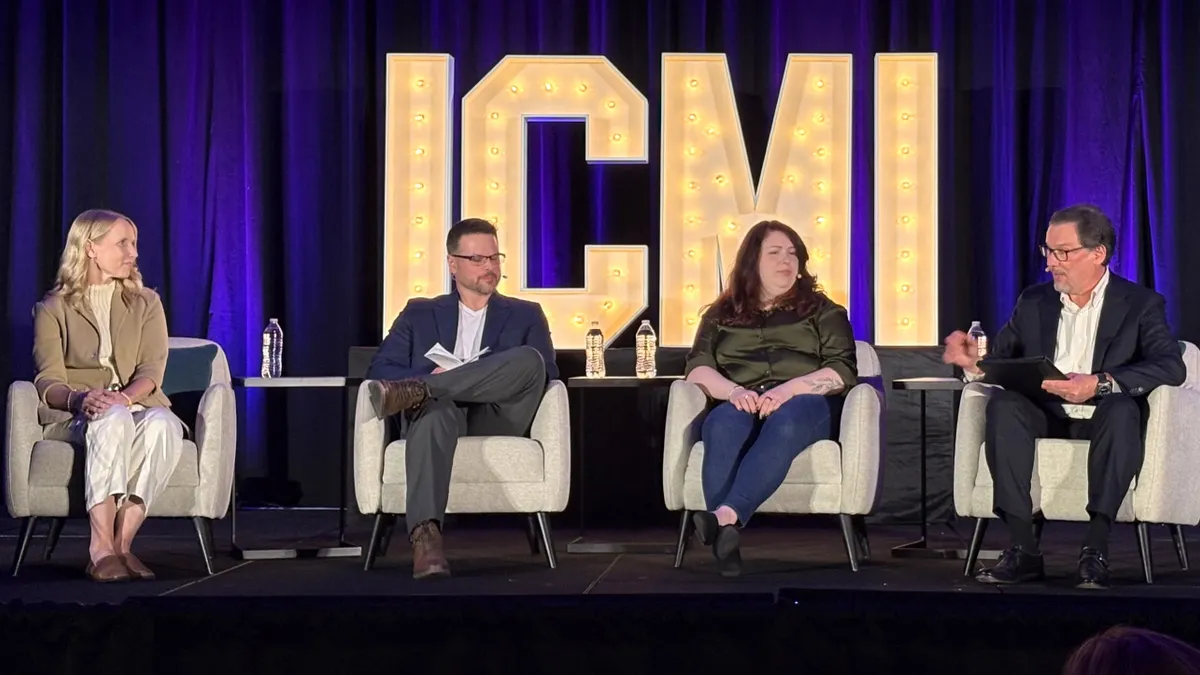
"We spent years putting automation in place and have AI tools," said ICMI co-founder Brad Cleveland, moderating a panel of contact center leaders, "and consumers are turning the tables with their AI assistants, contacting our organizations."
Amica Mutual Insurance Company has had "more than a handful" of personal agents calling in to its contact center, said Katie Knight, senior assistant vice president. The phenomenon has precipitated discussions around several different topics.
"It creates a lot of questions, particularly around customer authentication, fraud prevention, trust and even just the customer experience of what we're providing and investing in," Knight said. "As technology continues to change, we know we still have the responsibility to make transactions easy, yes, but more importantly, secure."
Personal agents pose challenges
Nightmare scenarios for contact center managers, beyond security concerns, include bot-to-bot loops. One real-life example occurred when a contact center bot got caught in a loop with another company's outbound-calling bot, said Brent Barbara, managing partner of CX technology consultancy Clearest Blue.
The contact center bot's performance was measured on calls resolved, while the other's was measured on calls made without involving a human. Before humans intervened, the two bots racked up $60,000 in costs for the two companies.
"Two machines, both hitting their numbers, and not one customer was helped," Barbara said. "Here's the lesson, and it's not about the money: Both bots had a great day by their own scorecards…when you look at your AI reports, you want to ask yourself: Are we rewarding real outcomes or just activity?"
Barbara said that personal agents are still so new, it's not clear how they will eventually appear to contact centers. Will they be calling from their own numbers? Will they spoof the owner's cell phone number?
The technology is so new that it changes week to week, and he believes that the response to these agents may differ depending on the industry vertical in which a company operates.
"Two machines, both hitting their numbers, and not one customer was helped."

Brent Barbara
managing partner, Clearest Blue
"Healthcare and finance are going to have a certain set of rules and policies; B2C and maybe retail e-commerce might have some different ones," Barbara said. "I don't think anybody has clear and concise, consistent answers on this topic. But it starts with making sure you can detect it and determine what to do with it, and then figure it out…that's where we are, the ground floor."
CX vendors build accommodations
Personal agents present a dilemma for businesses: security versus service. On one hand, a personal agent is a bot, and it's difficult to understand who is behind it. Understanding what is real vs. what is fraudulent is the prime directive. Then comes more nuanced logic — okay, the agent is authentic, but what actions is it permitted to take on behalf of a customer, and what things will a business allow it to do?
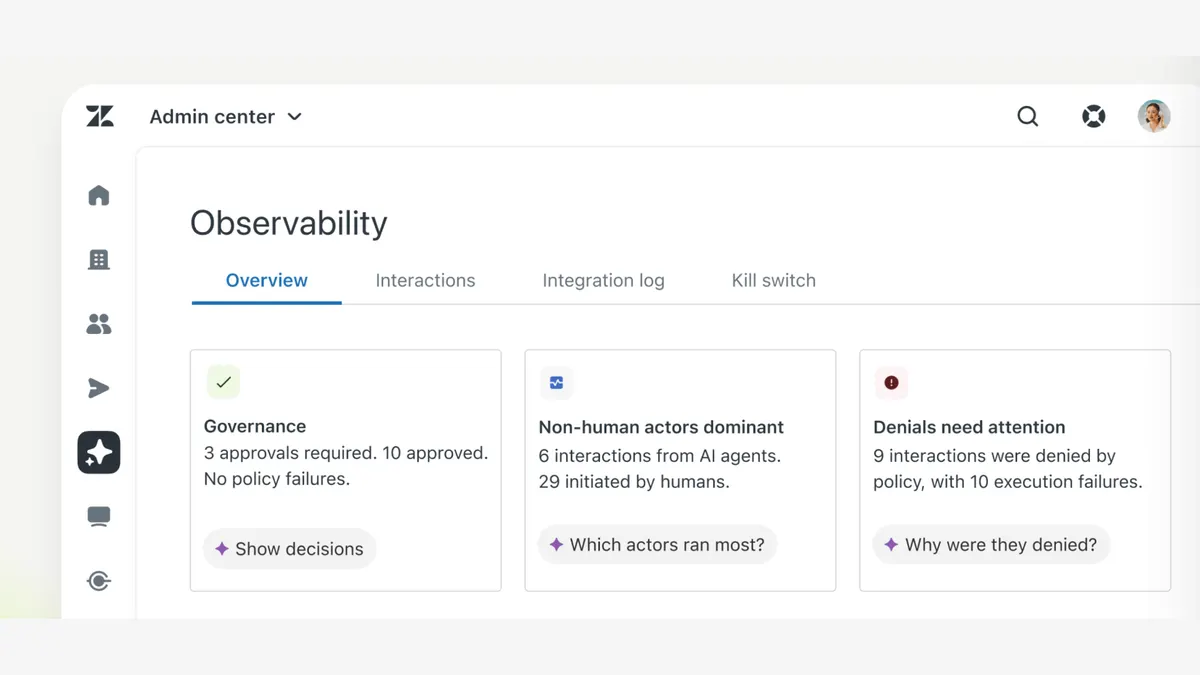
Genesys is adding features to its platform to put its users in control to make those decisions, said Mike Szilagyi, general manager, senior vice president and head of product. The company operates on the overall principle that personal agents shouldn't be outright blocked; after all, some of them do represent legitimate customers contacting customer service with legitimate needs.
"I think everybody will use personal agents," Szilagyi said. "They'll be used for simple things to start with, but eventually they'll be able to do more complex things."
Shashi Upadhyay, Zendesk president of products, engineering and AI, said that the tech industry can't take its usual passive approach — that is, waiting until a big problem happens and addressing it ad hoc — when it comes to what his company sees as a coming tsunami of personal agents. Now is the time to build the infrastructure to support — and limit — them.
"Our prediction is that, by 2030, about half the support traffic will come from personal agents," he said. "We have to become security companies. We have to become much better for [the coming time] when AI agents can completely overwhelm whatever systems we have built — because they were designed for humans."
Don Fluckinger is a seasoned B2B technology journalist with more than 30 years of experience specializing in enterprise IT, digital experience and content management. As a senior news writer at Informa TechTarget, he delivers award-winning analysis that helps IT and business leaders navigate complex technologies to enhance customer and employee experiences. Got a tip? Email him.