

Hospitality is not dead -- and it's certainly not just for the travel and restaurant industries.
As the CIO role transforms and soft skills take center stage, hospitality toward your employees as well as your customers can differentiate between an AI-led company culture and human-first.
When you think about hospitality, what do you think of? A greeting and smile upon making eye contact? An unexpected kind word or gesture that you won't forget? Something completely over the top that provides a once-in-a-lifetime experience?
It can be all of those things. But oftentimes, it's the little things that matter. One of those small things? Greet your staff each morning when you arrive to work.
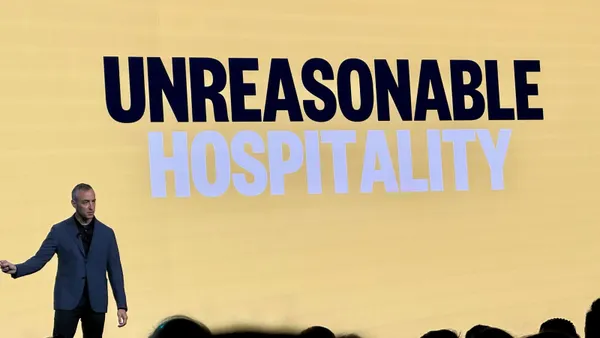
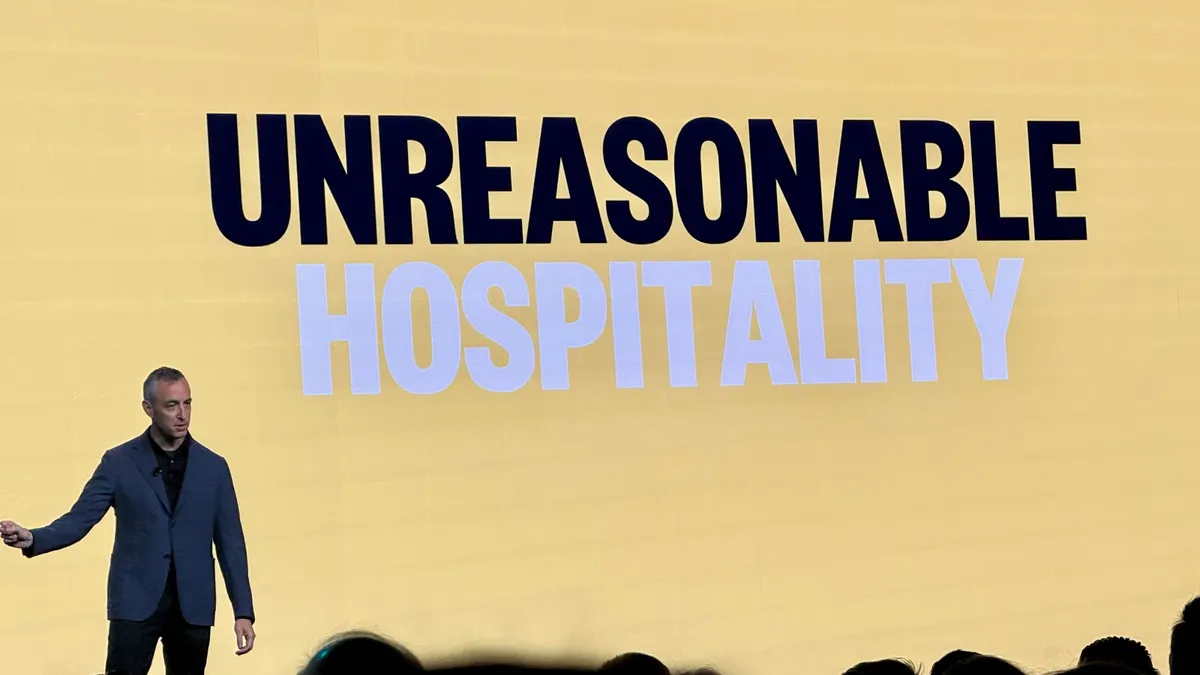
"These days I see too many people trying to get a jump on the day and skipping that all too crucial step of just taking a few minutes to acknowledge the people they work with," said Will Guidara, author of New York Times Bestseller Unreasonable Hospitality and former owner of Eleven Madison Park in New York City, in a keynote at the Gartner IT Symposium in Orlando, Fla., from Oct. 19-22.
Guidara would know about great hospitality. Under his leadership, Eleven Madison Park was named the best restaurant in the world in 2017.
Guidara said that as he travels and meets with business leaders, they're all trying to identify their competitive advantage. And most of those conversations revolve around the quality of a product or service their business offers.
"It doesn't matter how good your product or service is. … Someone is going to come in and build a better product or create a better service," Guidara said. "The only competitive advantage that exists over the long term comes through hospitality. Through being creative, consistent and generous in pursuit of relationships, because they take a long time to build. And if you build them the right way, the loyalty you'll earn will take a very long time to erode."
AI is making it easier to commoditize whatever technical edge a company has, so the differentiation has shifted to how leaders treat people.
A couple of bigger shows of hospitality include gift-giving and creating a tradition for your team.
You're probably thinking, easy, right? We've got company swag locked away in a closet, and I can just give that to my team at a company potluck.
Yeah … no. Both are terrible ideas.
Gifts should be meaningful. Gifts should say, I see you and hear you. It should be an unexpected, thoughtful surprise that your team remembers. Gifting company swag shows you've put next to no thought into a gift and you're scrambling to save face. But coupling that with a potluck? Double whammy. It shows you haven't put a single thought into a special event, either and aren't really thinking about your team's needs.
When I was right out of college working my first newspaper job, we had two yearly traditions: a company barbecue at a B&B one of our colleagues ran, and a catered Christmas party at a local country club. Both events were times when we got to unwind and talk to each other about anything and everything but work. The events brought us together as a team.
And one of the things my newspaper group did every year was give us company swag for Christmas: A fleece. A lunch bag. A scarf. A jacket. But our leaders also coupled those items with other small tokens of appreciation: An ornament. A coffee gift card. Chocolates. So, if you want to do company swag? Go for it! But don't stop there, because it might backfire on you.
How could it backfire? I'm glad you asked.
One year at our annual Christmas party we did a Yankee Swap -- but the variety where you rummage through your house to find items in good condition to regift. The usual suspects came up as gifts: Candles. Games. The elusive bottle of unopened wine found in the back of the pantry. And then the mother of all gifts came up: a gift bag with a fleece, lunch bag and scarf.
All with the company logo. Swag that had been gifted to us in years prior.
While everyone got a good laugh over the gift, the company never gave us any swag again.
Thoughtfulness matters.
That swag story is a reminder that unreasonable hospitality isn't about the size of the gesture -- it's about the thought behind it. And thought, unlike a budget, is free.
If gifts and special events aren't in your budget, there are plenty of other ways to show hospitality to your employees. And Guidara covers all of this and more in his book:
- Sing your team's praises. Do this with both your team and your own managers. This isn't about making yourself look good. It's about uplifting your team and giving them credit where credit is due. It shows them they are seen and appreciated.
- Give your team ownership of projects. While this may include assigning out some tasks, it also means letting them approach you with projects they want to tackle on their own. It keeps them engaged and demonstrates trust.
- Communicate and really get to know your team. This is the only way trust can be built. Communication and team building are equally important as the everyday work your team performs and can increase your productivity in the end.
- Provide feedback. Criticism or praise, it's a leader's job to give their team feedback. But people need to hear more about what they did well, not what they need to do better. If you can't find more compliments to deliver than criticism, that's a failure in leadership.
- Hold yourself accountable publicly. This strengthens ties between you and your team. If you're vulnerable and willing to criticize yourself, it shows you are not perfect and just as fallible as they are. It shows you are human. And it goes a long way toward building trust.
- Include your team in identifying and setting goals. This is engaging and provides them with the opportunity to set a direction for the whole team. While this has historically been a leadership role, including the entire team often offers perspectives you might not have considered.
- Make sure people who are trying and working hard have what they need to succeed. Team members often throw in the towel if they feel they're not being seen and are set up to fail.
- Listen to every idea. How you handle this will dictate how your team chooses to contribute in the future. If you're dismissive, those contributions are likely to fall off.
As AI takes on more technical tasks, CIOs should focus on human relationships. At the end of the day, it's relationships that matter.
Demonstrate that unreasonable hospitality with your employees.
Sarah Amsler is lead editor for editorial's Reader Engagement and Outreach team at TechTarget.