Software value metrics often start in the admin console. That makes sense. Usage data can show who logged in, which features they touched and whether adoption changed at all.
But usage is only the first question. High use can be misleading.
A tool might be used all day because the process is clumsy, not because the software is valuable. Another tool might be used less often but still matter because it removes a painful step.
That value might show up in a finance team that gets through month-end reconciliation faster. It might show up when planners stop arguing over which report has the right number. Or it might show up in HR, where fewer managers must ask the same basic question before they can do the work. The point is not only whether people used the software. The point is what changed because they used it.
A software value review should start with usage, but it should not stop there. The enterprise needs outcome measures tied to the work the software was bought to improve.
Value often appears outside the application
Enterprise software rarely creates value in isolation. A system might support a process that crosses other systems, teams, data sources and approval paths. A customer service tool might depend on CRM data, knowledge content, communications channels and billing visibility. An HR tool might depend on manager behavior, employee data, payroll rules and reporting workflows. An ERP workflow could depend on supplier data, finance controls, inventory accuracy and integrations with adjacent systems.
That makes software value harder to see from one admin console.
A feature might be used inside the application, but the real value could be fewer errors later in the process. A workflow might look slow inside one tool because it is waiting on a dependency elsewhere. A reporting feature might appear valuable because users open it often, but the real test is whether it improves planning, service, compliance or financial decisions.
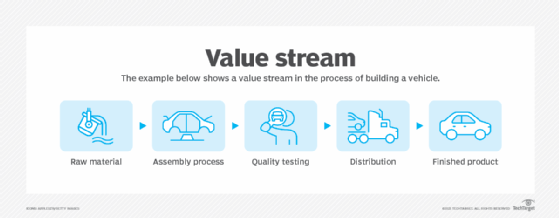
Value stream analysis can help teams connect software activity to the larger flow of work and the outcomes the business wants to improve.
This is where value stream management can help as a way of thinking, even if the organization does not buy a dedicated tool. The point is to follow the flow of work, not just the clicks inside one application.
Where does the work start? Which systems does it touch? Where does it wait? Where do users add manual steps? Where does the customer, employee, supplier or finance team feel the result?
Those questions move the review from software activity to business value.
Software reviews need process owners
Software reviews often involve IT, procurement, finance and application owners. They might also connect to application lifecycle management because value does not stop at deployment.
They should also involve process owners.
Each IT stakeholder brings unique insights: IT understands the system. Procurement is familiar with the contract. Finance knows the associated costs. Software asset management teams are aware of the licensing situation. Application portfolio management teams can identify redundancy and assess risk.
But process owners know whether the work changed.
They can say whether the tool reduced manual steps, improved visibility, simplified approvals, sped up service, reduced errors or created new workarounds. They can also explain why a low-use tool remains essential or why a high-use tool still frustrates users.
That does not mean every software value review needs a large committee. It means software value cannot be judged only from an admin console.
A practical review should connect usage data to workflow evidence. That might include support tickets, process cycle time, error rates, training questions, manual workarounds, user feedback, duplicate-tool use, report exports, escalation patterns or customer and employee experience data.
Evidence to include in a software value review
A software value review should combine usage data with evidence that shows whether the work actually improved.
Useful evidence can include the following:
Usage data by team, role, feature or workflow.
Support tickets tied to the application or process.
Process cycle time before and after adoption.
Manual workarounds, spreadsheet exports or duplicate data entry.
Error rates, rework or correction patterns.
User feedback from managers, admins and frontline workers.
Customer, employee or supplier experience data.
Training questions and help desk requests.
Contract cost, license use and renewal timing.
Evidence that old tools or processes were retired.
The goal is to see whether software changed the work, not only whether people touched the tool.
Activity needs workflow evidence
Usage data is evidence, but it needs to be paired with workflow evidence.
That evidence can come from several places. Support tickets can reveal recurring confusion. Process-cycle data can indicate whether work moves faster. Error rates can show whether data entry or approvals improved. Training questions can show where users are stuck. Manual workarounds can show where the system does not fit the process. Customer and employee feedback can show whether the experience improved.
A software review should also separate different types of use.
Required use is different from chosen use. Occasional high-value use is different from daily low-value activity. Exploration is different from dependency. Workaround use is different from productive use.
The more clearly teams separate those patterns, the better they can decide what to keep, improve, consolidate or retire.
This is also where IT operations metrics that deliver real value matter. Technical metrics should help teams understand the user and business effect of software, not only whether the system is available or busy.
Outcome measures should match the business case
A better review must answer the basic question: Did the software improve the work?
The evidence might be boring. Fewer duplicate steps. Fewer repeated tickets. Faster approvals. A report people trust. One less shadow process. Less risk sitting in someone's spreadsheet.
That is enough. The review does not need every possible metric. It needs the ones that match why the software was bought.
Those are harder questions. They are also the questions that matter.
Software value is not proven by the fact that people use a system. It is proven when the system changes work in a way the business can defend.
That means the measures should match the original business case.
The enterprise should count usage. Then it should ask what the usage is worth.
If the software was purchased to reduce manual work, the review should look for fewer manual steps. If it was implemented to improve customer service, the review should look at customer outcomes, escalation patterns and service consistency. If it was bought to improve compliance, the review should look at auditability, policy enforcement and exception reduction. If it was acquired to consolidate tools, the review should ask whether the old tools were actually retired.
The outcome does not have to be perfect. But it must be named.
Value reviews should guide decisions
The purpose of a software value review is not to produce a prettier dashboard. It is to make a decision.
Keep the software as is. Improve the workflow. Retrain users. Reconfigure the system. Consolidate a duplicate tool. Renegotiate the contract. Retire a low-value application. Invest more in an essential process. Revisit the business case because the work changed.
That requires a review rhythm. A value review should not happen only at renewal. By then, the enterprise might have too little time to understand whether the software is working or too much political pressure to defend a decision already made.
The better pattern is periodic review of important applications, workflows and software categories. Start with expensive platforms, heavily used applications, tools with low adoption, systems that support regulated work and software that spans multiple business functions.
The enterprise should count usage. Then it should ask what the usage is worth.
Outcome measures to pair with usage metrics
Usage metrics are more useful when paired with outcome measures that reflect the software's purpose.
Consider pairing usage with the following:
Cycle time for the workflow the software supports.
Number of manual steps removed.
Reduction in support tickets or repeated user questions.
Lower error, rework or reconciliation rates.
Faster approvals or handoffs.
Higher customer, employee or supplier satisfaction.
Better compliance evidence or fewer exceptions.
Fewer duplicate tools or shadow processes.
Lower cost per completed workflow.
Clear retirement of the old process the software was meant to replace.
The right measure depends on the business case. A software value review should test the reason the software exists.
James Alan Miller is a veteran technology editor and writer who leads Informa TechTarget's Enterprise Software group. He oversees coverage of ERP & Supply Chain, HR Software, Customer Experience, Communications & Collaboration and End-User Computing topics.