elenabs/istock via getty images
Athenahealth uses Health Tech Ecosystem to unify patient experience
A step forward in its Health Tech Ecosystem pledge, athenahealth has partnered with b.well to let patients lead their health data sharing through a QR code.

When athenahealth and b.well partnered to enable patient-led data sharing earlier this year, they didn't entirely start from scratch, according to Sam Lambson, the company's VP of product. In fact, the system's design -- which lets patients share health data through a QR code -- is inspired by the patients athenahealth and its customers serve.
"For patients, maybe they could upload a document in the patient portal, or they could bring a CD or a piece of paper to an appointment, which the doctor would then have to import somehow," Lambson said in a recent interview, recalling the early aughts of healthcare's digital transformation.
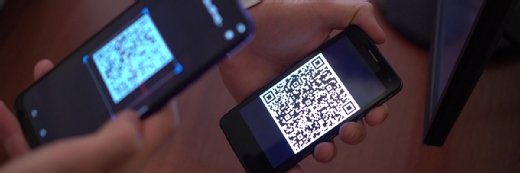
Those days might be over, with a new system from athenahealth and b.well, a FHIR-based platform that lets patients access and share their information all in one spot, aiming to streamline the data-sharing process. Patients can pull all their health information, including from non-athena EHRs and consumer-facing apps, into the b.well platform to generate a QR code.
Clinicians can scan the QR code using technology already embedded in athenahealth's system, and the information will be integrated in a usable way.
"The QR code is similar to patients bringing a bag full of papers to an appointment," Lambson said. "But we can do a lot more with that information than we could do with those papers," he added.
Making headway in CMS Health Tech Ecosystem pledge
The system was launched earlier this year as a part of athena and b.well's participation in the Centers for Medicare & Medicaid Services (CMS) Health Tech Ecosystem.
Announced last summer, the ecosystem calls for an interoperability framework for health IT developers and an initiative to "Kill the Clipboard" and promote a unified digital patient experience.
This latest partnership with b.well is a big step toward fulfilling the aims of the Kill the Clipboard pledge.
But, perhaps more importantly, Lambson said it's a big step in proving exactly what's possible in the digital patient engagement space.
"What we're trying to do with b.well and through the health tech initiative is to try to showcase the art of the possible," he said. "We wanted to be sure that the market understands what's possible with a cloud-based EHR working with independent, third-party, patient-oriented applications to improve the flow of information between doctors and patients."
That's exciting work, Lambson added, considering athenahealth's longstanding commitment to unifying the digital patient experience.
"Patients live in a world where they see multiple doctors, especially the Medicare population," Lambson said, noting that the typical Medicare beneficiary visits around four different facilities and seven different doctors in a year. That list grows longer if the patient has one or more chronic diseases.
"In that world, the ability to get your data and for your data to be available to your doctors wherever you go is very siloed. It's not always easy to have the best experience," he added.
This latest partnership with b.well is a step in the right direction, but Lambson noted that there's still more progress to be made, especially as more consumer-facing apps and AI chatbots proliferate the market.
Assessing the risk for a deeper digital divide
Although the CMS Health Tech Ecosystem -- and the innovations that have already come out of it -- have been championed by many in the medical industry, there are some concerns about a deepening digital divide.
After all, using patient-facing technology to streamline the healthcare experience requires patients to own the technology and know how to use it. Some in the industry are worried that pushes for deeper adoption of patient-facing tools will further divide the digital haves and have-nots.
Lambson said those fears are valid, but not top-of-mind for him. Healthcare organizations should always be ready to meet patients where they are, perhaps offering text message outreach instead of smartphone apps, or even providing human assistance where applicable.
"However, there has been a really wide engagement when it comes to the modality of the smartphone, especially."
Indeed, smartphone ownership is up to 91% nationwide, according to 2025 data from the Pew Research Center. That includes 78% of adults over age 65, a population many in the industry fear would be reluctant to adopt health IT.
According to Lambson, the industry shouldn't be as concerned about how patients will use technology.
"In terms of the digital divide, I see it more as the digital divide between healthcare providers," he said.
Long-term care facilities and skilled nursing facilities (SNFs), in particular, don't have the same access to health IT compared to academic medical centers and even primary care providers.
That's because these facilities were initially left out of the HITECH Act, which prompted healthcare's digital transformation back in 2009. Specifically, HITECH established the meaningful use program, a stimulus package that paid healthcare organizations for adopting and using EHRs and related technologies.
Consequently, long-term care facilities and SNFs are behind their peers in terms of health IT adoption. It's that disparity that Lambson fears will hamper the digital patient experience.
A patient might have a great digital experience with their primary care provider, he offered. But if that patient has a big surgery or procedure, they might end up in a SNF or post-acute care facility. Those types of organizations won't have as sophisticated technologies, which could leave the patient in the dark when they're used to transparency.
Health technology equity issues aside, Lambson said he remains optimistic about where athenahealth and other participants in the Health Tech Ecosystem are headed.
"This is just the beginning -- it's not the end of where we're going," he concluded. "Demonstrating that a patient has the power to collect and bring their own information is a really important psychological hurdle that we've overcome through this initiative."
Correction: A previous version of this article misstated the name of the Pew Research Center.
Sara Heath has reported news related to patient engagement and health equity since 2015.
Dig Deeper on Patient data access
-
![]()
B.well launches CMS aligned network with health systems, tech companies
By: Anuja Vaidya
-
![]()
How health systems are tackling 'Kill the Clipboard' obstacles
-
![]()
AI features, EHR integration in the HIMSS26 spotlight
By: Anuja Vaidya
-
![]()
Clover Health becomes first payer to go live on CMS aligned network
By: Jill Hughes