Biomemory's Catalog buy speeds DNA data storage development
Biomemory's acquisition of Catalog Technologies gives it key patents and infrastructure. Will it be enough to make DNA data storage commercially viable for enterprises?
The acquisition of one DNA data storage specialist by another this week pushes the technology one step closer to becoming a new, potentially cheaper and longer-lasting cold storage option for archival data than magnetic tape.
This week, French startup Biomemory acquired Catalog, a Boston, Massachusetts-based startup. Both companies work on DNA-based data storage, which encodes digital information into synthetic DNA sourced from bacteria, written and edited using enzymes.
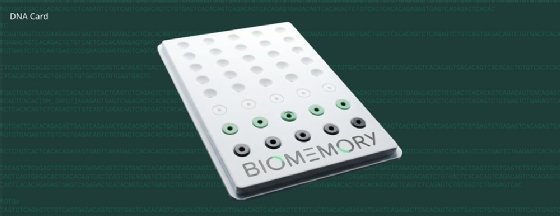
Catalog was the first to build industrial machines for writing DNA data, and has registered patents for its approach to searching for data in DNA storage systems. Biomemory, meanwhile, has been developing DNA data storage cartridges that can slot into existing data storage equipment and be used with existing software.
"On the Biomemory side we are [working] toward rackable equipment that fits into the data center in terms of form factor," said Olivier Lauvray, vice president of industrialization and partnerships at Biomemory.
Since the beginning, we have been abstracting the DNA world from the IT data center, so a customer would see just a software interface that is also used for other kinds of storage media, like hard disk drives, tapes or SSDs."
With this acquisition, Biomemory obtained high-speed, multi-layer 3D printers, key experts from Catalog Technologies and its Boston office. Catalog's patents include one that describes a parallel search method to increase read speeds across multiple DNA cards at once.
Biomemory aspires to be the first company launching commercial products, including 3D printers and DNA storage cards, for data center use. The medium could serve as an alternative to magnetic tape drives, which currently lead the market for cold storage, if Biomemory's planned commercial product reaches production before other competing long-term storage methods -- such as holographic storage.
The DNA Card is one of Biomemory’s planned products. This is where digital information is represented by a sequence of DNA nucleotides held in each well.
"Biomemory has developed a complete qualification [and] industrialization process -- end to end, software, hardware, everything that is allowing us to build the first commercial products," Lauvray said.
It will take roughly a year to take advantage of all the new resources from the Catalog acquisition, and two to three years to get its printers and DNA cards into production for purchase by enterprises, according to Lauvray. However, by next year, Biomemory plans to build and operate its own data centers for customer use as a service. The acquisition of Catalog has moved that time frame up by about six months, Lauvray said.
The uphill battle for DNA data storage
There are still several challenges ahead for Biomemory before it can ship a commercially viable product or service, according to Brent Ellis, principal analyst at Forrester Research.
The first challenge is the potential market for DNA data storage, Ellis said.
"[The Catalog acquisition is] obviously a good thing for Biomemory. It has one less competitor in the market, and it assumes that particular competitor's assets," Ellis said. "But a consolidation within the market before there is a healthy market, says to me that the market is very, very narrow."
Most enterprise organizations do not have a use for the kind of very long-term data persistence DNA data storage could offer, he said.
"If anything, after a certain amount of time, having data around is a liability," he said.
DNA data storage also has practical challenges, such as much slower read/write speeds compared to competing long-term archival storage methods, the need for specialized equipment and yet-to-be-made breakthroughs for scaling.
"It is an uphill battle, and it will serve a very specific use case," Ellis said. "If Biomemory gets there faster than, say, HoloMem, as far as commercialization, then maybe that use case could be monetized."
HoloMem is a UK startup developing holographic data storage that is commercially feasible for enterprise data centers. It's also positioned for long-term archival storage, but instead of using biochemistry to create blocks of DNA molecules that stand in for digital bits, holographic storage works by imprinting data into a polymer film, crystal, glass or other material using a laser.
"I just think that there are a number of challenges that Biomemory runs into, and they end up sort of competing for the same market that some of the other vendors … are competing for, but it has a longer runway to get there," Ellis said.
DNA storage is also orders of magnitude less dense than holographic storage, whereas HoloMem and competing vendors are already in the terabyte range, Ellis said.
Ellis isn't alone in his skepticism -- a Storage Networking Industry Association report from 2025 expressed similar doubts about the commercialization of DNA data storage before the end of this decade.
Where DNA data storage has an edge
While Ellis said he was skeptical of the commercialization timeline that Biomemory is presenting, the technology still has interesting potential benefits, he said.
One of the key motivations of selecting DNA is that until there are no humans anymore on Earth, we will probably have machines to read DNA.
Olivier Lauvray VP of industrialization and partnerships, Biomemory
If one side of a DNA strand is damaged, because of the way DNA is structured, there will still be a pair of complementary bases that can be used to restructure the data, for example.
Furthermore, while magnetic tape has a lifespan of around 20 years before it starts degrading, and holographic storage devices have a lifespan of up to 50 years, Biomemory's DNA cards are designed to store data for up to 150 years.
"One of the key motivations of selecting DNA is that until there are no humans anymore on Earth, we will probably have machines to read DNA," he said. "[For] other technologies, it is difficult to predict that there will be a machine to read the data 50, 150 years from now -- that's one of the challenges that the industry is already facing for magnetic tapes for every generation, even for old computers."
Biomemory is working toward rack-mounted DNA storage systems designed for data center use.
DNA data storage is progressively improving in performance and capacity, while Lauvray predicted potential cost savings of 10 times lower capital expenditures for DNA storage compared to 100 petabytes of magnetic tape.
Part of this cost savings comes from how Biomemory produces DNA blocks. Instead of following the traditional base-by-base synthesis, where a DNA strand is built one nucleotide at a time, Biomemory assembles pre-produced molecules in DNA blocks.
"Because of that," Lauvray said, "it's faster and cheaper."
Alexander Gillis is a Technical Writer and Editor at Informa TechTarget, with more than 8 years of experience writing about technology.