
Getty Images/iStockphoto
Space-based data centers: Edge computing in space
Space-based data centers, which enable edge computing in space, have the potential to revolutionize data management by reducing latency and optimizing satellite communications.

- Brien Posey
-
Enterprise Strategy Group
Intelligence and advice powered by decades of global expertise and comprehensive coverage of the tech markets.
As the demand for computing power continues to surge, the traditional landscape of data centers is undergoing a significant evolution. With land becoming increasingly scarce and environmental concerns rising, companies are considering deploying data centers in unconventional locations, such as space, which is gaining traction.
This article explores the innovative realm of edge computing in space, highlighting the potential benefits of space-based data centers that companies should consider. From reducing latency and optimizing satellite communications to harnessing limitless solar energy, the shift toward orbital data centers could revolutionize the approach to data management and sustainability in the digital age.
Uses for edge computing in space
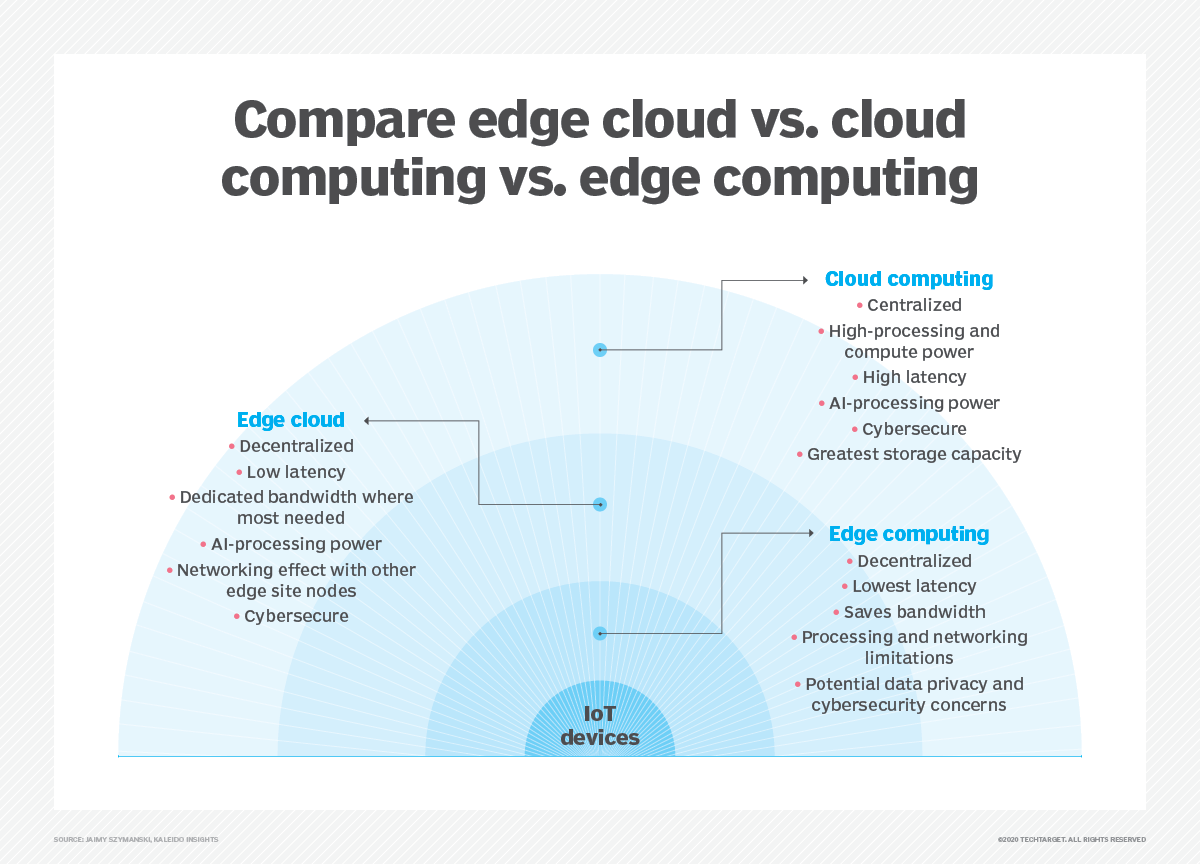
One of the major concerns associated with space-based data centers is latency. A data center placed in geosynchronous orbit would be positioned approximately 22,000 miles above the Earth's surface. At that distance, considerable latency would be associated with transmissions to and from Earth. However, an orbital data center could efficiently act as an edge computing platform, handling computational tasks for other space-based resources.
For example, many satellites equipped with imaging capabilities do not actually transmit images to Earth. Instead, such satellites often send large, raw packet streams of recorded data to Earth. That data must then be processed and filtered once it reaches transmitters on Earth, requiring a significant amount of bandwidth and latency.
As an alternative, an imaging satellite could conceivably send its imaging data to an orbital data center where the data is converted into imagery before being sent to Earth, saving both time and bandwidth. If the orbital data center can run AI workloads, then satellite imagery can be examined before transmission. That way, only relevant images are sent to Earth and other images are discarded. For example, if a satellite is designed to detect wildfires, an AI-capable, orbital server could be trained to analyze images for signs of fire and transmit only those images to Earth.
It's also conceivable that companies such as SpaceX could benefit from having access to an orbital data center. Normally, Starlink satellites communicate with one another using laser links. If the Starlink satellites had access to an orbital data center, it could theoretically act as a communications hub. By doing so, the data center can optimize Starlink traffic, make informed routing decisions, and buffer and reroute traffic during outages.
A space-based data center can also be used for satellite traffic control. Imagine a situation where satellites actively report their positions to a centralized data center. Such a data center could calculate the orbits for each satellite and predict collisions weeks in advance, allowing them to be avoided. Such a resource could also track the positions of known space junk, which poses a significant threat to satellites.
Why do we need space-based data centers?
It might be tempting to dismiss off-planet disaster recovery services as a one-off use case. However, space-based data centers can potentially address several problems associated with terrestrial data centers.
One of the most significant problems that an orbital data center can solve is its ability to generate enough power. According to the Penn State Institute of Energy and the Environment, "In 2023, data centers consumed 4.4% of U.S. electricity -- a number that could triple by 2028. AI's rapid expansion also drives higher water usage, emissions, and e-waste, raising urgent sustainability concerns."
A space-based data center could efficiently address these problems by harnessing a nearly infinite supply of clean solar energy. A data center in geosynchronous orbit would receive sunlight 24 hours a day, and an attached solar array could conceivably generate multiple gigawatts of power.
Starcloud, a leader in space-based data centers, reports that silicon-based solar cells can be priced as low as $0.03 per watt. These cells are more cost-effective than similar solar farms on Earth because they have a higher capacity factor and can generate peak power more efficiently in space.
On Earth, a significant portion of the power consumed within a data center is used for cooling. In space, however, IT resources can be cooled passively using radiators, such as those found on the Space Shuttle or the International Space Station. This means most of the power generated by a solar array can be used to power IT workloads instead of ancillary tasks, such as cooling.
Additionally, space-based data centers can be constructed in a modular manner, enabling easy scaling by linking new modules and deorbiting older, obsolete ones. There are two key reasons why this modularity is crucial:
- Modularity enables a space-based data center to have a significantly longer lifespan than would be possible if the data center were launched as a single unit.
- Modularity enables the data center to grow on an as-needed basis. In space, a data center will not face constraints related to the availability of real estate, nor will it have adverse effects on a local community, unlike an Earth-based data center construction project.
Are space-based data centers practical?
Space is a harsh environment, and radiation has historically made it difficult for computers to function properly. However, hardened digital systems have been used in space for decades, dating back to the Space Shuttle in the early 1980s. More recently, a company called Lonestar Data successfully demonstrated its ability to transmit digital documents to a lander en route to the moon -- the Intuitive Machines Odysseus IM-1 mission -- and then transmit those same documents back to Earth.
While a simple document transfer might not initially seem impressive, the test proves that it is possible to send, store and receive files without the data being corrupted by radiation. Lonestar Data eventually hopes to build a series of data centers in space, as well as on the moon. The company states that it "plans to offer off-planet disaster recovery services for commercial customers." Space-based data centers are currently in an experimental phase, but it might not be long before they become a common object in space.
Brien Posey is a former 22-time Microsoft MVP and a commercial astronaut candidate. In his more than 30 years in IT, he has served as a lead network engineer for the U.S. Department of Defense and a network administrator for some of the largest insurance companies in America.