Nemours Children's Health scales hospital-at-home as an operating model
Through its Advanced Care at Home program, Nemours Children's Health built an Epic-integrated operating model to coordinate workflows, expand capacity and support care delivery.
Since 1936, Nemours Children's Health has provided pediatric healthcare, research and education to children and families. Today, Nemours has more than 70 specialty, primary and urgent care facilities in Delaware, Florida, Pennsylvania and New Jersey. It is reimagining how to deliver pediatric healthcare for better health outcomes, with the belief that nearly 80% of what affects a child's health occurs in their home, school and community.
As hospitals and healthcare organizations across the U.S. face rising costs, staffing pressures and demand for capacity, hospital-at-home programs are evolving into enterprise-scale distributed care models. That shift requires healthcare providers to coordinate remote monitoring, clinical workflows, escalation processes, scheduling and patient engagement across integrated technology platforms. Nemours Children's approached Advanced Care at Home (ACaH) not as a standalone telehealth initiative, but as a coordinated care delivery model integrated into enterprise workflows, operational oversight and its existing Epic electronic health record (EHR) infrastructure.
For Nemours, hospital-at-home became less of a telehealth service and more of a distributed operating model requiring centralized workflow coordination, operational accountability and enterprise-wide visibility.
Through its ACaH program, Nemours Children's extends certain pediatric care, monitoring and recovery services into patients' homes through remote monitoring, virtual visits, care coordination and integrated clinical workflows.
"Every ACaH care plan we build is centered on the individual child and family," said Christopher Beaty, Nemours Children's Health's vice president of Operational Innovation. "The process starts prior to discharge, when an inpatient or outpatient specialty team identifies a child who is medically stable but still needs close oversight." Families are then onboarded into the program through training, remote monitoring setup and access to the organization's MyChart-based communication and support workflows.
With video conference technology, in-home patients receive virtual nursing care tailored to their clinical needs. Once a patient goes home, Nemours Children's coordinates virtual nursing visits, physician oversight, remote monitoring and escalation support through a centralized operations model. Families can connect directly with care teams through MyChart, video visits and a 24/7 operations center integrated into the organization's enterprise workflows.
Christopher Beaty
Nemours enrolled its first in-home patient in April 2025 at Nemours Children's Health in Florida. The hospital achieved its initial year-end patient census goal within the first 30 days and has since expanded the program into Delaware. Today, Nemours manages an average daily census of around 150-160 children across both regions from a centralized operations center in the Jacksonville home office.
Scaling the initiative required Nemours to coordinate provider scheduling, remote monitoring, documentation, escalation management and family engagement across a distributed care environment.
Developing best practices
Beaty recalled the initial learning curve of the ACaH program and the best practices Nemours identified.
Nemours learned early on that scaling its ACaH program required building on operational workflows that were already well understood and repeatable. The organization initially focused on lower-complexity care scenarios with standardized monitoring and escalation processes before gradually expanding into more clinically complex use cases.
"We learned that a capability-based approach lets you scale the team's competence faster than a diagnosis-based approach," said Beaty.
Operational communication and accountability quickly became critical as the distributed care model expanded. Nemours Children's established daily operational huddles and escalation review processes to coordinate distributed care teams, identify emerging issues early and assign accountability for resolution timelines. "The 15-minute huddles work," said Beaty. "They surface problems early and keep the team accountable."
Nemours discovered that distributed care could not scale without standardized escalation paths, clearly assigned operational ownership and shared visibility across teams.
The team's S-MESA framework of Safety, Methods, Equipment, Supplies and Associates helps them identify quick-fix issues for in-home patients that are resolvable within three days, as well as more complex issues, designated leads and follow-up timelines. The model depended on clearly defined operational ownership and standardized escalation processes across distributed care teams.
The program's most significant operational advantage came from integrating families, clinicians and remote care coordination into a single enterprise workflow inside Epic.
"We've built our workflow inside of our Epic EHR system, rather than around it," said Beaty. "Our informatics team configured EHR modules to coordinate nurse and provider assignments, schedule in-person and virtual visits, provide real-time transit information and collect remote monitoring data. This enables the ACaH team to work in the same chart as the inpatient team and outpatient providers."
Integrating ACaH directly into Epic helped Nemours Children's avoid creating parallel workflows or disconnected operational systems. Clinical teams, remote care coordinators and outpatient providers all operate within the same enterprise environment. This integration ensures visibility, documentation continuity and operational oversight across distributed care settings.
By embedding workflows into existing enterprise systems, Nemours Children's was able to scale operations without building separate coordination or documentation environments.
Beaty said treating ACaH as a virtual clinic inside of Nemours' EHR -- rather than as a standalone telehealth platform -- became a key enabler of scalability and operational consistency.
Nemours provided field clinicians with mobile tools to enable real-time documentation and secure communication. They integrated telehealth visits, remote monitoring, operational support and patient engagement workflows directly into Epic and MyChart. "We've also been careful to give field clinicians the right hardware like iPhones with Epic Rover [a mobile documentation app] for real-time documentation and secure communication," Beaty said.
Provider billing operates through standard outpatient telehealth workflows, enabling ACaH to function operationally as a virtual clinic within the organization's broader enterprise infrastructure.
Technology integration across patient, provider and operational workflows also became central to the model.At home, parents use MyChart to interact with Nemours medical staff. They also engage with staff through telehealth virtual visits and by using a wide range of monitoring and wearable devices that give parents and medical practitioners visibility into how a child is doing.
We've built our workflow inside of our Epic EHR system, rather than around it.
Christopher Beaty Vice president of Operational Innovation, Nemours Children’s Health
Beaty acknowledged that much of today's remote monitoring ecosystem was originally designed for adult care environments, creating integration and workflow adaptation challenges for pediatric use cases. Nemours addressed this by standardizing on a smaller set of remote monitoring tools and integrating patient-generated data into Epic's enterprise workflows.
Equipping families for in-home care was just as essential as preparing the clinical workflows. Nemours Children's had to implement onboarding and support workflows for caregivers involved in home-based care delivery. The organization prioritized establishing consistent communication, monitoring and escalation processes to ensure caregivers remained connected to clinical teams throughout the recovery process.
Seeing the results
For Nemours, extending child healthcare into the home was a mission-critical objective, and the program's early results exceeded its initial expectations.
"Beyond the numbers, what we've learned is that kids genuinely heal better at home," said Beaty. "By moving the right children home safely, we're also creating inpatient capacity for the kids who truly need a hospital bed, without having to build new ones."
For Nemours Children's, the operational value went beyond patient experience. By coordinating distributed care workflows in Epic and ensuring centralized operational oversight, the organization created additional inpatient capacity without expanding physical infrastructure.
This initiative shows that healthcare organizations increasingly view enterprise platforms as more than just systems of record; they are now seen as operational coordination layers for distributed service delivery.
ACaH has evolved into a comprehensive, coordinated enterprise care model. This model focuses on integrating workflows, ensuring operational accountability and managing capacity in a scalable way -- extending pediatric care beyond the hospital while preserving visibility across the organization.
Mary E. Shacklett is president of Transworld Data, a technology analytics, market research and consulting firm. Previously, Mary was senior vice president of marketing and technology for TCCU, Inc., vice president of Product Research and Software Development at Summit Information Systems, and vice president of Strategic Planning and Technology at FSI International.
Mary has a bachelor of science degree from the University of Wisconsin, a master's degree from the University of Southern California and a doctorate of law from William Howard TaftUniversity.Email her at[email protected].


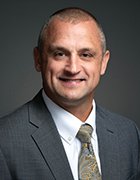 Christopher Beaty