Career cure for AI phobia: Be a beekeeper, not a worker bee
In this podcast, author Sharon Gai shares advice from her new book on using AI to do more with less and future-proof your job by building the innately human skills that will last.

It's now abundantly clear that AI is more likely to transform most jobs than it is to eliminate jobs entirely. AI seems here to stay, and employers increasingly mandate its use or strongly encourage it in the way that Don Corleone made "an offer he can’t refuse" in The Godfather.
That means it's probably time for workers to jettison principled resistance and learn to use AI to their individual advantage, but in ways that don't conflict with the goals of their organization.
In this episode of Enterprise Apps Unpacked, speaker and author Sharon Gai gives advice on doing just that. Her new book, How to Do More with Less: Future-Proofing Yourself in an AI-driven Economy, came out on March 31.
 Sharon Gai
To bee or not to bee? That is the question
A frequent keynote speaker on AI, e-commerce and digital transformation, Gai has appeared in major media, such as ABC, CNN and Bloomberg, and consulted for brands including Intel. For four years until 2022, she worked at Chinese e-commerce and AI giant Alibaba, advising brands on their digital marketing strategies.
The book is replete with stories from her days in China, including the night when Alibaba engineers excitedly demoed a technological breakthrough: generative AI continuously spewing out designs for the website banners, photos and text used in marketing campaigns -- even calculating likely conversion rates for different options, a process that took humans thousands of hours. Gai wondered if the AI would replace her and decided the solution was learning how to do more with less.
Gai began this podcast by explaining both sides of that equation: what AI enables people to do more of, and what they can do less of by handing it over to AI.
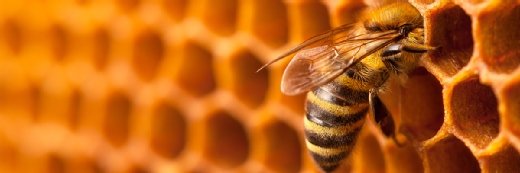
"The big concept in the book -- and why there's a bee on the cover -- is, pre-2022, we were looking at work like busy bees and were all very, very busy. It was endless to-dos, endless projects, things to go through," she said. "Post-2022, we can be beekeepers, where we're overseeing, where we create the environment for things to run in."
Gai offered reassurance to people worried about job loss with seemingly counterintuitive advice: Go as far as you can to replace yourself before your CEO does. It starts with writing down every task that your job comprises. The list is likely to have 20 to 30 tasks -- more if the job is complicated.
Next, lump together tasks that are clearly within AI's capabilities. "You'll realize that's maybe 30% or 50% of your job," Gai said. "In a very scary scenario, if that's 70%-80% of your job, you should have alarm bells going off. But then you will notice there are also tasks that are very, very human, or it will always need you. After you are very clear on what part of your job is quite outsourceable or AI can do already, start to find the right workflows, AI agents, AI systems, skills -- Markdown files, even -- that can do those tasks and start to replace yourself with it."
As AI evolves and roles change, people need to stay aware of the parts of their jobs that are "AI-able" and those that aren't and continue to improve their skills in the latter, she said. "The better muscles you build there, the more future-proof you can be, so that however better AI becomes next year and the year after that, there is a layer of your job that is hard to let go of."
Other topics discussed in the podcast include the following:
- Common characteristics of tasks that can be automated versus requiring human creativity and judgment.
- How managers can use AI to help with their strategic and supervisory responsibilities.
- Who is responsible for upskilling employees and whether employees can do it on their own.
- Whether standards and technology are far enough along to support the beekeeper model of agentic AI deployment.
David Essex is an industry editor who creates in-depth content on enterprise applications, emerging technology and market trends for several Informa TechTarget websites.