sdecoret - stock.adobe.com
How simulations and digital twins are advancing robotics
Nvidia GTC 2026 showed the potential of robotics across industries. But these systems must undergo stress testing, and digital twins and simulation are the key.

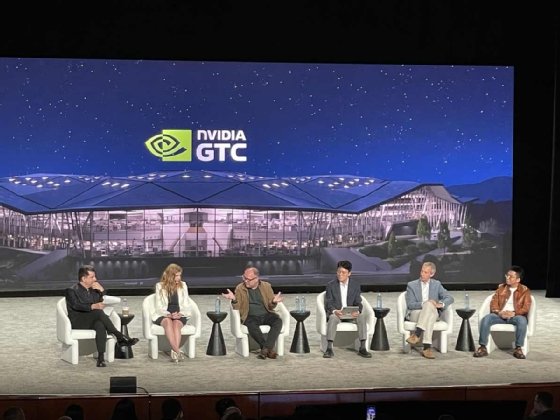
SAN JOSE, Calif. -- Agentic AI showed us the capabilities of autonomous AI systems in workflows. Now, physical AI is poised to show us the capabilities of autonomous systems in the physical world, but not without help, as noted in various sessions at Nvidia GTC 2026.
Physical AI is an embodied system that uses sensors to process and understand its surroundings. Consider tools like autonomous vehicles that use sensors to process a host of environmental data to ensure safe transportation. Or medical robotics, which provides healthcare workers with a degree of precision they never had before.
Physical AI and robotics stand to revolutionize and automate entire industries, but as emerging technologies, they're still in their infancy. These tools still need to learn to navigate the world around them without risking harm to humans or organizational failure. Simulations and digital twins could provide an environment to test and refine robots before implementation.
The importance of simulations
Rev Lebaredian, vice president of Omniverse and simulation technology at Nvidia, understands the paradox of training robots for real-world applications when they aren't ready for it.
"We can't get all the information we need for the actual physical world. This is too expensive, or dangerous to do that," he said in his session, "Accelerate the physical AI era with digital twins and real-time simulation."
According to Lebaredian, it takes three different computers to build a robot. These include the following:
-
Training computer. Trains and "builds the brain" of the robot.
-
Inferencing computer. Executes and performs the training from the robot's brain into the physical world.
-
Simulation computer. Tests and validates a robot's brain before it's commissioned for real-world use.
These simulation computers are what optimize and accelerate the development of robots to ensure safe and effective deployments, whether in the world among humans or in factories.
Roslyn Stuart, vice president of synergy creation at Hitachi Digital, explained that her organization uses tools like Nvidia's Omniverse to simulate and test models and robots before implementing them in real-world use cases that could have real-world consequences. These simulations helped Hitachi develop the technology that enabled Rio Tinto to create the AutoHaul, a fully autonomous train and the world's heaviest robot.
"You can't just go and inject a defect into a mission-critical, large-scale output," said Stuart during the panel "Building the future of manufacturing."
One of the most vital parts of a simulation is the data it uses. By using real-world, synthetic and simulated datasets, developers can create comprehensive simulations to train their models.
"Having the right data for those simulations is really, really important," said Matan Grinberg, CEO and co-founder of Factory, which specializes in agent-native software development, in an interview with TechTarget Editorial. "My sense is that generative AI is a tool in the toolkit for simulations, but it's not the end-all be-all."
GenAI is increasingly used in simulations, enabling developers to create complex environments for their models. However, to Grinberg's point, developers are also implementing agentic AI to grant digital twins greater autonomy within these environments. These digital twins enhance the simulations that developers can create.
How digital twins improve upon simulations
Digital twins are virtualizations of real-world objects or processes. Digital twins require three things: the real-world object or process, a virtual representation of that object or process -- which can be visual or a data set -- and data that links the two.
"We can try to build a real-world factory, and we can also have a virtual factory," said Sigma Huang, a senior assistant manager in application development at Foxconn, in an interview with TechTarget Editorial. "We can sync data in real time, monitor the status remotely and remotely control parameters."
Huang explained that traditional simulation only provides two-dimensional layouts for testing. Digital twins can provide three-dimensional, realistic and precise models for testing and observation. They're particularly helpful for robot training because many companies developing them have limited supply due to high costs and long production times.
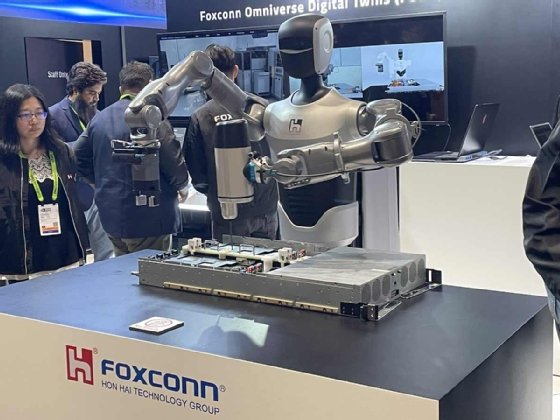
"Maybe we only have five robots in our lab. We start trying to simulate movement, speed and parameters in a virtual world," Huang said. "We can simulate deep learning and reinforce learning for maybe 5,000 or 10,000 robots to perform one task to try and see any different movement and achieve our goal."
Digital twins are helping organizations across industries deploy effective robots. Claudia Blanco, chief AI and partnership officer at GE Vernova, said in an interview with TechTarget Editorial that her organization is "in the baby steps" of using digital twins to ensure the effective deployment of robots, such as those used to maintain their wind farms.
Eventually, Huang said he believes digital twins will further commercialize robots and could even advance manufacturing. "New factories will be designed with digital twins from design to operation," he said.
He isn't the only one who feels this way. Lebaredian said that digital twins, robotics and physical AI represent a "new industrial revolution" happening right now.
"A new class of physical AI startups has arisen," he said during his session. "We're seeing the creation of a whole new business before our eyes. We have humanoid robot makers. We also have many companies that don't actually build any physical robots, but do build brains, an equally important part of this."
As digital twins continue to develop, so too does the efficacy and autonomy of robots.
Everett Bishop is the assistant site editor for SearchCloudComputing. He graduated from the University of New Haven in 2019.
Dig Deeper on AI Technologies & Platforms
-
![]()
Mutualist technologies drive the advent of ubiquitous robotics
By: Martin Schwirn
-
![]()
Neura Robotics accelerates next-generation physical AI
By: Joe O’Halloran
-
![]()
AI investment and the effect on urban digital twins
By: Martin Schwirn
-
![]()
Urban digital twins – missing pieces and emerging divides
By: Martin Schwirn