U.S. federal AI framework deemed aspirational, noncommittal
The latest executive order is a step toward federal AI regulation. But it's largely noncommittal and shifts most responsibility to Congress, creating an interesting midterm dynamic.
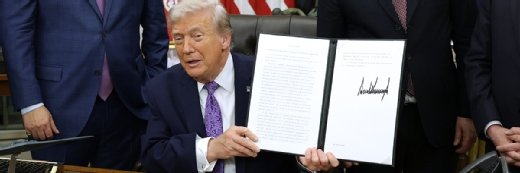
The Trump Administration published its latest executive order last week: the National Policy Framework for Artificial Intelligence. It's a light- touch federal regulatory approach that relies on congressional measures and puts the onus on federal agencies to review state laws, enforce federal policy and develop standards for AI.
Despite some "nonstarters," the framework signals the Trump Administration's acknowledgement that constituents on both sides of the partisan aisle are concerned about AI, according to Tyler Thompson, a partner in emerging technologies at global law firm Reed Smith.
"The big takeaway from this is it's clearly an area of high focus," Thompson said. "The White House has now done multiple executive orders on [AI regulation], and it's an administration that is avowedly pro-business, talking about potential regulation."
The big what-if factor of the executive order, however, is whether Congress will do anything about it, especially with 70% to 80% of the framework reliant on congressional actions, he added. Its progress could depend on congressional members' motivations to get political wins with their constituents as the nation heads into midterm elections this November.
Thompson said he sees "smaller nuggets" of opportunities for bipartisan wins, such as protections for children and monitoring data center energy consumption. A federal AI law that addresses these subsets is of interest to both red and blue states, business leaders, regulators, consumers and AI developers, he added.
But a potential barrier to the unified federal approach lies in the framework's focus on preempting states from developing their own AI laws, he said. It could be difficult to get wholesale support for a bill that aims to limit states from having their own AI regulations.
"The practical odds of getting there are extremely low, and I think probably the biggest issue is this preemption issue," Thompson said. "That's something that would require 100% bipartisanship, whether we're talking about right now or post-midterms."
This preemption reinforces the administration's desire to eliminate a patchwork of state laws, which isn't feasible in the long run, according to Michael Leone, practice director and principal analyst at Omdia, a division of Informa TechTarget.
"Fifty states running 50 different compliance regimes was never going to scale," Leone wrote in a LinkedIn post. "That part is real progress, but everything else is where it gets complicated."
The rest of the framework is noncommittal, he wrote, adding that it "feels like someone on the team prompted ChatGPT with 'draft me an AI legislative framework that doesn't commit to anything.'"
It feels like someone on the team prompted ChatGPT with 'draft me an AI legislative framework that doesn't commit to anything.'
Michael Leone, practice director and principal analyst, Omdia
For example, he noted the mixed signals around copyright laws and AI training, with the framework stating it's not a violation to use copyrighted materials to train AI models but giving the courts the final say. He also highlighted the lack of detail around regulatory sandboxes.
"Sandboxes are exactly where you establish testing standards, pass/fail criteria, benchmarks that evolve as fast as the technology does," Leone wrote in his post. "Instead, we get a bullet point with no substance behind it. Huge missed opportunity."
What the executive order addresses
The objectives included in the executive order align with many top-of-mind concerns around AI, such as child safety, deepfakes and workplace AI readiness. These issues often receive bipartisan support, Thompson said.
But, again, Congress is largely responsible for enacting the necessary measures to enforce this framework and for collaborating with the appropriate federal agencies and stakeholders. Together, Congress and those agencies will review existing and proposed AI state laws, issue guidance and coordinate the desired unified federal stance on AI governance -- if Congress decides to not ignore the order.
Here are the key objectives of the National Policy Framework for AI:
Protect children and empower parents. Congress would require AI services that minors can access to implement child safety protections and provide parents with control over privacy, screen time, exposure and account controls. Agencies such as the Federal Trade Commission (FTC) and the Department of Justice would be responsible for enforcing these laws.
Safeguard and strengthen American communities. Congress would try to stimulate economic growth by streamlining federal permitting for AI infrastructure construction; providing grants, tax incentives and technical assistance programs to small businesses; managing the effects of AI energy consumption on residents; and addressing national security risks.
Respect intellectual property rights and support creators. Congress and the federal courts would govern AI developers and platforms in how they use copyrighted material and likenesses to train AI models, while enabling creators to seek protection and compensation.
Prevent censorship and protect free speech.Congress would restrict federal government actors -- not private AI companies directly -- from coercing or influencing AI platforms to censor lawful speech. This would be enforced through limits on federal agencies and judicial review.
Enable innovation and ensure American AI dominance.By working through existing sector-specific federal agencies, such as the FTC and the Food and Drug Administration, Congress would reduce regulatory barriers, expand data access and promote innovation for AI developers and deployers across all industries. This doesn't include the creation of a new federal rulemaking task force.
Educate Americans and develop an AI-ready workforce. Congress, collaborating with federal education and labor agencies, would support educational institutions, workforce programs, employers and workers with AI training and workforce adaptability.
Establish a federal policy framework and preempt cumbersome state AI laws.Enforced through federal laws and the courts, Congress would be responsible for establishing a unified national standard and limiting state governments by blocking state laws it deems burdensome.
Takeaways for business leaders
AI isn't going away, and businesses using AI in any capacity need to be thinking about compliance, Thompson said. Right now, that means looking at state AI laws while the federal framework develops.
"For my clients, a lot of the focus still is on the state level, because it seems like that's more like the path for regulation in the near term," he said.
In the interim, business leaders can focus on practical and proactive compliance best practices, he added. Conduct impact assessments to document how your organization uses AI; emphasize AI transparency to be open and clear with consumers and customers about AI use in products and services; and strengthen contractual agreements with AI vendors and customers to address AI-specific risks and responsibilities.
Regardless of when -- or if -- the executive order is enforced, organizations can focus on tangible AI risks while monitoring federal regulatory developments. By keeping those best practices, they can ensure they're prepared when regulation ramps up.
Jennifer English is editorial director for TechTarget's AI & Emerging Tech group.