How software contract structure can maximize long-term value
Lock in a low price today, and enterprise software leaders might be locked out of tomorrow. In a fast-moving tech market, contract flexibility beats the opening number.
By the time a CIO signs an enterprise software contract, the hard part feels over: The vendor is chosen, the price is set, and procurement moves on to the next deal. But the signature is where the costs actually begin and, increasingly, where they go sideways. The catch is in the contract structure rather than the initially agreed-upon costs.
"One thing we see quite often is businesses focusing heavily on the upfront license or subscription fee without really digging into the operational side of the contract. That's usually where the hidden costs sit," said Rhys Collins, managing director of Total Systems, a U.K.-based insurance software provider.
That assessment is echoed by numerous industry observers. According to Gartner's April 2026 forecast, worldwide software spending is projected to reach about $1.44 trillion in 2026, up 15.1% from 2025. The increase appears to reflect more than new software adoption. Gartner points to generative AI (GenAI)-driven software growth, while other data suggests many organizations are paying more through AI tiers, consumption pricing and expanded contract packaging, even as application counts remain relatively flat.
For example, Goldman Sachs researchers predict customer service software that incorporates both traditional SaaS products and new AI agents "could expand by an additional 20% to 45% by 2030," compared with a scenario that lacks a GenAI boost. A report by Zylo, a software investment optimization company, found that organizations in its data set spend an average of $55.7 million every year on SaaS -- even as application portfolios remain essentially flat at around 305 apps -- with the increase coming from pricing inflation, AI tiers, consumption charges and contract expansion rather than new tools. Translation: Companies are paying more for the same software, and the difference is being written into the structure of their existing contracts.
That gap between what gets negotiated and what occurs is a function of contract architecture. Together, the deliberate design of pricing models, terms and conditions, flexibility provisions, performance mechanisms and other often-glossed-over terms decide whether an agreement builds leverage for the buyer or quietly surrenders it.
If the contract makes it expensive to change a workflow, add an integration or adapt the platform as the business moves on, you carry that weight for years.
Andy WebberManaging director, Atomic
Analysts have pointed to Salesforce's Agentic Enterprise License Agreement as an example of how AI pricing is shifting. Constellation Research described the model as a flat-fee, shared-risk agreement that can give customers more predictable costs upfront while potentially giving Salesforce more leverage at renewal. The lesson for technology leaders is that structure -- not sticker price -- governs the outcomes that compound over a contract's life.
Hidden costs in poor contract structures
Hidden costs often found in poor software contract structures, according to Andy Webber, managing director at software development consultancy Atomic, include the following:
User-based licenses that get a lot pricier as the team grows.
Consumption pricing where the bill climbs with usage, API calls, storage or AI model use.
Charges for integrations, data exports or API access that everyone assumed were included.
Professional services fees for setup, onboarding, upgrades and support.
Lock-in costs that hit later, when you try to move off the platform.
Terms that force you onto a higher tier or extra modules to get a feature you actually need.
"The biggest one is usually the cost of change. If the contract makes it expensive to change a workflow, add an integration or adapt the platform as the business moves on, you carry that weight for years," Webber added.
There are additional gotchas to look out for that are commonly hidden in the contract structure. Total cost of ownership tops the list of traps written in the fine print. Capacity commitments, true-up mechanics (i.e., reconciliation of actual usage versus contracted usage), overage rates and renewal escalators can quietly compound over the life of an agreement.
Watch for inflexible capacity commitments that can make your company pay for overbought, unused shelfware.
The most insidious hidden cost in poor software contract structures is unutilized capacity, or what I call the shelfware tax.
Steve WardFounder, Authenticate.com
"The most insidious hidden cost in poor software contract structures is unutilized capacity, or what I call the 'shelfware tax.' Traditional contracts force buyers to predict their future needs, leading them to over-provision users or data volume just to hit a specific discount tier," said Steve Ward, founder of Authenticate.com, an identity authentication and background verification platform.
Punitive true-up penalties and overage charges often turn ordinary demand spikes into budget overruns. Restrictive usage rights, proprietary integrations and auto-renewal clauses with unfavorable escalations ensure that organizations are stuck for years. Each of these factors is a value destroyer hiding in plain sight, and collectively they explain why contract structure deserves to be treated as a board-level concern rather than a procurement formality.
Long -term implications of pricing models
The most common enterprise software pricing models are subscription-based, consumption/usage pricing, perpetual licensing and hybrids (i.e., any mix of the first three).
Subscription-based pricing charges a recurring fee -- usually per user, billed monthly or annually -- for ongoing access, updates and support. Consumption or usage-based pricing charges for what you actually use, such as the number of API calls, compute hours, transactions and data processed. Costs scale with activity, rewarding efficiency but trading budget certainty for flexibility, especially in autoscaling environments where spend can run past expectations. Perpetual licensing is the traditional alternative: You pay once to own a specific version indefinitely. There might also be an annual maintenance fee for updates and support, though it has steadily fallen out of favor as vendors push toward subscriptions. In traditional perpetual-license deals, annual maintenance has often run around 18% to 22% of the license cost.
Perpetual licensing can reduce recurring fees, but it often pushes cost into maintenance, upgrades and internal complexity.
Nicolas MoreFounder, Reddinbox
"The pricing model matters because it shifts risk," said Nicolas More, founder of Reddinbox, an AI-powered audience intelligence platform.
"Subscription pricing is easier to start with, but renewal leverage matters. Consumption pricing looks flexible until usage becomes hard to predict. Perpetual licensing can reduce recurring fees, but it often pushes cost into maintenance, upgrades and internal complexity," More explained.
In practice, many enterprise agreements now blend these models, which is why understanding how each behaves is the foundation for negotiating terms that match how the business actually consumes the software.
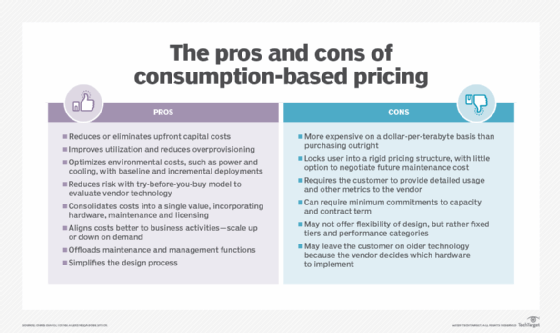
As with subscription-based pricing and perpetual licensing, there are both pros and cons to adopting consumption-based pricing that enterprise software leaders should be aware of.
Best practices for structuring value-driven contracts
Experience in viewing and analyzing software contracts from multiple vendors can go a long way in teaching you the good, bad and ugly that organizations can expect to find. But there are a few good pointers available to help enterprise software leaders find their way.
"Build the commercial model around the business outcome you want, not the feature list," said Webber. In practice, Webber suggests doing the following:
Model the cost over three to five years, not just year one.
Negotiate renewal protection at the start, while you still have leverage.
Leave room to flex license volumes and usage commitments.
Get data portability written in, not promised verbally.
Set up incentives so both sides benefit when adoption goes well.
Agree how you'll govern and price changes before you need to.
Read the termination and exit terms before you sign, not after.
Assume technology, priorities and market conditions will all shift during the life of the deal, and structure for it.
Andy WebberManaging director, Atomic
"Assume technology, priorities and market conditions will all shift during the life of the deal, and structure for it," Webber added.
The consensus is to remain focused on outcomes over features. A more concise set of guidelines might be of more help in keeping organizations on track.
"The best contracts match how the product creates value in real life. If usage can swing, negotiate guardrails. If implementation risk is high, break acceptance and payment into milestones," said More.
Pam Baker is a freelance journalist and the author of books including ChatGPT For Dummies and Generative AI For Dummies. Baker is also an instructor on AI topics for LinkedIn Learning and a member of the National Press Club, the Society of Professional Journalists and the Internet Press Guild.