Enterprise software deployments once carried the reputation of being massive, all-or-nothing undertakings. A new ERP system or business platform might be implemented across the entire organization in a single sweeping rollout, often accompanied by years of planning and preparation.
Many of the changes shaping enterprise technology today are subtle at first, revealing themselves gradually through routine technology decisions. The traditional all-at-once deployment model still exists, but it is becoming less common.
Today, many enterprise platforms are deployed incrementally. Core systems are introduced first, followed by additional capabilities and integrations over time. Organizations might roll out foundational functionality in finance or operations before adding modules for HR, customer management or analytics later.
ERP systems illustrate this pattern clearly, but they are far from the only example. Modern enterprise technology stacks -- from HR platforms and customer experience systems to collaboration tools and endpoint management platforms -- are increasingly assembled in stages rather than deployed all at once.
A company might introduce a new HR platform before expanding it with talent management or employee experience modules. A collaboration environment might begin with messaging and meetings before expanding into unified communications platforms, AI copilots, workflow automation or contact center capabilities. Even endpoint environments often evolve gradually as organizations layer device management, security and identity controls over time.
What appears to be a single enterprise platform is often the result of many smaller implementation decisions made over time.
Why ERP platforms became modular
ERP systems were originally designed as large integrated suites that handled core business processes in a single platform.
Over time, however, organizations began extending ERP environments with specialized tools that offered deeper functionality than built-in modules could provide. HR systems, CRM platforms, analytics tools and supply chain software increasingly became separate applications connected to the core ERP.
Cloud computing accelerated this shift by making it easier to deploy new software quickly and integrate it through APIs and middleware.
As a result, enterprise platforms today often resemble ecosystems of connected applications rather than single monolithic systems.
Enterprise systems were designed to connect business processes
ERP platforms combine multiple software systems into a single overarching platform. The goal is to better integrate separate -- but often related -- business processes, such as accounting, HR, inventory management and purchasing, into a more unified operating environment.
These connected business applications aim to streamline operations, improve workflows and support stronger returns on investment.
Today, many organizations deploy ERP platforms through cloud ERP environments, where the software runs on a provider's infrastructure rather than within the organization's own data center. Cloud delivery has made ERP platforms easier to deploy, maintain and extend over time.
Because cloud platforms can be updated more frequently and scaled more easily, organizations are often able to introduce new modules and capabilities without the large infrastructure investments that traditionally accompanied ERP deployments.
Enterprise platforms are rarely implemented all at once
Enterprises can purchase or subscribe -- in the case of cloud ERP -- to a core platform and extend it with additional modules or specialized applications. In many cases, organizations supplement the core ERP system with "best-of-breed" tools from other vendors that focus on specific business functions.
This modular approach extends well beyond ERP. Customer experience platforms often combine CRM systems, analytics tools and contact center software. HR environments often integrate core HR systems with recruiting, payroll and employee experience platforms. Collaboration platforms similarly expand over time as organizations introduce messaging, meetings, workflow tools and AI features.
These applications integrate with the ERP platform while providing deeper capabilities than those available in the base system.
Flexibility and nimbleness are essential for enterprises operating in today's faster and more fragmented competitive landscape. That reality is often reflected in modern enterprise platforms, where business applications can be deployed all at once or, increasingly, in pieces.
This phased approach allows organizations to implement only what they need at a given moment while managing governance, integration and troubleshooting incrementally rather than attempting to address everything at once.
However, the same flexibility that makes piecemeal deployment attractive also introduces complexity. Governance, troubleshooting and integration challenges might need to be revisited repeatedly as each new component is implemented and connected to the broader platform environment.
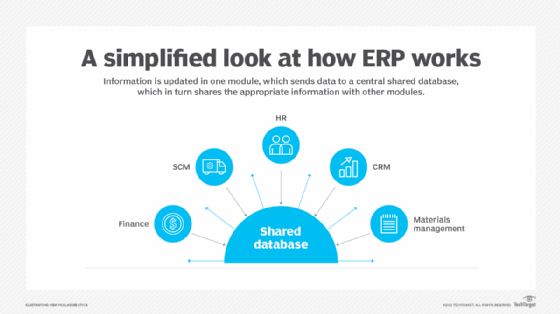
Enterprise platforms such as ERP systems connect multiple business functions through a shared data architecture. Core modules such as finance, HR, supply chain and customer management share information through a central database, allowing organizations to coordinate business processes across departments.
Go-live is only the beginning
Go-live is an important milestone in the deployment of a new ERP system -- or even a single component of one. It is not the final step in the process.
Work continues well after rollout because enterprise environments rarely remain static. As long as a platform is supporting the business, teams must continue addressing governance, integration, troubleshooting and optimization.
Enterprise platforms are continuously assembled, extended and refined.
ERP platforms are effectively living systems that evolve alongside the organizations that depend on them. New requirements, integrations and operational adjustments often emerge shortly after deployment as users begin interacting with the system in real-world conditions.
This ongoing refinement is a normal part of enterprise platform management and one reason implementation projects frequently extend beyond the original rollout timeline. Most organizations follow a structured ERP implementation lifecycle that continues well after the initial deployment milestone.
Phased deployments deliver functionality sooner
Deploying an ERP system in multiple phases has advantages beyond more manageable governance, integration and troubleshooting. Organizations often weigh different rollout strategies, including the big bang vs. phased ERP implementation approach, when determining how new enterprise platforms should be introduced.
It allows project teams to test and validate components incrementally as they go live while enabling employees to begin using new capabilities sooner. Each phase introduces additional functionality, allowing organizations to realize benefits before the entire system is complete.
At the same time, phased rollouts can introduce new challenges. Once employees begin using improved capabilities, they may quickly grow impatient for the rest of the system to arrive -- particularly if they must continue relying on older tools while waiting for future phases.
Similar rollout patterns appear across many enterprise software environments. Organizations may introduce collaboration platforms gradually as new communication capabilities are adopted or expand HR systems in stages as new workforce management tools are implemented. Even endpoint computing environments often evolve incrementally as identity, device management and security platforms are layered together.
Organizations, therefore, need to balance the operational advantages of phased deployment with users' expectations, who might see the potential of the new platform long before the full system is implemented.
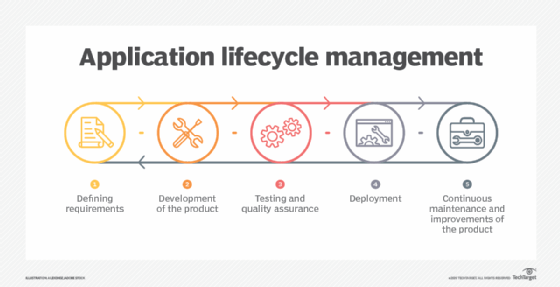
Enterprise platforms often evolve through ongoing lifecycle stages that include development, testing, deployment and continuous improvement. New capabilities are introduced over time as organizations expand and refine their systems.
Each phase sets the stage for the next
Each step of a phased ERP rollout effectively sets the foundation for the phases that follow. Once a component is deployed, integrated and stabilized, project teams can step back and evaluate how the rollout performed. Many organizations follow structured ERP implementation steps to ensure success by reviewing the results of each phase and planning which capabilities to introduce next.
That assessment helps determine what should come next. Organizations might decide to introduce new modules, address previously deferred issues, or implement enhancements that were too complex or risky to address earlier.
Phased deployment, therefore, serves as both an implementation strategy and an ongoing planning cycle for the platform's continued evolution.
Why phased deployments reduce implementation risk
Implementing enterprise platforms in phases helps organizations reduce the risks associated with large technology deployments.
Smaller rollout scopes make it easier for project teams to estimate resources, timelines and dependencies while identifying issues earlier in the process.
Phased deployments also allow employees to begin using new capabilities sooner, which can accelerate adoption and provide valuable feedback during later phases of the rollout.
However, organizations must still manage the integration and governance challenges that come with introducing new components over time.
Enterprise platforms are never truly finished
Enterprise platforms might still carry the label of a single system -- ERP, HR platform, collaboration suite or CX platform. In practice, they rarely exist as a single, unified deployment. Whether those systems manage finance, employees, customers or communications, the pattern is increasingly the same.
Instead, they evolve over time. Organizations implement foundational components first, then add new capabilities, integrations and enhancements as business needs change.
A platform that begins with finance and operations modules might later expand to include HR systems, analytics tools, customer platforms or specialized third-party applications.
That gradual expansion reflects the reality that enterprise environments are rarely static. Businesses change, competitive pressures shift and new technologies emerge. Enterprise platforms must adapt alongside them.
Phased deployments and modular architectures give organizations the flexibility to evolve their systems incrementally rather than attempting to predict every future requirement during the initial rollout.
The tradeoff, of course, is complexity. Each additional component introduces governance, integration and operational considerations that must be managed across the broader environment.
Taken together, these developments point to a broader shift in how enterprise software is built and maintained.
Enterprise platforms are no longer deployed once and left largely unchanged for years. They are continuously assembled, extended and refined.
Enterprise platforms, in other words, are never truly finished.
James Alan Miller is a veteran technology editor and writer who leads Informa TechTarget's Enterprise Software group. He oversees coverage of ERP & Supply Chain, HR Software, Customer Experience, Communications & Collaboration and End-User Computing topics.