Identity is quietly becoming enterprise IT's control plane
Identity policies increasingly govern how users access enterprise apps, devices and collaboration tools, shifting enterprise control from infrastructure to identity systems.
Enterprise employees now routinely access corporate systems from devices and applications that operate well outside traditional network boundaries.
Employees connect from personal laptops, mobile devices and cloud services that sit beyond the boundaries of the traditional enterprise firewall. In many environments, the infrastructure itself no longer defines the limits of enterprise systems.
As a result, governance is shifting toward identity systems and policy frameworks that determine how users, devices and applications interact with enterprise resources. As traditional network boundaries fade, identity is increasingly becoming the new security perimeter for enterprise systems.
Identity policies increasingly govern application access
Enterprises no longer need complete control over an endpoint to protect sensitive data in BYOD environments. Take Intune mobile application management without enrollment, for example: It enables IT teams to provide access to corporate data, but only within approved applications. This creates a kind of firewall between approved and unapproved apps, allowing users to keep their devices otherwise unmanaged.
Enabling corporate and personal environments to coexist on the same device can be a win-win, strengthening governance and data protection while still giving employees the freedom to use their personal devices without intrusive corporate controls.
Intune app protection limits access to corporate resources to only those applications permitted by IT policy. It does this by enforcing identity-based controls tied to individual user credentials rather than the device itself.
Rather than evaluating device compliance, IT can require that only apps with Intune app protection policies can access corporate resources through Conditional Access. In this model, the device becomes less important than the identity and policies governing how applications access corporate data.
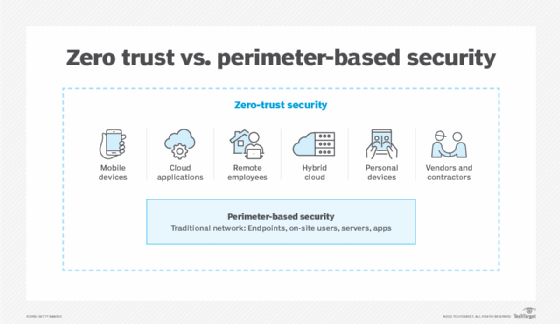
Traditional network perimeters are giving way to identity-based access controls as users, devices and applications operate outside the corporate firewall.
Enterprises no longer need complete control over an endpoint to protect sensitive data in BYOD environments.
Governance extends into collaboration platforms
Collaboration and communications platforms are becoming central hubs for work that goes far beyond chatting, messaging and calling. Increasingly, they are where business processes unfold and where important organizational data flows.
That reality means the information moving through these platforms must meet regulatory, legal and security obligations.
As a result, monitoring for compliance, security and investigative purposes becomes a necessary component of these tools and the workflows they support. These governance considerations are part of the reality of any core enterprise system -- which collaboration platforms increasingly are.
This oversight can also rely on identity-based policy controls. Identity roles help determine both who can access and participate in communications and who has the authority to monitor activity or enforce compliance policies within the collaboration environment.
Identity is becoming the new security perimeter
Enterprise security strategies historically relied on well-defined network boundaries. Organizations protected internal systems with firewalls and assumed users inside the network could be trusted.
That model has largely disappeared.
Employees now work from home, on mobile devices and across cloud services outside traditional networks. Identity credentials and authentication systems now determine who can access enterprise resources.
Modern security frameworks, such as zero trust, rely on verifying identity and evaluating context for every access request rather than trusting a user's network location.
Workforce systems help define enterprise identity
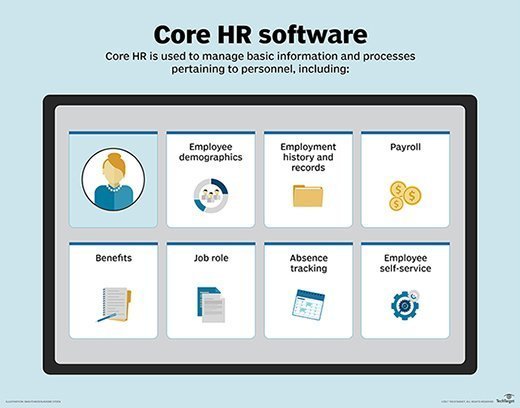
Human resource information systems (HRISes) aren't just repositories for employee records used in onboarding, benefits administration, talent management or offboarding. As the system of record for employee data, an HRIS frequently feeds that information into other systems across the organization, including applications used by finance and IT.
In that sense, workforce systems don't just track employee information; they help define the identity context in which enterprise access decisions are made. Employee records establish roles, responsibilities and organizational relationships that identity systems can use to determine which systems people can access and which actions they are allowed to perform.
HR systems often serve as the system of record for employee identity data that flows into other enterprise systems.
How HR systems influence enterprise access decisions
In many organizations, HR platforms serve as the authoritative source for workforce identity information. Employee records define attributes such as job title, department and reporting structure. Identity platforms use that information to provision accounts and assign permissions across enterprise systems.
When employees change roles or leave the organization, those HR records can trigger automated updates to application access across the enterprise environment. This approach helps organizations maintain consistent governance across cloud platforms, collaboration tools and enterprise applications.
Identity as the enterprise control layer
Taken together, these shifts point to a broader architectural change: Enterprise governance is no longer defined solely by infrastructure boundaries, devices or application deployments. Instead, identity systems increasingly function as the policy layer that connects them.
Identity policies help determine which applications users can access, which devices are permitted to connect, how collaboration environments are governed and how access decisions propagate across enterprise systems.
As enterprise technology environments continue to expand across cloud services, personal devices and AI-driven tools, identity is quietly emerging as the operational control plane for enterprise IT.
James Alan Miller is a veteran technology editor and writer who leads Informa TechTarget's Enterprise Software group. He oversees coverage of ERP & Supply Chain, HR Software, Customer Experience, Communications & Collaboration and End-User Computing topics.