Routine IT updates now shape enterprise governance
Routine IT updates now shape enterprise governance, as patching, endpoint compliance and identity policies determine how organizations enforce security.
Enterprise collaboration platforms have transformed how employees communicate and share information. Tools such as Microsoft Teams make it possible for employees to collaborate across offices, time zones and hybrid work environments in ways that were difficult or impossible only a few years ago.
The benefits are obvious: faster communication, easier coordination and the ability to bring distributed teams together around projects and decisions.
At the same time, these platforms expand the flow of information across the organization. Conversations that once took place in private emails or meetings now occur across shared channels, group chats and recorded collaboration spaces.
That shift creates new regulatory, legal and security obligations. Enterprises must ensure that sensitive data is protected, regulatory requirements are met and corporate communications remain compliant with internal policies.
Doing so increasingly means understanding how collaboration platforms operate and implementing governance tools that enable organizations to monitor information flows responsibly without undermining the collaborative culture those tools were designed to foster.
Monitoring collaboration platforms responsibly
Modern collaboration platforms provide administrative tools that enable IT teams to review activity patterns across messaging, meetings and calls.
Examples of monitored signals include the following:
Number of messages sent.
Meeting participation.
Call activity.
Device types used to access collaboration platforms.
Administrative dashboards can provide these insights while still allowing organizations to anonymize identifying data and protect employee privacy.
Comprehensive unified communications (UC) platforms such as Microsoft Teams enable employees to communicate and collaborate like never before, whether on-premises, remotely or in some hybrid arrangement. The benefits are numerous.
However, this collaborative freedom also complicates regulatory, legal and security processes, as data and information can be shared more easily and more widely through chat, video and other channels. Those obligations still must be met, which means enterprises need to understand how these platforms enable information flows to be monitored and then implement those methods in ways that work without compromising workforce privacy.
Monitoring in these environments is meant to support governance rather than surveillance. Enterprises do not want to undermine the collaborative culture these platforms provide by acting like a surveillance state. After all, communication and the free exchange of ideas are the very reasons organizations adopt tools such as Teams in the first place.
Instead, oversight typically takes the form of governance policies, role-based administrative access and automated compliance controls that flag potential issues without constantly watching employee conversations. These tools help organizations reduce insider risk and protect sensitive data while still allowing employees to collaborate freely.
Monitoring in these environments is meant to support governance rather than surveillance.
Endpoint compliance automates governance
Compliance typically involves defining specific rules and settings for device categories and the users associated with them, shaping what employees can do with those devices and what data or corporate resources they can access.
In many enterprise environments, identity verification comes first, followed by checks on whether a device meets established compliance standards. Mobile device management (MDM) platforms then automate enforcement by monitoring devices for those conditions and triggering specific actions when a device falls out of compliance.
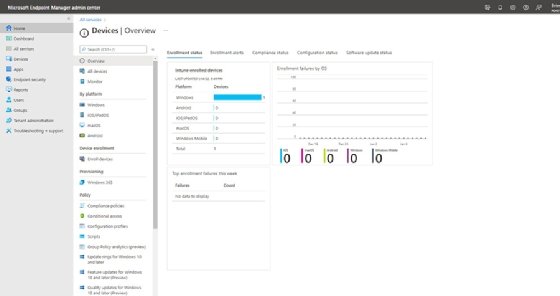
Endpoint management platforms give IT teams visibility into device compliance, enrollment status and policy enforcement across distributed enterprise environments.
Device policies shape enterprise oversight
Any policy related to governance and compliance, including MDM policies, is more than simply static documentation. It becomes a living tool around which security, privacy and endpoint strategy pivot.
In the case of MDM, the policy establishes the procedures and controls used to protect enterprise, employee, customer and partner data, comply with industry and government regulations, and guide the endpoint strategies that support those goals.
These frameworks are typically documented through enterprise mobile device management policies that define acceptable device use, security requirements and enforcement standards.
Identity and device compliance now work together
Identity verification typically comes first, giving a user access to specific resources based on who they are and their role within the organization.
Conditional access then takes enforcement a step further by evaluating the compliance state of the device itself before allowing access to corporate applications or data. In practice, it functions as a second layer of security, privacy and governance protection.
Together, these controls form the layered access model that now governs how users and devices interact with enterprise systems.
How modern enterprise access control works
Modern enterprise access control typically relies on layered verification. Identity establishes who the user is, while device compliance and conditional access determine whether that user can safely access corporate resources.
Identity verification
Users authenticate through identity platforms such as Azure AD, Entra ID or other identity providers. Access rights are tied to role, identity and permissions.
Device compliance check
Device management platforms evaluate device posture, including the following:
Operating system version.
Encryption status.
Jailbreak or root detection.
Security posture.
Patch level.
Conditional access enforcement
Policies evaluate both identity and device state before granting access.
Examples:
Compliant device: Full access is provided.
Non-compliant device: Access is limited or blocked.
Unknown device: Access is restricted or multifactor authentication is required.
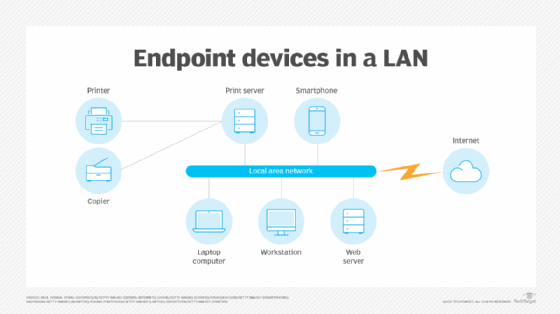
Modern enterprise environments include a wide range of connected endpoints that must meet compliance requirements before accessing corporate systems.
Governance is becoming part of routine IT work
Taken together, these developments illustrate how routine IT work has evolved. Tasks that once focused primarily on system maintenance now play a much broader role in enterprise governance.
Monitoring collaboration platforms ensures that communication remains compliant with regulatory requirements and internal policies. Device compliance policies enforce security baselines across distributed endpoint fleets. Identity and conditional access controls determine whether users and devices can reach enterprise applications and data in the first place.
Identity verification typically comes first, giving a user access to resources based on who they are and their role within the organization.
Each of these capabilities represents a layer of operational oversight embedded directly into everyday IT management.
What once appeared to be ordinary platform administration -- managing collaboration tools, configuring device policies or monitoring endpoint compliance -- increasingly shapes how organizations enforce governance, security and regulatory obligations.
Routine enterprise maintenance is no longer just operational work. It has become one of the primary mechanisms through which enterprises maintain control over the modern digital workplace.
James Alan Miller is a veteran technology editor and writer who leads Informa TechTarget's Enterprise Software group. He oversees coverage of ERP & Supply Chain, HR Software, Customer Experience, Communications & Collaboration and End-User Computing topics.