
What enterprise software updates now reveal about modern IT
Enterprise software updates reveal how Windows upgrades, endpoint lifecycle planning and hybrid work infrastructure are reshaping enterprise IT operations.

Enterprise software updates rarely make headlines inside IT departments. Most of the time, they are simply part of routine maintenance -- the steady cycle of patches, version upgrades and configuration changes that keep enterprise systems running.
Yet those routine updates often reveal deeper pressures shaping enterprise technology decisions. They expose how organizations manage endpoint lifecycles, support hybrid work environments, enforce security governance and evolve enterprise application architectures.
What looks like maintenance on the surface often reflects much larger changes beneath the surface.
Those pressures appear across several areas of enterprise IT -- from endpoint lifecycle planning to hybrid workforce infrastructure and security governance.
Routine updates reveal deeper structural pressures.
Operating system lifecycles reveal broader planning pressures
The changeover from one version of Windows to its successor is a major milestone for most enterprises. The transition from Windows 10 to Windows 11 is no exception, especially as organizations balance upgrade timelines with hardware refresh cycles and broader endpoint management strategies.
The October 2025 end-of-support deadline for Windows 10 has become a major planning milestone for IT teams. IT leaders must now decide whether to migrate devices to Windows 11, extend support through Microsoft's ESU program or align the transition with broader endpoint lifecycle strategies.
Sure, sometimes when updating a technology, we run into bugs and must wait for a vendor patch or upgrade to resolve the issue. But that is the exception, not the rule. Patching and updating technology regularly, more often than not, keeps enterprises running smoothly with the latest versions of the software engines that power them. It also provides the latest safeguards and security protections against those looking to compromise systems and access corporate data.
Why routine enterprise updates are becoming strategic decisions
Enterprise software was once implemented through large, organization-wide rollouts. Major systems, such as ERP platforms, were introduced across departments all at once, often after years of planning, testing and process redesign.
That model can still work in certain environments. In many organizations, however, it has become harder to execute as enterprise technology environments grow more complex and interconnected.
Companies now operate with distributed teams, tightly integrated applications and business requirements that change more frequently than they once did.
As a result, many enterprises deploy new platforms in stages. Core functionality might go live first, followed later by additional modules, integrations or automation capabilities.
Phased deployment does not eliminate complexity. Instead, it spreads governance, integration and operational challenges across multiple stages of the rollout -- giving project teams opportunities to stabilize each phase before expanding the platform further.
For many organizations, that incremental approach is easier to manage than deploying an entire enterprise platform at once.
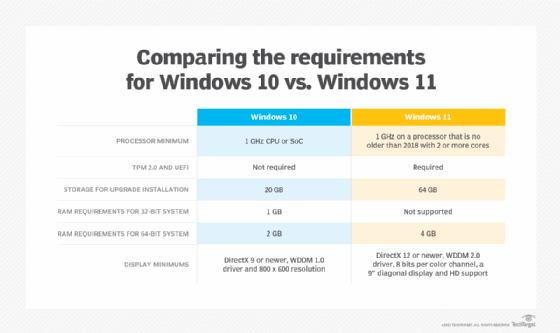
Because of Windows 11's hardware compatibility requirements, many organizations are tying OS upgrades to broader PC refresh strategies. Extended support programs often become temporary bridges while enterprises phase hardware replacements and migration plans across multiple budget cycles. Many IT teams are now navigating these decisions as part of broader Windows 10 end-of-support planning.
Endpoint lifecycle management is becoming more complex
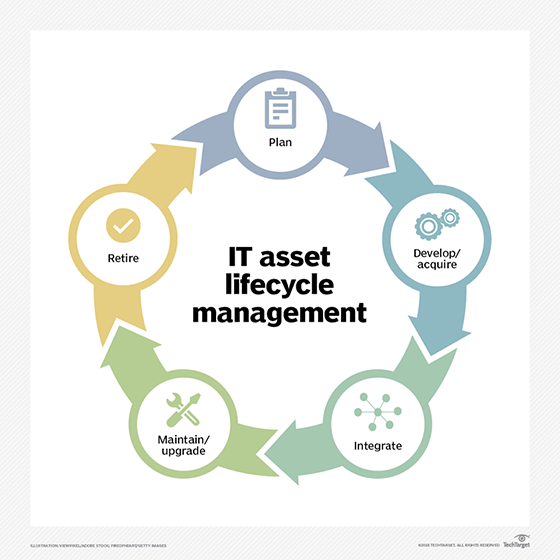
Lifecycle planning itself is becoming more complex. In 2026, lifecycle strategies are increasingly influenced by Windows 11 hardware requirements, security baselines, zero-touch provisioning models and environmental sustainability goals.
Record keeping and maintaining a chain of evidence are central to most compliance and governance requirements. Proof must be preserved in case of an audit and to ensure guidelines are followed correctly. It also helps keep these processes organized, whether during the purchase, deployment, implementation and integration stages or, at the other end of the lifecycle, when retiring old machines and storage media.
Organizations developing these policies are increasingly evaluating broader PC lifecycle management strategies.
Hybrid work complicates patching and endpoint management
Hybrid work environments are now the norm in modern enterprises. While this shift has simplified many aspects of work life for both employees and employers, it has also complicated the patching and updating of devices such as Windows laptops and desktop systems.
Many of these devices operate beyond the reach of the corporate network for extended periods. Given the hostile threat environment and the constant vigilance required to maintain proper security, this can become a real problem unless organizations account for it and put systems in place to update those devices in a timely and consistent manner.
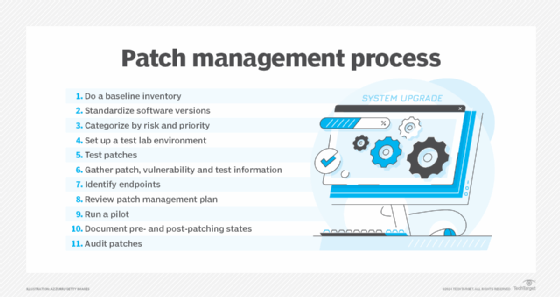
Maintaining consistent Windows update levels across a distributed device fleet is a major challenge in hybrid environments, particularly when laptops spend extended periods outside the corporate network.
Why hybrid work complicates endpoint updates
Hybrid work has changed how enterprise devices are managed.
In traditional office environments, laptops and desktop systems are regularly connected to the corporate network, allowing IT teams to apply patches, enforce policies and monitor system health.
In hybrid environments, many devices operate outside that network for extended periods. Employees might work from home, travel or connect through public networks such as airport Wi-Fi or mobile hotspots.
This makes it harder to maintain consistent update levels across distributed device fleets and increases the importance of endpoint visibility, device management tools and strong governance policies.
For many IT teams, maintaining patch consistency across hybrid work environments has become one of the more complex aspects of endpoint lifecycle management.
Remote access infrastructure is now mission-critical
Hybrid work has made remote access infrastructure more critical than ever. When remote sessions freeze, employees can lose access to business-critical applications and workflows -- whether they are working in a virtual desktop environment or connecting remotely to their office computer.
The disruptions highlight how dependent everyday enterprise work has become on remote access infrastructure. IT teams troubleshooting reliability issues often find themselves addressing problems such as Windows 11 Remote Desktop freezing issues.
Enterprises often account for the security gaps created by remote work by requiring employees to use company-issued devices when accessing corporate resources. Workers might find it inconvenient to always use their work laptop, but from the employer's perspective, it simplifies security, compliance and governance by giving IT greater control over data access. It also helps organizations account for the realities of weaker home network security and the even less predictable protections available on public networks such as mobile hotspots, cafés and airport Wi-Fi.
Security teams applying these controls often follow broader contact center security best practices and related governance frameworks.
Enterprise applications are increasingly modular
Enterprise platforms are experiencing the same shift.
Nowadays, enterprises rarely purchase or deploy large enterprise software platforms such as ERP systems in one fell swoop. Instead, they often deploy them in pieces or components over time.
On the one hand, this approach provides flexibility during implementation and deployment by enabling IT teams to focus on rolling out and integrating one component at a time into the broader business application ecosystem. On the other hand, it complicates implementation and governance because those same integration and management tasks must be repeated every time a new component is added.
Business applications are increasingly pieced together rather than acquired in a single monolithic ERP suite. This postmodern ERP approach provides flexibility but also introduces significant integration and governance challenges often associated with modern cloud ERP architectures.
Routine updates now signal broader enterprise change
Routine enterprise software updates might seem like simple maintenance tasks. In practice, they often reveal deeper shifts in how enterprise technology environments are evolving.
OS lifecycles are increasingly tied to hardware refresh strategies. Hybrid work has expanded the complexity of patching, endpoint visibility and remote access reliability. Security teams must account for distributed employees, weaker network environments and evolving governance requirements.
Enterprise software platforms themselves are also becoming more modular, introducing new integration challenges alongside the flexibility organizations need.
Taken together, these developments show that what appears to be routine maintenance work -- applying patches, upgrading OSes or refreshing hardware -- is increasingly connected to broader architectural and governance decisions across the enterprise.
Routine updates are rarely routine anymore.
James Alan Miller is a veteran technology editor and writer who leads Informa TechTarget's Enterprise Software group. He oversees coverage of ERP & Supply Chain, HR Software, Customer Experience, Communications & Collaboration and End-User Computing topics.