Offshore wind project suspensions pose challenges for CIOs
Trump administration offshore wind suspensions disrupt data center clean energy supply, raise power costs, threaten grid reliability, delay climate goals and affect CIO planning.
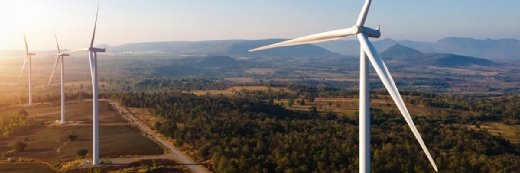
The Trump Administration has halted construction on large-scale offshore wind projects under construction the United States, at a time when rapidly advancing technology has increased the country's need for affordable and reliable energy generation.
The 2024 Report on U.S. Data Center Energy Use, produced by the Lawrence Berkeley National Laboratory and released by the U.S. Department of Energy, estimated the data center load growth has tripled over the last decade and is projected to double or triple by 2028.
Data centers consumed about 4.4 percent of total U.S. electricity in 2023 and are expected to consume about 6.7 to 12 percent of total U.S. electricity by 2028, according to the report.
Why are large offshore wind farms being suspended?
Large scale offshore wind projects are among the types of renewable energy sources that data centers can tap into. However, they have run afoul of the Trump Administration's hostility to renewable energy.
In December the Department of the Interior paused the leases for all large-scale offshore wind projects under construction in the United States, citing national security risks. Leases and construction activities were suspended on the Vineyard Wind 1, off the Massachusetts coast; Revolution Wind, off Rhode Island and Connecticut; Coastal Virginia Offshore Wind (CVOW), off Virginia; Sunrise Wind, off New York; and Empire Wind 1, off New York. Several of these suspensions were challenged in court and judges in early 2026 allowed work to resume on Empire Wind, Revolution Wind, and Coastal Virginia Offshore Wind.
The administration argues that the offshore wind installations present security risks. Unclassified government reports said that the movement of the turbine blades and the highly reflective towers create radar interference that obscures legitimate moving targets and generates false targets in the vicinity of wind projects. This position is disputed by many in the clean energy sector. As the issue works its way through the court, system business leaders are left to consider how this action will impact IT strategy, costs and sustainability goals.
“The security reasoning is very puzzling,” said Barbara Kates-Garnick, a professor of energy policy at The Fletcher School, Tufts University and the former undersecretary of energy for Massachusetts.
The scientific community has addressed the radar interference issue and identified ways to deal with these issues, she said. Further, wind farm developers work with the federal government, security and state agencies in a long process of studies, permitting, legal regulations, community engagement and finance. A series of decisions at each stage determines whether the project moves forward throughout the permitting process.
Why this matters to CIOs -- not just energy teams
The effects of the offshore wind project suspensions reach beyond the energy sector and can reach the enterprise.
New England’s costal states are at the end of the fossil fuel energy pipeline, Kates-Garnick said. If the offshore wind projects in the area were built to scale, they could provide significant clean energy, jobs and supply chain manufacturing.
Offshore wind was an important part of the clean energy mix, she said. States with mandated clean energy goals based on legislation or policy will now be highly challenged in meeting those goals at the dates that they set, despite seeking alternatives.
“It’s fairly clear to all of us that the goals won’t be met in a timely fashion,” Kates-Garnick said.
Offshore wind would have played a role in states facing grid reliability issues or data center crises, she said. The suspended Coastal Virginia Offshore Wind (CVOW) project was expected to add generating capacity to Virginia's “Data Center Alley,” which handles a large portion of existing internet traffic due to its fiber network an infrastructure. As a result of its large concentration of data centers, power demand continues to grow and is expected to more than double its peak load by 2040.
If states cannot replace the lost offshore wind capacity, energy prices and volatility will likely increase. The amount of the increase depends on whether the “missing energy” is replaced by other renewable resources or by thermal resources, according to Kates-Garnick. Reliable and adequate power generation is vital for AI and future technology needs.
"These aren’t either/or discussions, this is part of a whole picture," she said. "Take one source of generation off the table completely and the inability to develop supply chains and improve on the technology is the long-term cost of this policy.”
Take one source of generation off the table completely and the inability to develop supply chains and improve on the technology is the long-term cost of this policy.
Barbara Kates-GarnickProfessor of Energy Policy, The Fletcher School, Tufts University.
Business and IT impacts of offshore wind project pauses
Most tech companies and data center companies have some kind of renewable power goals and net-zero goals for carbon emissions.
“We expect that the grid is greener over time with more renewables coming on the grid and more coal resources coming offline,” said Jenny Gerson, senior director of sustainability at DataBank. “Now with wind stalling and coal elongation it’s hard to plan on that grid greening effect, so most companies are turning to other products instead of relying on the grid.”
Data centers, which require ample and affordable power to meet the demands of AI and other digital technologies, are running into shortfalls and shortages across the board, Gerson said.
“A lot of data center companies right now are looking into bringing things like natural gas, generators or natural gas plants and building their own power plants,” she said. “That changes the economics substantially.”
The turbines required for natural gas generation are back ordered five to seven years, creating additional slows and bottlenecks in those areas where data centers need to bring their own power, Gerson said.
Still, this is a short-term problem as utilities will figure out ways to solve the problems, she said
“We are in a bottleneck right now with a high amount of growth and issues with the utility companies not being able to move as fast as people would like, but we will get over this hurdle,” Gerson said. “In the coming years we’re going to see a very different picture where I do think the utilities will be able to keep up.”
In addition to delaying clean energy goals, halting the offshore wind projects will affect the security margin in the New England states. The security margin is the supply buffer above peak consumption.
“Despite what the mainstream media says, offshore wind does indeed contribute towards your overall security margin,” said Tom Harper, partner at Baringa.
The region was expecting the offshore wind projects to come online and contribute to the overall security margin, he said. Because they’re now significantly delayed, energy prices in the region are creeping up.
Harper also predicts a high-capacity cost for the area. Consumers pay for capacity -- which is megawatts to be online -- and pays for energy when they actually use it, according to Harper Capacity price is expected to keep increasing because the renewable energy is being delayed.
Overall, Harper expects to see more use of fossil fuels for a longer period as enterprises seek alternative resources. The New England region does not have a good gas network and may have to depend more on electricity imports, probably from Canada, he said.
What CIOs should do now
Organizations can take steps to protect their interests as the offshore wind suspension plays out.
Hedging is a strategy that involves procuring power and gas at fixed prices going forward.
“It doesn't remove the high cost but at least you know what you’ll be paying for the next three or four years,” Harper said.
Greener options include “behind the meter” installations, such as batteries or solar to help offset consumption and avoid grid costs.
Energy firms tend to be risk-averse and they’ll likely won't be anxious to re-invest in offshore wind projects in the next seven or eight years, according to Harper.
“The offshore wind industry is not going to bounce back quickly even if there was a change in policy," he said. "Memories in the boardroom are long and the losses too recent for this to be forgotten in a hurry.”
Julie Hanson is a freelance writer who has reported on local news across Massachusetts and New Hampshire.