Enterprise data used to begin when someone sat down at a system. Increasingly, it starts in someone's hand.
Mobile apps are no longer just smaller screens for existing enterprise systems. They are increasingly where enterprise work happens, where data is captured and where the first version of the record begins. That makes mobility an agility issue, but also a data-quality and integration issue.
For enterprise mobile app development, the key question is no longer simply whether employees can access systems from somewhere else but whether mobile work is being captured with enough context, control and trust to become useful enterprise data.
The ability to safely capture and deliver data to and from mobile systems across enterprise software platforms can give an organization an edge. But the key is getting that data where it belongs without too many detours along the way.
If an observation starts in the field, moves through a text message, sits in a spreadsheet, gets summarized in an email and only later reaches the system of record, it can lose value before the enterprise ever acts on it. Sometimes it might never reach the system of record at all.
That has always been a problem, but it is becoming more important as the boundaries between enterprise software categories become more porous. ERP, CX, HR, collaboration, communications, field service, supply chain and analytics systems no longer operate as cleanly separated categories. Data moves across them. Work happens across them. Increasingly, analytics and AI tools also depend on context from more than one of them.
This means the data foundation on which these systems depend is not always identical, though it has to be governed by many of the same rules. Security, compliance, identity, access control, data quality and integration all matter more when mobile apps capture information that might later feed workflows, analytics, automation or AI systems.
At the same time, mobile apps are easier to build. End users can do more from smartphones, tablets and laptops than ever. Organizations have more tools to capture data, analyze it and turn it into action. But common mobile app development challenges still include data access, integration, security, UX and synchronization with back-end systems.
That is the opportunity. It is also the problem.
The same mobility that helps companies gather and deliver more data is making that data harder to manage. Workers are more mobile, both literally and figuratively. Work moves across devices, apps, collaboration tools and enterprise platforms. That broader shift toward enterprise mobility means mobile is not only about delivering on-the-move access to existing systems; more often than not, mobile is the access point to those systems.
Mobile apps are increasingly where enterprise data starts, not just where enterprise software is accessed.
The bigger change is where the moment of truth lives. In many workflows, the mobile device is where key data is first observed, captured, corrected or acted on. That is especially clear in ERP and CX environments, but it also matters in HR, field service, supply chain, communications and other enterprise systems.
If that moment is captured well, mobility can make enterprise software more current and useful. If it is captured poorly, mobility can create another layer of disconnected data that companies later have to clean up, reconcile or ignore.
The system of record is not always where the truth begins
Enterprise systems are often described in terms of systems of record. That still matters. But the system of record is not always where the truth begins.
In many workflows, the first version of the truth begins much earlier. It might start when a field worker documents a repair, a sales rep updates a customer interaction, a warehouse employee scans returned inventory, a manager approves a shift change or a service agent updates a customer case.
Those moments increasingly happen on mobile devices, in mobile apps or through web apps accessed from distributed work environments. The data might eventually land in ERP, CRM, HR, supply chain, analytics or collaboration systems, but its usefulness depends on how well it is captured at the start. In customer-facing work, for example, mobile CRM can make customer data more immediate, but only if the information captured in the field reaches the right system with enough context to be trusted.
That is why mobile data capture should not be treated as a lightweight extension of enterprise software. If the first observation is wrong, incomplete, delayed or stripped of context, the downstream system can still look orderly while containing weak data. The record might be cleanly stored but poorly grounded.
Mobile strategy, then, is not just an access strategy; it is also a data-quality strategy.
This is also where mobility changes enterprise agility. The closer an organization captures data to the moment of work, the more current its systems can become. But that advantage only matters if the data moves into the right workflow, with the right controls, before it becomes another disconnected fragment.
Mobile strategy, then, is not just an access strategy; it is also a data-quality strategy. Once mobile becomes the place where enterprise records begin, mobile governance has to follow the data across apps, devices and downstream systems.
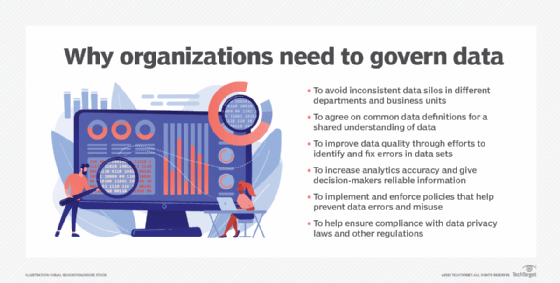
Mobile data capture affects data quality, analytics, compliance and policy enforcement across enterprise systems.
Enterprise apps do not have to replace systems to change workflows
Mobile apps and web apps do not have to replace existing systems or reinvent the wheel to be effective. They can connect to those systems and their data through an API and provide a valuable service by making work move more easily across systems that already exist.
LiquiDonate is one example. The company is not trying to replace retailers' return management, warehouse management, third-party logistics or customer service systems. Instead, its reverse logistics platform connects to those systems through APIs and becomes part of the return management workflow.
That lets e-commerce companies route unsellable returns to charities rather than sending them through more expensive or wasteful return, storage, shipping or disposal processes. The value comes from getting the right data to and from the right systems quickly enough for the business to act on it.
In this case, the workflow can touch supply chain, customer service, inventory, shipping, sustainability reporting, tax documentation and fraud prevention. Because the platform connects to existing systems, it becomes more than a front end, acting as a coordination layer across systems and creating a new workflow that can have measurable business value.
The broader point is that data is more useful when it moves directly into the workflows and systems that need it. LiquiDonate is one example of how mobile and web apps can sit across ERP, CX, logistics, customer service and reporting rather than inside one clean software category.
That pattern is not limited to reverse logistics. It applies anywhere mobile or web apps capture data at the edge of a workflow and need to move it into ERP, CX, HR, supply chain, field service or reporting systems without losing context along the way.
Questions to ask when mobile becomes where data starts
Mobile strategy is no longer just about access; it is also about whether mobile work becomes trusted enterprise data.
The first question is where the first version of the data is captured. If the answer is a mobile device, field app, browser form, scanned code or customer-facing workflow, then the mobile layer deserves more attention than a convenience tool usually gets.
The second question is what happens next. Data that starts in mobile does not stay there. It moves into ERP, CRM, HR, supply chain, analytics, reporting, collaboration or service systems. Each handoff is a chance to preserve context or lose it.
Ask these questions before treating a mobile app as production-ready:
Where is the first version of the data captured?
Which system of record eventually receives it?
What context can be lost before the data reaches that system?
Which APIs, integrations or middleware move the data?
Which users, roles and devices can access the workflow?
Does the data later feed analytics, automation or AI tools?
Can users correct bad data before it spreads downstream?
Who owns the mobile strategy after launch?
A mobile app can make enterprise systems more current and useful. But only if the organization designs for the data path, not just the screen.
Mobile strategy is part of app delivery strategy
Data capture and integration are not the only things IT leaders have to consider as work becomes more distributed and mobile; how data is captured, delivered and made usable for end users has also changed.
Choosing the right application delivery model can make a significant difference to productivity, governance and security. Work now moves across distributed workforces, diverse devices, browsers, virtual desktops, SaaS applications, progressive web apps, local apps, virtual apps and other delivery methods. That gives organizations more flexibility, but it also creates more decisions about which model fits which application, workflow and user group.
In many enterprises, there is no single delivery model. One application might be delivered through application virtualization because it is easier to manage centrally or still depends on a legacy Windows environment. Another might be delivered through session-based access for task workers who need standardized applications. VDI or DaaS might make more sense for developers, contractors, power users or regulated environments that require stronger control over where applications and data reside. Web applications and progressive web apps might work better for mobile or cross-platform productivity use cases.
The important point is not that every organization needs every model but that these choices require planning. Mobile cannot be treated as an isolated app development issue because it now exists inside a larger application delivery environment.
Some applications might be mobile-only. Others might have mobile, browser, desktop and virtual versions. Either way, the common thread is the data moving across ERP, HR, CX, supply chain, communications, collaboration and end-user computing environments.
That means IT has to balance UX, access, security, cost, management complexity and application requirements. If most organizations use multiple virtual application delivery methods, then mobile strategy needs to be governed as part of a hybrid app delivery strategy, not left to individual teams or one-off app projects.
The mistake is treating mobile app delivery as only a device or platform decision. Standardizing around one device, platform or delivery model might be necessary for some organizations, but standardization alone will not produce the best outcome if workflow and user needs are not central to the decision. App delivery has to be optimized around how work actually happens, how data moves and where enterprise systems need to remain trusted.
James Alan Miller is a veteran technology editor and writer who leads Informa TechTarget's Enterprise Software group. He oversees coverage of ERP & Supply Chain, HR Software, Customer Experience, Communications & Collaboration and End-User Computing topics.