Mobile security, endpoint audits and compliance must become ongoing governance functions as mobile apps and devices become part of the enterprise data lifecycle.
Mobile risk used to look like a device problem. Now it looks more like a data-path problem.
Mobile governance has to cover more than the app; it has to cover the endpoint, the user, the data and the path that data takes after it is captured. That is becoming more important because mobile apps and devices are no longer side channels for enterprise work. In fact, they are increasingly part of the enterprise data lifecycle.
The companion argument is that mobile apps are enterprise data's first mile. If mobile workflows increasingly capture the first version of the record, then governance has to follow that data from the point of capture through the systems that later use it.
That changes how IT leaders should think about mobile security and compliance. A mobile app is not just an employee convenience tool. A mobile device is not just a portable endpoint. Together, they can become the first place where customer, employee, financial, operational or service data is created, changed, transmitted or acted on.
That means mobile security should not be treated as a side item. It should be embedded in data governance policies from the beginning, not added later as a lower-priority adjunct to the broader security and governance model.
Mobile is not a separate line item on a checklist. It is part of the overarching enterprise application and data structure that should be considered when the checklist is created in the first place.
Mobile security is part of the data trust problem
The enterprise data lifecycle is no longer only an on-premises concern, with mobile serving as a lightweight front end or a convenience for employees on the move. Mobile is now one of the places where important enterprise data is created, captured and delivered to and from cloud services and back-end systems.
The organization's security model has to cover mobile apps, the APIs they use, the data they store and the systems they connect to, just as readily as it covers applications used on-premises or on laptops and desktops used off premises.
That changes how organizations should think about audit frequency. Mobile app security audits should not be occasional, one-time reviews that happen before launch and then fade into the background. They should be part of a broader, rolling governance and audit process throughout the application lifecycle because mobile apps keep changing as APIs, workflows, back-end systems and devices change.
The same principles that govern enterprise applications overall should apply to mobile, but the mobile environment can make the risks more immediate. Mobile devices and applications are often more distributed, more frequently updated and more exposed than traditional enterprise systems. That makes the broader growth of the mobile attack surface the starting point for governance and security planning.
From there, organizations need to address risks that are especially visible in mobile environments, including APIs, authentication, authorization, encryption, data storage, third-party components, session handling, hardcoded secrets, insecure configuration and ongoing remediation. The goal is not to create a separate mobile security bureaucracy, but to make sure mobile is governed as part of the same enterprise data and application environment it now helps feed.
A practical mobile governance checklist
Mobile governance starts with a simple premise: Any app or device that can touch enterprise data belongs inside the governance model.
That does not mean every device, app or user requires the same controls; it means IT and business leaders need a repeatable way to decide what risk each workflow creates, who owns it and how gaps are fixed.
A checklist can help, but only if it reflects how mobile work actually happens. A device might be compliant at enrollment but risky later. An app might be secure at launch but exposed after an API change. A workflow might look harmless until the data it captures feeds reporting, compliance or automation.
Ask these questions before treating mobile security or compliance as complete:
Which mobile apps create, change or transmit business data?
Which devices can access corporate systems?
Are BYOD, laptop, tablet and IoT risks in scope?
Are app-level and endpoint-level audits connected?
Are APIs, authentication, secrets and third-party components reviewed?
Are MDM, UEM, encryption, patching and remote wipe policies enforced?
Are access controls based on user role, device posture and application use?
Are findings assigned to owners and reviewed in future audits?
Does mobile data later feed analytics, automation or AI tools?
Who owns mobile compliance after launch?
The checklist matters, but the mindset matters more. Mobile governance should not be a separate check at the end of the process. It should be part of how the organization decides which mobile work becomes trusted enterprise data.
Mobile governance has to cover apps, devices and data
Mobile governance has to cover the app, the endpoint and the data that moves between them as part of the wider enterprise data lifecycle.
If mobile devices are where data is captured, accessed, transmitted or acted on, then organizations need to know which devices can reach corporate resources, what data those devices can access, whether the devices are managed and whether they comply with policy. That includes smartphones and tablets, but it can also include laptops, BYOD devices and other relevant endpoints, including some IoT devices.
The point is not to treat every device exactly the same; it is to treat any device that can access corporate systems or data as part of the broader governance strategy. That requires a repeatable mobile device security audit program, not a one-time checklist.
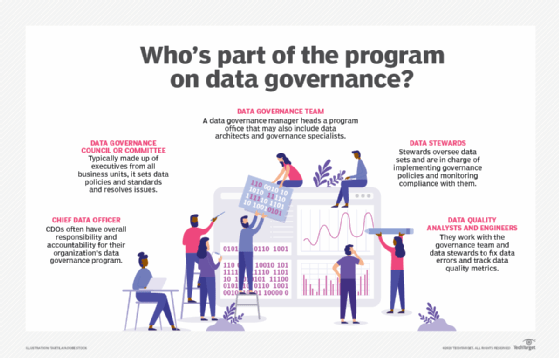
Ownership matters here. Mobile strategy needs an individual or team responsible for inventory, access, policy enforcement, remediation and recurring review, with clear ties to security, application development, IT operations, compliance and business stakeholders.
This device-level governance complements app-level security. App audits focus on risks such as APIs, authentication, code, data storage, hardcoded secrets and third-party components. Device and endpoint audits bring governance to mobile device management (MDM), unified endpoint management (UEM), BYOD, patching, mobile threat defense, encryption, remote wipe, compliance, access controls, segmentation and remediation.
Device-level controls are not enough on their own, especially in BYOD and mixed-ownership environments. Organizations might also need mobile application management or UEM policies that separate corporate apps and data from personal use, limit how data moves between managed and unmanaged apps, and allow corporate data to be removed without wiping the entire device.
Together, these layers show why mobile is changing not only where enterprise data starts, but also how it has to be governed. Mobile is becoming a key part of the enterprise governance infrastructure because it is now a key part of the enterprise data lifecycle.
Mobile compliance has to follow the data
Mobile governance is ultimately about access to sensitive data across users, devices and applications. As mobile devices increasingly touch customer, financial, operational and employee data, mobile compliance has become part of the broader enterprise governance problem.
That does not apply only to highly regulated industries. Mobile now plays a role in ordinary enterprise workflows, from field service and customer support to HR, logistics, finance, collaboration and operations. Any workflow that captures, changes, transmits or acts on business data from a mobile device can create compliance obligations.
Compliance has to follow the data from the first point of capture through the systems that later use it.
That requires organizations to control, monitor and review access across users, devices and applications. That is simpler to say than to do. Mobile environments often include diverse devices, mixed ownership models, shifting networks, changing application ecosystems and multiple categories of data. They also connect to a wider set of enterprise systems, tools and workflows than mobile strategies of the past.
This further demonstrates why mobile is now part of the enterprise data lifecycle, not a side channel. It belongs inside enterprise governance, not outside it.
That also makes ownership essential. Mobile strategy needs an owner or accountable team after launch because mobile compliance depends on policy, identity, application controls, monitoring, auditability, records, training, enforcement and incident response working together across the device and application lifecycle.
Mobile governance requires coordination across data, security, compliance, application and business stakeholders.
Compliance has to follow the data from the first point of capture through the systems that later use it.
Mobile strategy needs ownership after launch
The governance work does not stop when the app launches or when the device is enrolled.
Mobile apps change. APIs change. Devices age. Operating systems update. Employees leave. Contractors rotate in and out. Business units add workflows. Compliance requirements shift. New data types become sensitive once they are connected to other systems.
That is why mobile governance needs ownership after launch. Someone has to be accountable for the app, the endpoint and the data path. That might be a single owner, but in larger organizations it is more likely to be a team that connects application development, endpoint management, security, compliance, data governance and business stakeholders.
This is also where application security testing belongs. Security cannot be treated as a final review after development is mostly done. It has to be part of how mobile apps are built, updated and maintained, especially when those apps connect to sensitive systems or feed downstream analytics and automation.
The larger point is that mobile has become a peer of other enterprise application and endpoint environments. It deserves the same level of vigilance as on-premises applications, desktop environments and traditional endpoints. In some ways, it can be harder to govern because devices are more distributed, ownership models vary, networks change and users move across work environments.
The shift is not from device management to data governance as an either-or choice. Device controls still matter. But mobile governance also has to protect the data path across apps, users, endpoints and systems.
Mobile governance is not a separate bureaucracy. It is a way to make sure mobile work can become trusted enterprise data.
James Alan Miller is a veteran technology editor and writer who leads Informa TechTarget's Enterprise Software group. He oversees coverage of ERP & Supply Chain, HR Software, Customer Experience, Communications & Collaboration and End-User Computing topics.