
Getty Images/iStockphoto
ServiceNow AI push exposes different priorities in HR and IT
While the vendor introduced AI agents that can cross departments to execute common HR processes, experts noted the risks HR departments face when adopting the technology.

At its Knowledge 2026 conference this week, ServiceNow focused on how its AI agents can operate across business departments and software stacks. It introduced new agentic AI tools across its platform, including a new Autonomous CRM product and more agentic tools for a similar HR offering unveiled last fall.
But the conference also made clear that companies deploying AI agents will find their business units having different priorities and concerns. For example, what works for an IT help desk might not work for HR.
CVS Health, a ServiceNow user, illustrated those differing priorities in a conference session.
The company deployed ServiceNow's EmployeeWorks product, which creates a single front door for handling queries and agent tasks. Building it required input from HR, procurement, IT, store operations and other units.
"We all wanted different things," Joe Lombardi, associate vice president of digital workplace at CVS Health, said during the conference session. "IT wanted call deflection. HR wanted quality answers that were accurate."
Lisa Highfield, principal director at HR research and advisory firm McLean & Co., said shared platforms like ServiceNow create a false equivalence between IT and HR use cases.
"When an IT agent gets it wrong, you log a follow-up ticket," Highfield said in an email, but when an HR agent gets a critical issue wrong, "you may have a compliance issue or a damaged employee relationship."
HR processes require agents to work across departments
ServiceNow framed its HR announcements as part of a broader strategy to connect agents across enterprise systems.
"What we're trying to do is connect the entire ecosystem end to end, and we're approaching it mostly from the employee experience," said John Phillips, group vice president of employee experience at ServiceNow, in an interview. "Part of our A to A [agent to agent] strategy is to be able to talk to any agent and be able to hand off with any agent."
For example, a simple employee name change can require multiple system changes across disparate systems, a process the ServiceNow agents are designed to handle, he said.
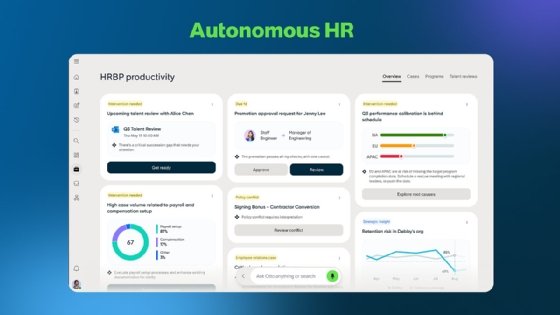
The new offerings include ServiceNow Otto and EmployeeWorks, which, according to the vendor, provide a unified AI experience for routing and resolving employee requests across systems. Some HR-specific tools are due out later this year: the HRBP (HR Business Partner) Experience and the next-generation manager experience, which aim to automate administrative work and surface talent insights for managers and HR professionals.
While IT might jump in with fast adoption of AI agents, HR's foremost concern may be legal, compliance and regulatory risks, analysts said.
"When it comes to using AI agents, HR teams need to ask whether they should deploy the agent, rather than whether they can do so for a given task," said Evelyn McMullen, an analyst at Nucleus Research.
Agentic AI "has brought forth a fear of the unknown on multiple fronts, including compliance and security risk, and end-user job security concerns," McMullen said. "No organization wants to be made an example of how not to deploy AI."
Meanwhile, Gartner analysts are warning HR leaders that their departments risk being dissolved or outsourced if they move too slowly on AI and allow other departments, such as IT, to drive HR transformation efforts. "The risk isn't just falling behind competitors -- it's becoming irrelevant," analyst Hanne Nieberg wrote. "As AI augments 100% and performs up to 50% of current HR tasks, organizations that don't adapt their operating model will face declining productivity, diminishing strategic influence and the inability to attract top talent who expect modern, AI-enhanced HR experiences."
Holger Mueller, vice president and principal analyst at Constellation Research, said there are many low-risk HR processes -- especially in call centers that run on tickets -- that are ready for automation, including employee and manager self-service processes. These typically include tasks such as checking vacation balances and approving timesheets.
When employees bypass ticketing systems and seek help from HR professionals, it takes time. "If they can do that with agents -- that takes away the HR pro," Mueller said.
Statistics point to decline in need for human labor
Beyond automation, AI is being deployed with multiple goals in mind: to control labor costs, limit hiring and shift employees to more sophisticated activities.
The latest benchmarking data from the Society for Human Resource Management (SHRM) shows a decrease in staffing ratios, from 1.98 HR professionals per 100 employees in 2025 to 1.67 HR workers in 2026 -- a possible signal that HR is becoming more efficient.
SHRM said it doesn't have data on the reasons for the 16% drop in staffing ratios. "We have heard anecdotally of organizations using AI to automate many tasks within HR," said Eddie Burke, a SHRM spokesperson, in an email.
Separately, in its "State of AI in HR" report, SHRM found that recruiting has experienced the highest levels of AI adoption in organizations, at 27%, and might be the HR function where these cuts are happening.
ServiceNow itself is seeing some efficiency gains from AI. In the April 22 earnings call, Amit Zavery, ServiceNow's chief product officer and COO, said AI is speeding support. "Typically, a human requires around two days based on the case volume to resolve it. We are now able to do that in less than 20 minutes."
On the same call, Chairman and CEO Bill McDermott said ServiceNow held its headcount flat despite 19% year-over-year subscription revenue growth. He didn't distinguish between HR, IT or other internal operations.
Patrick Thibodeau has worked for several decades as an enterprise reporter, focusing on IT and workforce management, ERP, high-skills immigration, tech policy, and high-performance computing.
Dig Deeper on HR Software
-
![]()
Why CIOs and CHROs should be forming strategic partnerships
By: Harriet Jamieson
-
![]()
Who do you trust? HR's conflicted role in the AI disruption
By: David Essex
-
![]()
SHRM CEO gives HR needed pep talk amid bad rap, AI challenges
By: David Essex
-
![]()
HR leaders weigh in on the reality of AI initiatives
By: Molly Driscoll