Records management certifications can help professionals build expertise in information governance, privacy, security, compliance and records lifecycle management.
Records and information governance professionals come from a wide variety of backgrounds. Some enter the field through legal, compliance, privacy or cybersecurity work. Others come from document management, content management, archives, IT or business operations.
New records managers quickly learn that there is more to the job than building file plans and securing records. In enterprise environments, records management overlaps with legal discovery, regulatory compliance, privacy, cybersecurity, retention policy, digital archives, content systems and broader information governance work.
That is where certifications can help.
Records management certifications can help new and experienced professionals assess their skills, identify knowledge gaps and build expertise in records lifecycle management, information governance, privacy, security and program leadership. Preparing for a certification can also be useful even if a professional never takes the exam, because the study process forces them to review core concepts, terminology and best practices.
There are several certifications relevant to records and information governance professionals. Some focus directly on records management. Others are broader or more technical, covering privacy programs, information security, project management or vendor-specific records systems. The right certification depends on the skills a professional wants to strengthen and the role they want to grow into.
The certifications below are widely recognized in records management, information governance, privacy, security or project management. Requirements, exam structure, pricing and maintenance rules can change, so candidates should review the certification provider's current guidance before applying or registering for an exam.
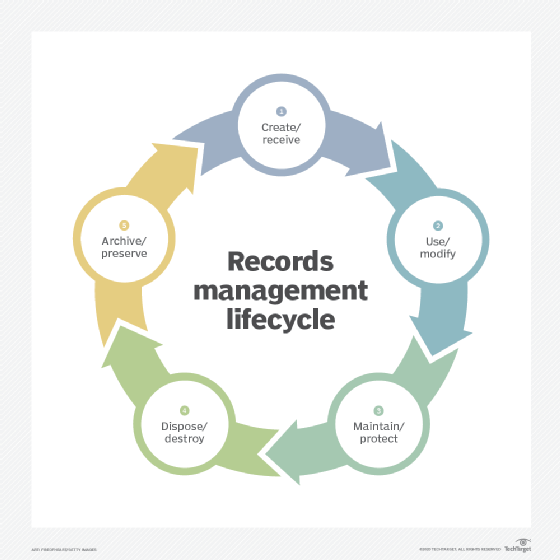
Records management certifications can help professionals build expertise across the records lifecycle, from creation and use to preservation and disposition.
Certified Records Manager
The Certified Records Manager, or CRM, is offered by the Institute of Certified Records Managers. It is one of the most rigorous certifications for records management professionals because it covers not only records lifecycle concepts, but also broader records program management.
The CRM is designed for professionals who need to demonstrate knowledge across the full spectrum of records and information management. It can be a strong fit for records managers, information governance leaders, compliance professionals and others responsible for designing, running or improving a records program.
The CRM exam path includes multiple exam parts, including records and information management topics, technology and a business case component. Candidates should check the ICRM site for current eligibility, exam structure, pricing and maintenance requirements.
Certified Records Analyst
The Certified Records Analyst, or CRA, is also offered by the Institute of Certified Records Managers. The CRA covers a subset of the CRM body of knowledge and focuses more directly on core records lifecycle management.
The CRA can be a good entry point for professionals who are newer to records management or who do not yet have broad records program leadership responsibilities. It can also serve as a stepping stone for professionals who may later pursue the CRM.
Because the CRA is connected to the CRM framework, candidates should review ICRM's current requirements to understand which exam parts apply, how the CRA can support a later CRM path and what continuing requirements apply after certification.
Information Governance Professional
The Information Governance Professional (IGP) is offered by ARMA International. It is broader than a traditional records management certification because it focuses on the strategic governance of information across an organization.
The IGP can be useful for professionals whose work extends beyond records operations into information policy, compliance, risk, privacy, data governance, retention, disposition and information value. Professionals in information governance roles might also work closely with data teams as organizations build broader data governance strategies.
The IGP credential is intended for professionals working in strategic information governance roles. Candidates should review ARMA and Pearson VUE guidance for current prerequisites, exam scheduling and testing requirements.
Certified Information Privacy Manager
The Certified Information Privacy Manager, or CIPM, is offered by the International Association of Privacy Professionals. It focuses on how to create, manage and improve a privacy program.
Privacy has become an important concern for records and information governance professionals because many records contain personally identifiable information or other sensitive data. Records managers may need to understand how retention, access, deletion, transfer, discovery and disposition policies intersect with privacy obligations.
The CIPM can be useful for records professionals who work closely with privacy teams, manage records that contain personal data or help design policies for regulated information. Candidates should check IAPP's current exam page for exam format, fees, scheduling and certification maintenance requirements.
Certified Information Security Manager
The Certified Information Security Manager, or CISM, is offered by ISACA. It focuses on information security governance, risk management, security program management and incident management.
CISM is more technical and security-focused than most records management certifications. It can be useful for records and information governance professionals who manage sensitive records systems, work closely with cybersecurity teams or oversee records environments that contain regulated or high-risk information.
Because CISM includes experience requirements and ongoing professional education obligations, candidates should review ISACA's current certification guidance before pursuing it.
Project management certifications
Records managers often run projects, not just records inventories. They may lead retention schedule updates, system migrations, legal hold improvements, data cleanup projects, information governance rollouts or records technology implementations.
That makes project management skills useful for records and information governance professionals.
The Project Management Institute offers several project management certifications, including the Project Management Professional, or PMP, and the Certified Associate in Project Management, or CAPM.
The PMP is designed for experienced project leaders, while the CAPM can be a better fit for professionals earlier in their project management careers.
Professionals who work in Agile project management environments can also consider Agile-focused certifications, especially if their organizations use Scrum, SAFe or other Agile frameworks.
Candidates should compare project management certifications based on their experience level, project responsibilities and how their organization manages work.
Questions to ask before choosing a records management certification
Does the credential match my current role or the role I want next?
Does it focus on records management, information governance, privacy, security or project management?
What experience or education requirements apply?
What exam format and study commitment should I expect?
What continuing education or maintenance requirements apply?
Will my employer recognize or reimburse me for the certification?
Does the credential support the systems or regulated information I work with every day?
Vendor certifications
Records management principles matter, but so does practical system knowledge. Professionals should consider training or certification for the records management, enterprise content management, document management or information governance system their organization uses.
A vendor certification is usually most valuable when paired with broader records, information governance, privacy or security credentials.
Vendor training can help records professionals understand how records policies are applied in real systems. It can also help them configure retention rules, security settings, workflows, legal holds, disposition processes, search tools and audit features more effectively.
A vendor certification is usually most valuable when paired with broader records, information governance, privacy or security credentials. The combination can show that a professional understands both the principles of good records management and the practical tools used to apply those principles.
How to choose the right certification
The best certification depends on the role a professional has now and the role they want next.
A newer records professional might start with the CRA or a vendor-specific credential. A records manager responsible for a full program might consider the CRM. A professional moving into enterprise policy, risk or compliance might look at the IGP. Someone who works heavily with personal data might benefit from the CIPM. A professional responsible for records systems that contain sensitive or regulated information might consider CISM.
Before investing in any certification, candidates should review the provider's current body of knowledge, eligibility requirements, exam format, maintenance requirements and training resources. They should also look for practitioners who already hold the certification and ask how useful it has been in real records, compliance or information governance work.
There is not one correct certification path for every records professional. Each credential serves a different purpose. The right choice is the one that strengthens the skills a professional needs most and supports the direction they want their career to take.
Laurence Hart is the director of consulting services at CGI Federal and has more than 20 years of IT experience.