A demo or pilot launch of an enterprise software product or feature is one thing. Whether it works at scale across the wider enterprise is another.
Agentic AI is a useful example. Sanctioned pilots are everywhere, and that makes sense. The potential benefits are obvious: faster workflows, lower costs, better routing, more consistent execution and new ways to automate repetitive work.
But moving from a promising pilot to broader enterprise deployment has proved frustrating for many organizations.
A Deloitte State of AI in the Enterprise report points to the gap between experimentation and production. Pilots can run with small teams, cleaner data and isolated environments. Production deployment is different. It requires infrastructure investment, integration with existing systems, security reviews, compliance checks, monitoring and ongoing maintenance.
That is where many AI efforts get stuck.
The issue is not always that the technology does not work. In many cases, it does work, especially in narrow use cases such as customer support, document processing, workflow routing, meeting follow-up, inventory planning and other bounded tasks with clear inputs and outputs.
The harder question is whether the pilot was designed to become something larger.
A demo can show that an AI agent can perform a task in a controlled setting. A pilot can show that the technology works less than limited conditions. But neither proves that the organization has addressed the data quality, governance, security, workflow design, value metrics and operating model needed to use that agent repeatedly across the enterprise.
That is why agentification pilot purgatory is such a useful phrase. The pilot might be promising, but the scale questions arrive too late. Production exposes what the demo can hide: messy data, system integration, compliance requirements, monitoring needs, edge cases, ownership questions and workflows that are harder to redesign than they looked during the proof of concept.
Agentic AI has a pilot-to-production problem, not just a hype problem. Together, those problems make the current moment difficult for buyers. The hype creates pressure to move quickly. The production realities require organizations to slow down long enough to ask whether the use case, data, governance and operating model are ready to scale.
Pilots need to be designed for production
The real buyer risk is not only that the AI does not work. It is that the company has not designed the use case to scale.
That distinction matters. A pilot can run in a contained environment with fewer users, fewer integrations and fewer operational consequences. Production is different. It requires integration with existing systems, security reviews, compliance checks, monitoring, maintenance and a clear understanding of who owns the workflow once the agent is live.
That makes the pilot stage more important, not less.
Organizations should not build an agentic AI pilot and then ask scale questions later. They need to ask those questions before and during the pilot. What enterprise problem is this solving? What data does it need? What systems does it touch? What happens when the edge cases show up? What value will be measured? Who maintains it? Who can override it? What happens when the workflow changes?
A pilot that solves an isolated productivity problem might still be useful.
But that is not the same as proving enterprise readiness.
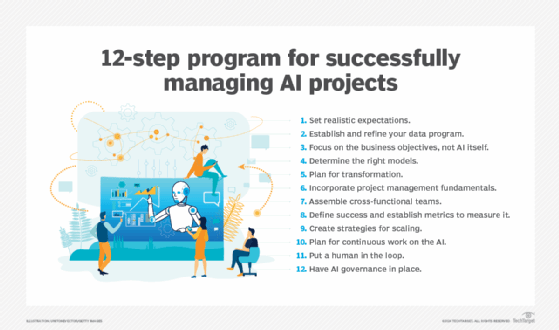
Agentic AI pilots need more than a working demo. Production readiness depends on realistic expectations, data preparation, business alignment, change management, scaling plans, human oversight and governance.
This is where buyers need to distinguish between proof of capability and proof of deployment. A demo can prove possibility. A pilot can prove that something works in a limited setting. Deployment proves whether the company can support the workflow, govern the data, manage the risk, measure the value and keep the system running when the use case moves beyond controlled conditions.
That is especially important for agentic AI because agents are not only summarizing or recommending. In many cases, they are expected to take action, trigger steps, retrieve data, route work or coordinate with other systems. The more an agent is allowed to do, the more important the deployment questions become.
Those questions also extend beyond technical readiness. Buyers need to understand agentic AI compliance and regulation issues before an agent moves from a contained pilot into production, especially if it can act, move data, trigger approvals or affect customer, employee, supplier or financial records.
Narrow use cases might show the clearest value
Agentic AI is not mostly smoke and mirrors. There are real examples showing that the technology can produce meaningful value when the use case is specific, the data sources are trusted, the workflow is defined and the human decision boundary is clear.
Aeropuertos Argentina is a useful example. The company, which manages 35 airports in Argentina, created an SAP agent to mitigate weather challenges on the SAP Business Technology Platform. The S.N.O.W. Agent combines weather data, runway sensor data, supply chain data and other information to compose work orders, send alerts to the right people and check the availability of equipment needed to clear runways.
The reported result is significant: The company said S.N.O.W. Agent reduced the time required for administrative work by 90%. That is not a vague productivity promise. It is a specific operational benefit tied to a defined workflow.
Agentic AI has a pilot-to-production problem, not just a hype problem.
The important point is what this agent has that many broader agentic AI pilots do not. It has a clear, narrow job. It is not trying to automate the whole enterprise. It supports a defined operational process where speed matters, the data sources are known and human judgment still owns the final decision.
That human boundary matters. The agent collects information, analyzes conditions, creates alerts and supports work orders. But it does not make the final operational call on its own. Humans remain responsible for deciding what action to take based on information from systems and data sources the organization already trusts.
That is why this example helps balance the broader concern about agentic AI pilots. The technology can work. It can work well. But the strongest early deployments are likely to be the ones with clear goals, reliable data, defined workflows, human oversight, measurable outcomes and obvious ownership.
Deployment proof is different from a successful demo
The point is not to dismiss agentic AI. The point is to evaluate it as enterprise software.
That sounds obvious, but it is easy to lose in the current AI cycle. Agentic AI is often presented as something different from traditional enterprise software because it can reason, act, summarize, orchestrate or execute across tools. In some ways, it is different. In other ways, it should be judged by the same practical questions that have always mattered.
Does it fit the workflow? Does it rely on trusted data? Does it respect permissions? Can it be monitored? Can it be maintained? Does someone own the outcome? Does it still work when the real environment is messier than the demo?
Those questions become even more important when the agent crosses boundaries among ERP, HR, CX, communications and collaboration, and end-user computing systems. An agent that touches one workflow may be manageable. An agent that reaches across multiple systems, business units and sources of record raises a different set of questions.
Questions that separate pilots from production
A useful AI pilot should leave buyers with more than enthusiasm.
Before expanding it, ask the following questions:
What did the pilot actually prove?
Was the use case narrow by design?
What data did the agent rely on?
Was that data cleaned up for testing?
Which systems would it touch in production?
Where would human approval be required?
Who owns the workflow after launch?
What happens if the agent is wrong or stalls?
What value was measured?
Would the result hold up with more users, messier data and more exceptions?
A pilot can show that an AI agent works. Production shows whether the organization is ready to run it.
That is where the companion issue comes in: partial automation is the current buyer reality. Agentic AI can automate pieces of work today, but broad autonomy depends on data, governance, workflow design, integration and human handoffs that most enterprises still must build or improve.
Buyers should make vendors separate the pieces. What is live now? What is still planned? What is actually automated, and what is only a recommendation? What worked in a pilot and what has worked in production? They should also ask whether the vendor's AI agent frameworks can support the enterprise's monitoring, integration, governance, escalation and human-review requirements after launch.
They should ask whether the agent is generally available, in beta or still on the roadmap. They should ask whether it is live with customers or mostly shown in demos. They should ask what use case the pilot was designed to prove and whether scale was considered from the beginning.
They should also ask what systems the agent touches, what data sources it relies on, how data quality is validated and what identity, authorization and permission rules apply.
The next set of questions is about action. What can the agent do on its own? What still requires human review or approval? What happens when the workflow changes? Who owns the agent after deployment? How are errors, exceptions and escalations handled? What measurable value has been produced, and can that value be repeated outside the showcase use case?
Agentic AI is already useful. But buyers should resist treating vendor demos as deployment plans. The harder and more important work starts after the demo, when the enterprise must decide whether the use case, the foundation and the organization are ready for production.
James Alan Miller is a veteran technology editor and writer who leads Informa TechTarget's Enterprise Software group. He oversees coverage of ERP & Supply Chain, HR Software, Customer Experience, Communications & Collaboration and End-User Computing topics.