Vendors increasingly promise an "autonomous enterprise," with AI agents and LLMs at the center of enterprise automation. But the gap between vendor vision and buyer deployment reality remains wide -- and is likely to do so for the foreseeable future.
That is not because this level of automation is impossible. It is already possible in smaller, well-defined use cases. The harder issue is whether it is practical across the enterprise once data quality, compliance, governance, security, interoperability and workflow complexity are considered.
For now, the more useful phrase appears to be "partial automation."
That is where most enterprises are today. Agentic AI can automate tasks, accelerate repetitive work and help users move through processes more quickly. But broader autonomy still depends on foundations that are hard to perfect across the whole enterprise software stack: orchestration, contextual awareness, data quality, permissions, system integration and reliable human handoffs.
That is why AI demos are not enterprise deployment plans. A demo can show what an agent might do. It does not prove that the enterprise has the foundation to let the agent do it repeatedly, safely and usefully in production.
Partial automation is the more practical buyer frame. It asks what part of the work is actually being automated now, what remains under human control, what depends on future roadmap promises and what foundation the agent needs before it can act.
AI agents need a foundation to act from
SAP's approach helps show why those foundations matter.
SAP is clearly pushing toward a more autonomous enterprise software model, with agents, Joule assistants, a knowledge graph, a context layer and AI embedded across major business processes. But it is doing so on top of its long-standing ERP foundation.
SAP's core argument is that ERP remains the trusted system of record for running the business and that AI becomes more useful when it can draw from governed enterprise data, identity rules and authorization controls.
That is not just a demo story. It is a deployment story.
The workflow might look simpler to the user, but the underlying process could be more complex.
SAP's push to partially automate the ERP suite illustrates the questions buyers should ask whenever a vendor presents dozens or hundreds of agents across finance, supply chain, procurement, human capital management and customer engagement.
What is available now? What is still on the roadmap? Which parts of the workflow are actually automated? What still requires human review? What data foundation does the agent depend on? What governance, security and compliance controls are already in place?
The trusted system-of-record point matters beyond SAP. For agentic AI to work in any enterprise environment, it must run on reliable business data and clear process logic. In many companies, ERP might be the natural place to start because that is where so much operational, financial, procurement and supply chain data already lives.
That is why the debate over exposing its ERP data matters: AI agents become more useful when they can reach trusted enterprise data, but that access also raises governance, ecosystem and control questions.
In other areas, the system of record might be HR, CRM, IT service management, communications or endpoint management software. The principle is the same: The agent is only as useful as the foundation it can act from.
That does not mean every agent has to start in ERP. It means buyers should know what the foundation is. They should know where the data comes from, which system owns the record, how permissions are enforced and what happens when the agent needs context from more than one application.
Without that foundation, an agent might still look impressive in a demo. It could still summarize, recommend or complete a task. But the deployment question is whether it can do that work in a governed, secure and compliant way when the workflow touches real systems and real business consequences.
Partial automation is not a small idea
Partial automation can sound modest compared with the autonomous enterprise.
It should not.
For many organizations, partial automation is where the most realistic value is likely to come from first. That means narrower use cases such as invoice matching, procurement intake, supplier risk checks, supply chain exception alerts, HR case routing, benefits Q&A, customer service summaries, meeting action items, IT ticket triage and device remediation suggestions.
Partial automation is not limited to the largest enterprise deployments. Salesforce's move to add Agentforce agentic AI to SMB packages shows how vendors are also packaging agents around more tactical work, everyday busy work and easier entry points.
Those are not trivial use cases. They are the connective tissue of enterprise work. They sit among systems, teams, approvals, records and decisions. They are also the kinds of workflows where small delays, bad handoffs or inconsistent execution can add up.
The value of agentic AI might not be that it makes the whole enterprise autonomous. Rather, it lies in taking well-defined pieces of work and making them faster, more consistent or easier to route.
That is still meaningful.
It also fits how enterprise software usually changes. Most companies do not transform all at once. They automate a workflow, improve a handoff, clean up a process, connect a data source, reduce an administrative burden or remove a repetitive step. Over time, those changes can add up.
But the buyer's question should stay grounded. What is the agent doing now? What does it need from existing systems? Where does it stop? Where does a person step in? What must be true before this can expand?
Partial automation is not failure. It may be the responsible path to broader deployment of agentic AI.
Customer service is another example. Tools such as Agentforce Contact Center point toward a model in which voice, CRM data, digital channels, automation and AI agents are tied more closely together. That can create useful workflow automation, but it also makes the data, handoff and oversight questions more important.
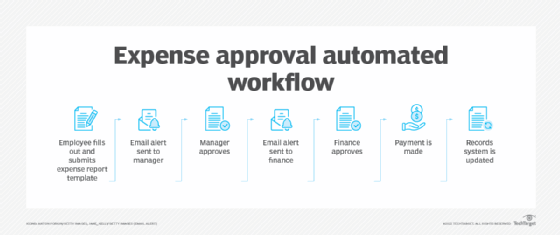
AI agents are most useful when they automate defined pieces of enterprise work, such as routing approvals, updating records and moving tasks through governed workflows.
Agentic workflows are often more complex underneath
Salesforce's Agentforce Operations shows another side of the automation question.
Agentforce Operations is not just about putting an AI agent in front of a user. It is about taking messy back-office work -- documents, spreadsheets, approvals, compliance gaps and ERP-connected processes -- and turning its pieces into agent-driven workflows.
That matters because automating a task is not always a one-for-one substitution. An agent might not perform the work the same way a human would. A process that might look like 10 steps in a traditional software workflow could become 50 smaller steps when it is broken down for agents.
That does not necessarily make the work simpler. In some ways, it makes the workflow more complex. But if the steps are granular, structured and machine-executable, the agent might be able to move through them faster and more consistently than a person could.
That distinction is important for buyers. The workflow might look simpler to the user, but the underlying process could be more complex.
Organizations still need to ask the same hard questions about governance, oversight, ownership, integration and maintenance. What systems does the agent touch? What documents does it read? What data does it extract? What approvals does it trigger? What happens when the workflow changes? Who owns the agent when it makes a mistake or stalls?
In that sense, Agentforce Operations tackles workflow orchestration in a way that shows why agentic AI is not simply a before-and-after automation story. The process itself may change. The way the work is divided, executed and monitored might change as well.
Some of this might sound self-evident. Enterprise software buyers have always needed to understand how a product fits into existing workflows. But agentic AI raises the stakes because agents can act across systems, chain together steps, touch business records and reshape workflows that were previously handled by people or deterministic automation.
That is why partial automation still requires serious governance. A workflow can become more efficient and more complex at the same time. Buyers need to understand both sides before they expand from one use case to many.
Questions that separate automation from autonomy
Before treating an AI agent as autonomous, ask the following questions:
What is automated now?
What is still on the roadmap?
Which systems does the agent touch?
What data does it rely on?
Where is human approval required?
What can the agent do on its own?
How are permissions enforced?
How are conflicts with other agents handled?
Who owns errors or exceptions?
What happens when the workflow changes?
If those answers are unclear, the buyer might be looking at useful automation, not real autonomy.
The autonomous enterprise is still an operating model problem
The phrase "autonomous enterprise" can make it sound as if autonomy is mainly a technology milestone.
It is not.
Autonomy is also a question of operating model. An enterprise must decide which agents are allowed to do what, which systems they can touch, what data they can use, when humans remain in control and who is accountable when something goes wrong.
That is not a reason to avoid AI agents. It is a reason to be more precise about them.
A vendor may announce agents across finance, supply chain, procurement, HCM and customer engagement. Buyers should welcome the product direction, but they should also ask how those agents work together, how they avoid conflicts, how they respect system-of-record boundaries and how they handle workflows that cross vendor platforms.
That will matter more as companies deploy agents from multiple software providers. One vendor's agent might operate in ERP. Another may work in CRM while others summarize meetings, trigger follow-ups, pull information from collaboration tools or support HR cases or IT tickets.
The question is not only whether each agent works on its own. The harder question is whether the enterprise can govern what happens when they all touch the same work.
That is where interoperability, orchestration and context become more than buzzwords. They become deployment requirements. If agents cannot understand the systems around them, respect business rules and hand work back to people at the right time, autonomy will stay limited no matter how impressive the demo looks.
That is why partial automation is the real near-term promise. It lets enterprises find value in what agents can do now, while still building the data, governance, integration and operating model needed for broader automation later.
True autonomy across the enterprise remains more aspiration than reality. Human review will still be essential at key points. Buyers should ask not only what an agent can do, but what foundation it runs on, how it avoids conflict with other agents or systems, when it hands work back to people and why the organization should trust it to act in a governed, secure and compliant way.
The future may be more autonomous.
The present is more practical. For now, that is where buyers should focus.
James Alan Miller is a veteran technology editor and writer who leads Informa TechTarget's Enterprise Software group. He oversees coverage of ERP & Supply Chain, HR Software, Customer Experience, Communications & Collaboration and End-User Computing topics.