When enterprise edge cases become core architecture
What once felt like edge-case technology decisions around AI, mobile access and hiring are now shaping core enterprise architecture, governance and risk strategies.
Decisions that organizations once felt comfortable postponing are now showing up much earlier in enterprise architecture conversations. Not because the technologies themselves are brand new, but because the cost of waiting has gone up.
For years, many teams could afford to treat certain capabilities as "we'll get to those later" problems. Access models could be tightened after rollout. Data could be unified once systems were in place. Governance could be layered on once the value was clear. That sequencing is getting harder to sustain.
Across enterprise software, AI and access are increasingly part of the system from the beginning, not additions at the end. They show up inside core platforms, planning workflows and the paths employees and partners use to reach enterprise systems. As a result, architecture, data and governance questions are surfacing earlier than many organizations expect -- often before ownership models, guardrails or even internal alignment are fully settled.
What matters most is not the presence of any single technology, but the requirements that come with it. Data that once lived in separate systems now must be consistent and trusted. Mobile devices are no longer occasional access points but everyday gateways. Hiring workflows introduce identity and access considerations sooner than many teams planned for. As those realities stack up, decisions that once arrived late in projects are moving closer to the start. Architecture and governance stop being cleanup work and start becoming prerequisites.
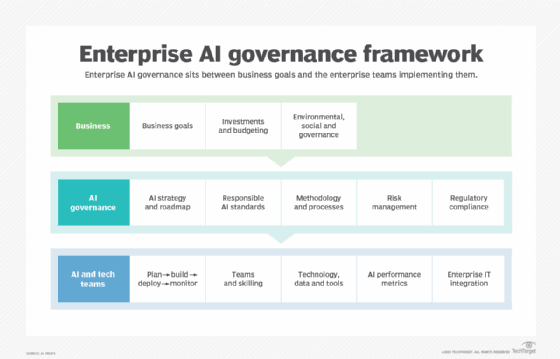
AI governance is becoming a central coordination layer as enterprise architecture decisions are being made earlier in the lifecycle.
How AI, mobile and hiring are reshaping core enterprise workflows
That shift is easy to see in SAP's recent look at AI-native systems for retailers. On the surface, the story is about forecasting and operational efficiency. Underneath, it is really about data. The AI only works if information is unified -- not just within a retailer's own systems, but across suppliers and partners as well. Without that shared foundation, the automation breaks down.
What is different this time is where that capability sits. Instead of collecting data, handing it off to specialists and acting later, planners can interact directly with AI during the planning process. Natural language interfaces collapse steps that used to require expert intervention. Decisions that were previously made downstream are pulled forward into earlier stages of the workflow.
SAP's use of Model Context Protocol extends that idea further. Once data is unified and trusted internally, it can be securely exposed to external AI systems and search platforms. That means enterprises are no longer designing data only for internal consumption. They are designing it for machines outside the organization as well. When data becomes discoverable in that way, weak governance and inconsistencies stop being contained problems.
What once felt like edge cases in enterprise technology are now shaping core architectural decisions.
A similar dynamic is playing out in mobile security. The questions themselves are familiar, but the role of mobile has changed. Smartphones and tablets are no longer secondary access paths. For many organizations, they have become one of the primary ways employees connect to enterprise networks, applications and cloud services.
As described in reports on attacks on mobile applications in the enterprise, mobile apps now act as gateways to email, collaboration platforms, CRM systems and shared data. That changes the stakes. Mobile security stops being an endpoint problem and becomes an architectural one. Decisions about mobile app security are being made earlier because compromising a single device can expose far more than it once did.
The same pattern is now appearing in hiring. Fake job applicants -- particularly AI-generated identities -- are no longer just a recruiting nuisance. They represent another path into enterprise systems and data. When hiring processes become an access vector, the risk is no longer confined to HR.
What was once handled informally by recruiting teams increasingly requires formal coordination across the organization. Chief HR officers are working more closely with IT, security and legal teams, often under a designated executive owner. Hiring has become a front-line security concern rather than a downstream operational one.
Why these shifts force earlier architecture and governance decisions
Taken together, these examples point in the same direction. The pressure is moving upstream.
AI is no longer layered onto finished systems. Mobile is no longer treated as an edge. Hiring is no longer insulated from broader governance and security models. Each of these shifts forces organizations to think earlier about data, access, ownership and interoperability than they are used to doing.
What has changed is not just ambition, but feasibility. AI can now work across dozens of disparate systems in ways that were previously unrealistic. Long-standing integration challenges are no longer theoretical problems. They are increasingly actionable -- and increasingly unavoidable.
What enterprises are now forced to confront
As a result, integration, identity and governance can no longer sit quietly in the background. These decisions shape whether AI initiatives move beyond experimentation, whether access paths remain defensible and whether risk stays contained or spreads.
Organizations that already have a clear view of their data, workflows and access models will find it easier to adapt. Those who assumed these issues could be addressed later might discover they have already made architecture decisions they did not realize they were making.
James Alan Miller is a veteran technology editor and writer who leads Informa TechTarget's Enterprise Software group. He oversees coverage of ERP & Supply Chain, HR Software, Customer Experience, Communications & Collaboration and End-User Computing topics.