AI in law offices: How it's being used and the risks
Document discovery, court motions, patent protection, focus groups and client calls are tasks where AI saves law firms significant time and costs, while keeping humans in the loop.
Law firms aren't typically among the first to embrace innovative technologies, but in an industry where protecting sensitive data is paramount, they're using AI to summarize large volumes of information, write drafts, support legal research and analyze documents.
Yet there have been more than 1,700 reported cases of lawyers filing briefs containing AI-generated errors. With penalties and fines on the rise, lawyers across the board are stressing that human oversight is essential.
"Every fake citation traces back to two things people misunderstand about these tools,'' said James Rubinowitz, managing partner at Rubinowitz Law Firm and adjunct professor at Cardozo School of Law. "First, these AI systems are prediction engines, not answer engines. Second, attorneys assume that because a legal citation looks legitimate, it is, so they never go back and check it. … [A]s these [AI] systems get more sophisticated, they cite real cases but hallucinate the findings."
A formal opinion from the American Bar Association on the use of generative AI (GenAI) states that lawyers must have some understanding of the tools they use: "[L]awyers should either acquire a reasonable understanding of the benefits and risks of the GenAI tools that they employ in their practices or draw on the expertise of others who can provide guidance about the relevant GenAI tool's capabilities and limitations. … Given the fast-paced evolution of GenAI tools, technological competence presupposes that lawyers remain vigilant about the tools' benefits and risks."
To maximize the benefits of AI while proceeding with caution, several lawyers and their law firms are setting the pace. They're using AI and automation in practical and innovative ways, including for patent applications, drafting motions, focus groups and client interactions.
Patents and IP protection
Traditional partnership structures "tend to be very brittle, very hard to change, very slow moving,'' said Michael Drapkin, managing partner at patent law firm Landfall IP. He, along with partners and practitioners from his previous practice, formed an "AI-native" IP firm.
What used to take weeks and cost thousands of dollars now takes less time with deeper knowledge of inventory.
Michael DrapkinManaging partner, Landfall IP
Before adopting AI, Drapkin said a typical patent application process, which included multiple calls and conversations between inventor and drawing artist, would take up to six months. Landfall has been using a proprietary discovery AI agent on calls that evaluates every conversation, asks questions and extracts relevant information in about 25 minutes, he explained. The agent then conducts research and provides patent availability, with a human in the loop during the process, Drapkin added.
"What used to take weeks and cost thousands of dollars now takes less time with deeper knowledge of inventory and digs down to the most strategic points … to direct the patent application in the right way,'' Drapkin said. His clients "can't believe the speed that we're moving at and the quality,'' he added, "so, it's been kind of a really welcome reception."
At first, there were questions about AI's trustworthiness, Drapkin said, but "if you optimize what AI does well and you match it with what attorneys do well," AI can be beneficial "as long as you … verify and magnify and think about things the AI can't." The firm has also put several structures in place to have AI review itself, he noted, "and you can get much better results doing it that way."
Focus group preparation
Daniel Cote, trial strategist and focus group moderator at legal consultancy Total Trial Solutions, had used ChatGPT for personal matters when he decided to apply AI to his job. Cote said he prompts queries with ChatGPT, Perplexity and Copilot to gather information during focus group sessions and glean potential strengths and weaknesses that might help the defense team better prepare its court case. "I'm not sitting there typing word for word," he said.
AI also recommends documents to review as Cote prepares for a session. "Once I get the documentation, you go through it, and then you can start running simulations through AI to figure out how the focus group can go," he said.
AI has become "a way to deepen our understanding of what's coming from focus groups,'' Cote explained. "Going in, I might think of two good questions and branch out from there," but AI's "going to come up with three additional topics ... It's a different way of thinking about something."
Cote cautioned against relying too heavily on AI. He suggested editing and cross-referencing AI's findings to guard against hallucinations. "A lot of times [the result] sounds really good and promising, and then you find out it's coming from nowhere."
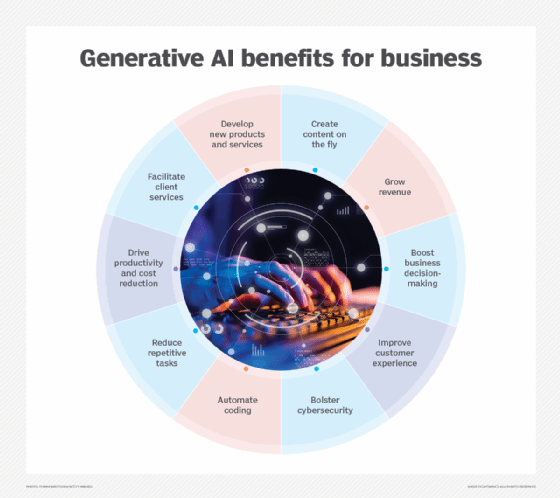
Drafting motions, facilitating client services and saving money are among AI's benefits in law firms.
Demand letters and motion drafting
AI has brought major changes to writing demand letters, drafting motions and searching for information across numerous court cases, according Danny Abir, founding partner at ACTS Law.
"Case managers now draft their own demand letters using tools like ChatGPT, Claude and EvenUp, catching inaccuracies immediately, rather than waiting for someone else to do so,'' Abir said. In motion drafting, he added, AI helps surface counterarguments and runs them past previous rulings by specific judges to tailor legal arguments.
"The biggest transformation has been in mass tort cases,'' Abir said. In such cases, where many plaintiffs file lawsuits against the same defendants, AI's connection to various databases and documents speeds the fact-finding process. "Completing plaintiff fact sheets, which previously took months, now takes a fraction of the time," he noted.
Document discovery and review
"One of the most time-consuming tasks AI now tackles in large federal criminal cases is document review," said Robert Tsigler, principal at the Law Offices of Robert Tsigler. "The volume of pages in discovery packages for federal wire fraud or drug conspiracy cases has historically been in the hundreds of thousands, and the hours spent by attorneys categorizing and tagging the pages have been substantial."
At the minimum, [AI] is a research multiplier, enabling the lawyer to appear more knowledgeable than the other party.
Robert TsiglerPrincipal, Law Offices of Robert Tsigler
In addition to reviewing huge amounts of documents in just a few hours, Tsigler said, the firm's AI document review tool identifies patterns a human reviewer might miss even after hours of doing the same review. Law firms with smaller litigation support budgets, he added, can now competently litigate complex federal cases that previously were handled by bigger firms with larger budgets.
AI systems collect and review transcriptions from hearings as well as court findings "to give an attorney a real picture of what a judge will care about before entering a courtroom," Tsigler said. "That preparation edge is very real in a removal hearing where a person's fate in this country may rest on how one discretionary factor is defined. … At the minimum, [AI] is a research multiplier, enabling the lawyer to appear more knowledgeable than the other party."
Traffic ticket sorting and patterns
Ron Harper, a licensed paralegal and the founder of OTD Ticket Defenders Legal Services in Ontario, Canada, has been using AI since 2024 to sort incoming ticket files according to charge type and likely outcome, which he said, cuts intake processing time by roughly 60%. "We ran a test where we fed 200 speeding ticket disclosures into an AI review tool to flag weak radar evidence before the file ever reached a paralegal,'' Harper recalled. "It caught patterns our staff had missed for years."
On the flip side, Harper said he has "sat across from defendants in court who filed AI-written motions they couldn't defend verbally." Even though an AI motion might look polished and the citations real, he said, "the moment a justice asks a follow-up [such as] 'Why this argument and not that one?' the person goes blank,'' Harper said. "The reason is simple. AI builds an argument by pulling from what worked in past cases ... So, when pressed, there's nothing behind the words. … A justice can tell the difference in about 30 seconds."
Client-facing information gathering
One of McCreadyLaw Injury Attorneys' primary goals was to integrate "Judith," an AI intake agent, into its workflow a few months ago. Judith responds to clients who contact the office, gathers basic information and bridges the gap between first point of contact and first interaction with a human, said Michael McCready, founder and managing partner.
Judith is judged by its ability to process intake from initial contact to the first call with a real person, while recording all necessary information without issues, McCready said. "That is a win in terms of time savings for our firm."
While AI doesn't take vacations, lunch breaks or have a bad day, McCready noted, "AI should be a decision-support tool, not a decision-maker. … I would never suggest that humans are out of the equation. But for certain repeatable parts of the intake process, AI can be more consistent than a human team member who is tired, distracted or stretched too thin."
The law firm also uses AI to summarize depositions, organize medical records, draft client communications, identify case bottlenecks and build custom generative pre-trained transformer models. "AI helps us process large volumes of information quickly, but it does not replace legal judgment,'' McCready cautioned. "We rely on AI to build a bridge between automation and providing a personal touch."
Esther Shein is a veteran freelance writer specializing in technology and business. A former senior writer at eWeek, she writes news, features, case studies and custom content.