GenAI in accounting: Chat BDO's ride from pilot to production
Accounting and advisory firm BDO built and deployed a proprietary AI platform so its tax and audit pros could automate routine tasks and significantly increase client-facing time.

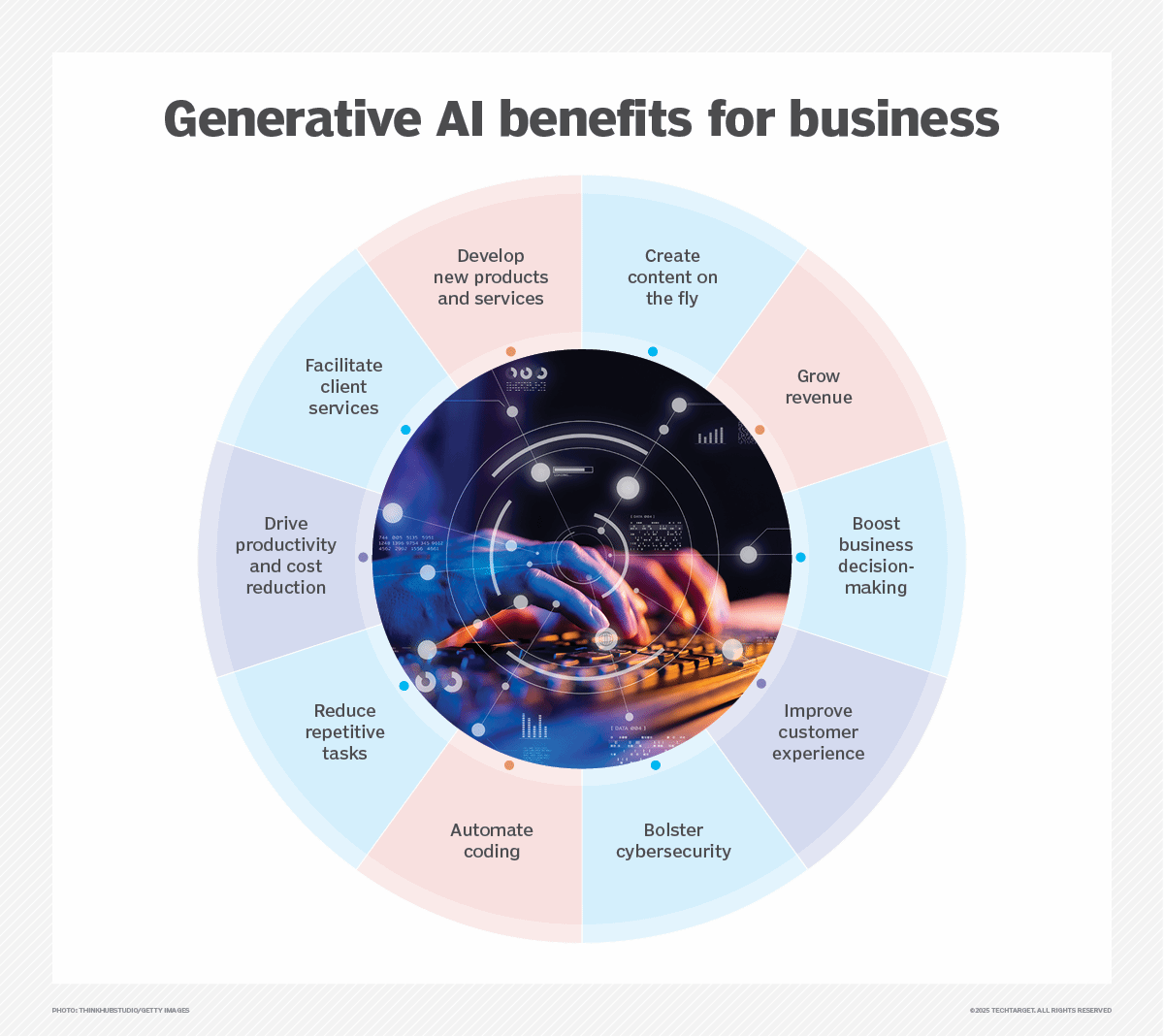
As generative AI reshapes the way businesses operate, leadership teams face a high-stakes balancing act: harnessing innovation and monetizing AI deployments while managing enterprise risk. Organizations integrating AI into their processes and workflows must unlock business value without jeopardizing compliance or introducing risks. The stakes are especially high in heavily regulated industries such as financial services.
One mid-tier accounting and advisory firm built a secure GenAI platform to help its tax and audit professionals automate routine work and focus on higher-value advisory services.
BDO USA is a member of BDO International, a U.K. company with a global network of independent tax, audit and advisory firms. With more than 70 locations across the U.S., the professional services company offers assurance, tax and advisory services tailored for various industries.
Top accounting firms like BDO are investing billions of dollars in AI to develop intelligent virtual assistants with personas to provide client simulation for advisory services. Embedding AI into the workflow enables employees to test tax strategies, financial reporting tools, compliance procedures and advisory recommendations without using real client data. Employees can apply the tools to real client data, but the AI models are not trained on it, ensuring client information remains secure.
This article is part of
What is GenAI? Generative AI explained
BDO's proprietary chatbot 'knows BDO’
At BDO, GenAI powers a proprietary virtual assistant the company calls Chat BDO, developed in conjunction with Microsoft. It's also used to create AI personas -- specialized roles designed for specific tasks -- that employees can interact with as domain experts. BDO used OpenAI GPT models running inside a secure Azure environment to create the original GenAI tool, which is now a platform designed to support specific business tasks.
Businesses can deploy GPT models using Azure OpenAI, AWS, Google Cloud, direct APIs, open source models or on-premises GPUs. By the end of 2025, Microsoft had invested $13 billion in OpenAI (27% ownership), while OpenAI spent $12.43 billion on Azure infrastructure and model inference. As of Q3 2025, roughly 230,000 organizations globally used Azure OpenAI Services, including many Fortune 500 companies such as AT&T, Coca-Cola, KPMG, PwC and Walmart.
While machine learning (ML) has been used in accounting tools for more than a decade, GenAI's large language models (LLMs) have rapidly transformed the possibilities for automating tasks and knowledge retrieval. Accounting firms are highly regulated and follow frameworks when preparing financial statements, such as Generally Accepted Accounting Principles (GAAP) and International Financial Reporting Standards (IFRS). So, AI systems can learn the patterns and rules that auditors apply.
Accounting firms also handle massive amounts of documents: invoices, contracts, receipts, tax filings and financial statements. GenAI and document processing models can extract structured data, summarize documents, compare contracts and help identify anomalies. When employees need to research regulations, AI assistants can quickly summarize tax codes, audit standards and accounting guidelines.
Like other firms in the accounting industry, BDO is building systems that integrate multiple AI capabilities, including intelligent document processing, retrieval-augmented generation (RAG) over internal knowledge bases (such as tax law, accounting standards and firm policies), anomaly detection models and internal AI assistants that can answer technical questions, draft reports and analyze financial data.
Mike Gerhard oversees BDO USA's research and AI development as the chief data and AI officer. He's responsible for BDO's data and AI strategy, including the governance procedures, enablement platforms, and adoption programs that ensure AI is scalable, usable and responsibly deployed across the company. "What we're looking at doing is enabling AI across the firm, so we can make better decisions, deliver work faster and improve our outcomes," Gerhard said.
Deploy quickly but don't overestimate AI's value
BDO started to build proprietary GenAI tools early in 2023, just a few months after OpenAI unleashed ChatGPT. In May 2025, BDO announced plans to invest more than $1 billion globally in AI over the next five years. By then, the professional services company had implemented several pilots along with a responsible AI governance framework and AI literacy training for employees.
The groundwork for building AI prototypes was already in place. Gerhard and his teams learned some hard lessons during their development of robotic process automation and intelligence automation systems, which add AI and ML to standard rules-based process automation. Intelligent automation is used by top accounting firms to automate repetitive digital tasks; software bots perform routine accounting tasks and AI tools detect patterns, interpret documents and offer decision-support.
"The two big things were really the measuring of the ROI and making sure that we understood the pieces that we had up front," Gerhard said. Early on, they tended to overvalue AI initiatives, creating large projects that looked promising on paper but didn't always deliver. Their second priority was building and deploying AI tools quickly. "We'd take what we had -- about 80% complete -- put it into production, see how it worked, and then if it's successful, we could add on to it through the innovation team," he explained. "Both of those approaches are something that we've learned and we've been able to apply to our AI team once we started moving forward in AI."
By early 2023, the strategy evolved to include sophisticated measures like conversational AI to deter employees' unsanctioned use of open source learning and other GenAI sites with limited governance. After buy-in from leadership and other stakeholders, the firm decided to build Chat BDO, a virtual assistant application powered by OpenAI's LLM and deployed within a secure environment for employees to use.
Collaborate with the users early and often
BDO has control over Chat BDO's data, security and integration with internal documents, knowledge bases and APIs. The GenAI platform also keeps sensitive conversations internal and can meet data privacy, security and compliance requirements. Only employees or approved systems can query the model.
The Chat BDO pilot benefited from earlier automation initiatives, ensuring a controlled and effective rollout. "We looked at it with a better holistic approach of building out the right enablement program, which was to have users and collaborators early and often in the process, so we could actually make the correct tool to use -- not just build it from an IT cycle," Gerhard said. The pilot involved 400 to 500 participants, including a beta test group that had access to limited functionality, such as AI prompts, so they could provide user feedback.
Chat BDO can help employees draft reports and client communications, summarize documents and regulations, research industries and companies, and generate insights from internal knowledge systems. The tools are primarily used for staff productivity and research, rather than for direct client deliverables, due to compliance issues.
Combine fragmented data sources
The company also modernized its data strategy. BDO focused on data governance and transformed its data management approach, adopting a collaborative, companywide model of data ownership. Instead of building data from individual systems of record, the firm constructs data sets based on an entity model. This approach enables them to combine multiple data sources to build tools such as a proactive engagement monitoring system with a centralized dashboard.
"We're driving [the system] with GenAI to start to ask questions about that data," Gerhard noted. "We couldn't do that a year ago or two years ago because of that fragmented approach that we had on our data sets, where every system owner owned their source of data."
The GPT model is pre-trained on OpenAI's large data sets. BDO can customize model behavior through prompt engineering, RAG, fine-tuning and search. The BDO data is logically isolated in the Azure tenant; the prompts and responses are not shared with other OpenAI or Microsoft customers. BDO's documents and data might be passed through at runtime, but they're not being used to retrain GPT or Microsoft's foundation models.
Ensure security and compliance in the cloud
The GPT model is available through the Azure OpenAI Service, announced in 2021 and made generally available in 2023. As part of Microsoft's partnership with OpenAI, the service provides access to LLMs within enterprise-grade environments designed to support performance, security and compliance with standards such as HIPAA, SOC 2 and ISO 27001.
As a result, BDO can access and deploy GPT models within its own Azure subscription. All data processing occurs within Azure's secure enterprise-controlled environment. The data is isolated, encrypted at rest and in transit, and not used to train shared models.
The managed service uses Microsoft Entra ID to authenticate and control access to Chat BDO, and it uses role-based access control to enforce fine-grained permissions. It also provides audit logging to track API usage for monitoring and compliance reporting. BDO can further configure policies for specific use cases and apply built-in moderation and content filtering to reduce the risk of disallowed or inappropriate outputs. The model API can be exposed through a private virtual network, ensuring that all calls remain within the company's network and aren't accessible from the public internet.
In many companies, technology challenges occur outside the models in areas such as security, data pipelines, knowledge indexing, permission controls, evaluation and guardrails, and integration with internal systems. Moving to production can take 6 to 12 months.
Institute change management
With Chat BDO, the planning and prototyping started in March 2023 and five months later the first edition of the virtual assistant was made available to employees. "We've continued to enhance Chat BDO with new personas, new features," Gerhard said. "We actually now have an AI platform that's in place that allows us not only to use Chat BDO, but we have several other modules that we have developed inside of this AI platform." The first Chat BDO used the GPT-3.5 model, and the current technology is based on GPT-5.2.
BDO uses AI Ambassadors, a group of professionals across business units who support change management among the workforce and help facilitate beginner and advanced AI training. They also work with the AI teams on potential use cases. The intelligent virtual assistants are used by more than 14,000 BDO professionals.
Moving toward automation requires businesses to rethink their culture, processes and people -- areas that often prove more difficult than the technology itself. "AI has introduced cultural change," said Mark Beccue, principal analyst for AI at Omdia, a division of Informa TechTarget. "And that can be both a challenge and a strength."
Pinpoint AI ROI
Chat BDO has saved BDO professionals more than one million hours since its inception, according to the company, with 66% reportedly using the tool regularly. Telemetry data suggests that "revenue segment users" gain 20% more client-facing time following the adoption of Chat BDO, based on changes in billable hours, Gerhard explained. Because Chat BDO was developed internally, it can access BDO-specific guidance and documentation, which is critical for employee productivity.
Another tool, Consultative Selling Account Insights, uses internal and web accessible data to help sales professionals analyze information more quickly and provide business value and recommendations to clients. The BDO DocPro document analyzer tool uses AI and intelligence automation to process and learn from documents, transforming them into structured work papers. When a business process is automated, as in the case with BDO DocPro for tax filings for multinational corporations, ROI can be quantified using per-engagement savings, along with changes in efficiency, cost and throughput.
Many companies focus on low-risk, internal use cases first, Beccue said. "The ones with the most risk are the external-facing use cases -- and they come under a lot of scrutiny."
As part of its strategy, BDO is partnering with Microsoft to deliver AI-based products and intelligent virtual assistants to clients. The firm is also working on AI-driven personalization, AI business automation for operational processes such as billing, scheduling and service desk modernization, and multimodal AI. BDO is developing an AI vision tool for forensic accounting to extract and analyze visual data.
AI could transform accounting much like coding assistants have reshaped the software industry. While human professionals remain essential for decision-making, legal responsibility and client advisory, AI has the potential to significantly change accounting roles and workflows.
Kathleen Richards is a freelance journalist and industry veteran. She's a former features editor for TechTarget's Information Security magazine.