Artificial intelligence is advancing quickly. Enterprise adoption, however, is not unfolding as a sweeping transformation. Organizations are introducing AI into tightly defined use cases, embedding it into existing systems and workflows. The constraint is rarely a capability. It is the practical reality that AI must operate within complex enterprise environments where integration, oversight and coordination are already in motion.
In many cases, AI is introduced as an enhancement to established workflows rather than a replacement. Narrow deployments enable organizations to validate how AI interacts with their data, processes and controls before attempting broader change. This sequencing reflects operational readiness as much as strategy: It is far easier to align AI to a contained business function than to retrofit an entire application landscape to support it.
As a result, early enterprise AI success is less about technological breakthrough and more about fit -- how effectively AI can be contained, integrated and governed within the systems companies already rely on.
AI delivers value fastest when embedded inside existing workflows
Enterprises see the quickest gains when they embed narrowly scoped intelligence into existing workflows, rather than reinventing processes entirely. In these cases, AI behaves less like a disruptive platform and more like a workflow accelerator -- improving visibility, classification and oversight without forcing organizations to redesign how work gets done.
These contained implementations reduce integration friction and limit governance exposure. Organizations can validate performance improvements within a contained operational domain before expanding scope. The technical capabilities of AI might be broad, but enterprise readiness is incremental.
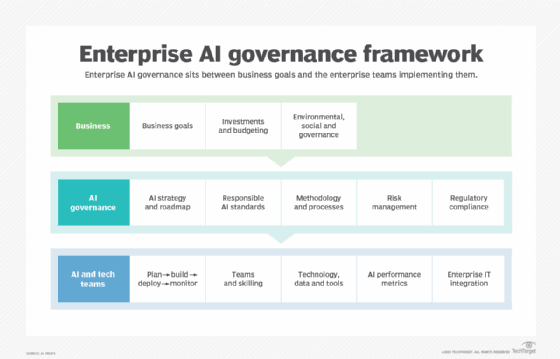
Enterprise AI adoption often begins in contained deployments because governance, strategy and technical integration must align before scale becomes sustainable.
Integration complexity scales faster than AI capability
The challenge enterprises encounter is not that AI models cannot perform tasks, but that stitching those capabilities into fragmented application environments is far harder than deploying the models themselves. Years of SaaS expansion have already created distributed data, duplicated workflows and brittle integrations. Introducing AI magnifies coordination problems that organizations were already struggling to manage.
In distribution environments, for example, embedding AI-driven pricing recommendations directly into ERP order-entry workflows required aligning external market signals, historical purchasing data, and margin logic with live sales processes before measurable gains could be achieved.
The limiting factor on AI adoption is often systems architecture rather than algorithmic maturity. Model innovation moves quickly. Enterprise integration tends to move more slowly.
The limiting factor on AI adoption is often systems architecture rather than algorithmic maturity.
Data readiness must precede meaningful AI expansion
Model sophistication matters, but reliable AI outcomes depend primarily on disciplined data environments aligned to business processes. Constraining AI to structured workflows and standardized data pipelines provides guardrails that improve both accuracy and trust.
Organizations integrating AI with IoT sensors, digital twins and enterprise platforms are discovering that intelligence becomes meaningful only when those systems are connected through a unified data architecture that supports operational and strategic visibility.
This sequencing -- structure first, intelligence second -- helps explain why enterprises focus on narrow deployments while modernizing their data foundations. Without coherence, AI can amplify inconsistency rather than produce useful insights.
Narrow deployments make ROI measurable in ways broad transformation cannot
Targeted AI initiatives succeed because they produce outcomes that can be directly measured. When AI is applied to a defined operational task, organizations can tie performance improvements to speed, margin or throughput gains within weeks.
Attempting to evaluate AI as a sweeping transformation introduces too many variables to isolate value. Contained use cases allow leaders to validate impact before expanding scope. The path to scale becomes clearer as a result.
This ROI-first pattern reinforces incremental adoption rather than enterprise-wide redesign.
Governance concerns push organizations toward controlled AI adoption
Even when AI is embedded in familiar tools, it introduces new oversight responsibilities around privacy, decision transparency and appropriate use. Enterprises must ensure these systems do not expose sensitive information, create compliance risk or operate without human accountability.
Limiting deployments to specific functions gives IT and business leaders time to establish governance models that can scale later, rather than imposing controls across the enterprise all at once. Controlled adoption becomes both a compliance strategy and a disciplined approach to risk management.
The orchestration layer required for scale is still emerging
A further constraint is that enterprises are only beginning to confront what happens when multiple AI agents operate across dozens -- or hundreds -- of applications. Coordinating those agents requires policy enforcement, data access control and cross-system visibility that many organizations are still building.
The growing focus on agentic orchestration as the next issue CIOs must tackle reflects the reality that scaling AI is not simply about deploying more agents; it requires a control layer capable of managing how those agents interact, escalate and operate within enterprise guardrails.
Until that orchestration layer matures, most organizations will continue to deploy AI in isolated pockets rather than operate it at true enterprise scale.
What "fit" actually means in enterprise AI
When enterprise leaders say an AI use case fits, they are rarely referring solely to model capability. Fit usually reflects alignment across several existing conditions:
• The AI operates inside a system that already has defined ownership. • Established data sources are maintained consistently. • Workflows tend to be documented and stable. • Governance expectations are already understood. • In most cases, the use case improves an existing task rather than replacing an entire process.
In these environments, AI acts as an enhancement rather than a disruption. The organization does not need to redesign architecture or renegotiate accountability to deploy it.
Narrow AI deployments succeed not becausethey are small, but because they align with existing structures.
Early enterprise AI successes tend to emerge in contained, task-specific scenarios because those environments reduce coordination variables. When AI is embedded within existing systems and bound to defined workflows, organizations can validate performance without forcing broad architectural change.
This explains why narrow deployments often deliver value first. They operate within familiar governance models, established data structures and existing operational constraints.
But containment alone does not resolve the structural realities beneath those systems. As AI moves beyond isolated use cases and becomes more deeply embedded across enterprise platforms, the limitations of integration discipline, data alignment and architectural compatibility become harder to ignore.
Narrow AI use cases might win first because they fit within existing structures. Scaling those wins requires deeper structural alignment.
James Alan Miller is a veteran technology editor and writer who leads Informa TechTarget's Enterprise Software group. He oversees coverage of ERP & Supply Chain, HR Software, Customer Experience, Communications & Collaboration and End-User Computing topics.