Digital transformation: Balancing speed and governance
The success of digital transformation hinges on balancing rapid innovation with strong governance to avoid risks like fragmentation, technical debt and operational instability.
The global digital transformation market is forecast to grow more than fourfold, from $1.07 trillion in 2024 to $4.62 trillion by 2030. These numbers show that organizations recognize the value of digital transformation in today's fast-moving, technology-driven business landscape.
Firms that prioritize digital transformation rely on many technologies to modernize their legacy systems and processes. Modernization enables them to be more efficient, relevant, resilient and responsive; to continuously innovate; and to remain competitive -- even amid market changes and environmental disruptions. In short, digital transformation is a critical factor that differentiates successful companies from the also-rans.
Undoubtedly, digital transformation can yield numerous business benefits. However, not all transformation initiatives are successful. In fact, only 30% of companies successfully navigate such initiatives, according to the Boston Consulting Group. One reason for the high failure rate is that many firms pursue transformation at breakneck speeds but fail to prioritize governance discipline. Prioritizing unrestrained experimentation and rapid modernization without governance controls can create a host of issues and hinder them from achieving their transformation goals.
To avoid these problems, companies need to temper transformation speed with strong governance. This means ensuring that elements like clear decision rights, platform ownership, data governance policies, architecture standards and cross-functional accountability structures are in place before the transformation initiative takes off.
This article examines the factors driving organizations' interest in digital transformation, the role of enterprise platforms in enabling transformation and -- most importantly -- why enterprise governance is critical to its success.
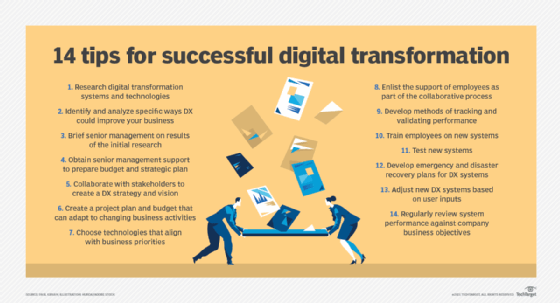
Successful digital transformation (DX) requires more than just new technology. Careful planning, collaboration, monitoring, training, testing and developing recovery procedures in case of system failure or breach are all necessary components.
Factors driving the need for digital transformation
Digital transformation is a deliberate and strategic initiative aimed at transforming business operations, processes, culture, supply chains, customer interactions and even employees' skill sets. By deploying the right technologies at scale, organizations can improve operational efficiency, optimize costs and unlock new revenue streams. They can also improve customer experience (CX), accelerate innovation, respond more quickly to market changes and evolving customer demands, and build a stronger competitive advantage in a fast-evolving market economy. All these potential benefits drive organizations' need to accelerate digital transformation initiatives.
Many other factors also pressure firms to move quickly on such initiatives:
Competitive pressures and industry-wide digitization. When competitors adopt advanced technologies and digital-first operational models to change how they operate and deliver value, organizations are forced to accelerate transformation -- or risk losing customers and market share.
Pressure from the business ecosystem. Third-party entities like partners, suppliers and vendors that are already digitized can influence organizations to upgrade their own systems to ensure compatibility, ease collaboration and capture powerful synergies.
Technological advancements. Cutting-edge technologies like generative AI, machine learning and big data analytics can improve operational agility, enhance decision-making and accelerate business innovation -- potential benefits that might compel firms to adopt these technologies in a hurry to stay competitive.
Evolving customer expectations. The increasing demand for seamless, personalized and digital-first CX from customers pushes companies to quickly embrace tech-driven process and product modernization.
Executive mandates. Strong "top-down" executive directives and priorities drive new initiatives to modernize legacy systems across the enterprise.
Regulatory changes. Some national laws and industry-specific regulations mandate specific digital systems and controls to avoid fines and legal troubles, pushing organizations to prioritize fast digital transformation.
Enterprise platforms as transformation enablers
Enterprise platforms like ERP, CRM, HR, workflow automation and supply chain systems influence the direction, pace, scale and ultimate success of any digital transformation strategy and initiative. These and other business-critical systems provide a strong foundation for firms to integrate and coordinate core business processes, workflows and data. Well-designed, properly configured and customized systems based on the latest technologies enable organizations to improve operational efficiency, augment the capabilities of human workers, eliminate communication silos and make better, data-driven decisions.
Transformation initiatives interact with these platforms at many touchpoints, such as during legacy platform modernization or when migrating on-premises workloads to the cloud. Firms might adopt new platforms when redesigning business processes or streamlining core business functions. Cutting-edge software can also aid efforts to digitize CX, capture real-time data insights or improve supply chain visibility.
The risks of weak governance
Regardless of which platform they implement, organizations could face numerous problems if their governance structure does not support the digital transformation strategy. Fast-paced initiatives lacking clear governance can lead to the following unintended consequences:
These financial and operational consequences could linger for the long term, even if the modernization effort appears successful in the short term.
The key to successful and long-term digital transformation is controlled momentum rather than unrestricted acceleration.
The key to successful and long-term digital transformation is controlledmomentum rather than unrestricted acceleration. And to achieve this momentum, a strong governance framework is essential. Such a framework can support the modernization initiative without destabilizing core operations, creating fragmented technology environments and causing security or compliance gaps.
Key governance structures that sustain momentum
Organizations that achieve successful digital transformation balance speed and control during the effort because they have mature governance structures. A multi-layered governance framework should incorporate multiple elements, including the following:
Clearly defined decision rights for business and technology leaders.
Enterprise architecture standards guiding modernization initiatives and ensuring that the initiatives align with long-term business goals.
Incident management mechanisms to identify and mitigate risks or issues during and after implementation.
Regular compliance audits to maintain consistent adherence to relevant standards and regulatory requirements.
Clearly defined metrics and KPIs to monitor system performance and track implementation success.
Documentation controls to maintain consistent documentation and version control across systems and teams.
A popular misconception is that these mechanisms hinder transformation and decelerate results. On the contrary, they act as guardrails and catalysts that speed up transformation initiatives. A mature governance structure allows for continual experimentation and "fail fast" modernization, and it maintains accountability and integration across enterprise platforms. It also prevents potential long-term structural problems that typically arise from transformation efforts, such as operational instability, integration complexity, and rising operational costs and risks.
Why digital transformation is ultimately a leadership balancing act
Ultimately, any digital transformation initiative is an ongoing balancing act that leaders need to undertake. To execute the digital transformation strategy and realize its stated objectives, leaders must balance speed with control. A strong governance ecosystem can help them maintain this balance.
With the right governance measures in place, leaders can determine where and when experimentation should occur and who is authorized to approve major platform changes. Time-tested governance controls also ease decisions regarding which initiatives should be standardized across the enterprise, how data should be managed and secured, and which technologies and systems are most likely to serve business goals.
The bottom line? In the long term, successful transformation depends on whether leaders have implemented a sturdy, multi-layered governance structure -- and whether this structure can support the transformation initiative's momentum and goals.
Rahul Awati is a PMP-certified project manager with IT infrastructure experience spanning storage, compute and enterprise networking.