Snowflake storms into IT monitoring with Observe acquisition
Historically focused on data management and AI development, the vendor is adding infrastructure observability capabilities in a move that could differentiate it from competitors.
With its latest acquisition, Snowflake is delving into new territory.
The vendor on Thursday reached an agreement to acquire infrastructure monitoring vendor Observe, marking expansion beyond its traditional roots in data management and its foray into AI development over the past few years.
Financial terms of the deal, which remains subject to customary closing conditions, were not disclosed.
Historically, infrastructure observability has been kept separate from AI development, data management and analytics, with different teams specializing in analyzing telemetry data -- information about organizational systems -- than those working on analytics and AI initiatives. Meanwhile, as data management and analytics vendors have expanded into AI over the past few years, and data management and analytics have converged with many vendors providing full-featured data platforms, observability has been handled by a different set of vendors.
In addition to Observe, companies such as Cribl, Datadog, Dynatrace and Splunk specialize in IT monitoring.
Given that Snowflake is bringing infrastructure observability together with data and AI, its acquisition of Observe is of great intrigue, according to Sanjeev Mohan, founder and principal of analyst firm SanjMo.
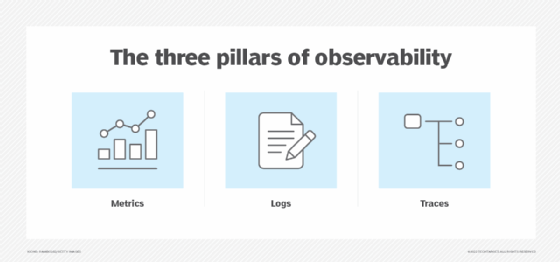
"This is the first time we're seeing an infrastructure observability vendor acquired by a data company," he said. "Traditionally, DevOps teams analyzed telemetry data consisting of metrics, logs and traces in standalone products. With this acquisition, Snowflake is signaling that telemetry is fundamentally a data problem."
Beyond indicating that IT monitoring is intertwined with data and analytics, Snowflake's acquisition of Observe demonstrates that unification is happening on a broad scale in the data management and analytics industries, Mohan continued.
"By collocating telemetry data with traditional enterprise data, developers can analyze a more comprehensive dataset without having to raise tickets to DevOps requesting log information," he said. "This makes developers significantly more productive."
Combining capabilities
Based in Bozeman, Mont., but with no central headquarters, Snowflake is a data management specialist that, like archrival Databricks and many of its other peers, has aggressively added AI development capabilities in response to customer demand since OpenAI's 2022 launch of ChatGPT sparked surging interest in building AI tools.
This is the first time we're seeing an infrastructure observability vendor acquired by a data company. Traditionally, DevOps teams analyzed telemetry data consisting of metrics, logs and traces in standalone products. With this acquisition, Snowflake is signaling that telemetry is fundamentally a data problem.
Sanjeev MohanFounder and principal, SanjMo
Observe, meanwhile, is a is a 2017 startup based in San Mateo, Calif., that provides an AI-powered platform for monitoring enterprise systems. Before getting acquired, the vendor had raised $393 million in total funding, including $156 million in May 2025.
By collecting metrics, logs and traces on systems such as servers, databases and cloud storage platforms, IT observability tools enable enterprises to proactively discover and address issues, detect anomalies and security threats, and optimize the performance of organizational systems.
Data observability is a genre of IT observability that has emerged in recent years as data volume continues to grow exponentially, and its complexity similarly increases. But data observability is limited to monitoring the health and quality of data pipelines and data itself. Similarly, AI observability is emerging as more organizations develop chatbots, agents and other AI applications, but it also is a specialized genre.
Snowflake's impetus for broadening beyond its traditional focus was provided by a perceived shift in the relationship between telemetry data and data management, according to Carl Perry, the vendor's head of analytics. In particular, he noted that isolated platforms provided by IT observability specialists are resulting in soaring costs related to data volume and AI development.
"Modern applications and AI systems generate massive volumes of telemetry, forcing teams to choose between cost, retention and visibility," Perry said. "By bringing Observe into the Snowflake AI Data Cloud, Snowflake aims to change that equation. … Longer term, Snowflake is positioning itself as infrastructure for AI at scale."
However, whether Snowflake's move to integrate an IT observability platform -- even one built on Snowflake such as Observe with Snowflake one of Observe's early investors -- will prove successful is unknown, according to Mohan.
"Snowflake is charting a new course here, and it remains to be seen how this plays out," he said, noting that the acquisition resembles security specialist Palo Alto Networks' November 2025 purchase of Chronosphere. "Neither Databricks nor the other data platform vendors have made moves into observability, so Snowflake is differentiating with this bet."
Mike Leone, an analyst at Omdia, a division of Informa TechTarget, similarly noted that Snowflake's acquisition of Observe is unique; some observability vendors have expanded into traditional data management, but no data management vendors until now have added IT monitoring.
In addition, he pointed out that the acquisition demonstrates that infrastructure observability is about data, just as other enterprise initiatives such as marketing and risk management are based on data.
"It reinforces the reality that observability is ultimately a data problem and likely belongs on the same platform where you already analyze your business," Leone said. "By treating telemetry as just another data type, Snowflake is betting that a platform with great economics and gravity will win over specialized point solutions."
From a competitive standpoint, Snowflake's acquisition of Observe is a differentiator, he continued, noting that Databricks has added AI observability capabilities but not IT monitoring tools.
"This move propels Snowflake directly into the broader IT operations market," Leone said. "This distinguishes Snowflake because it's offering a full replacement for standalone observability tools rather than just adding a monitoring feature to a data lake. It creates a sticky new workload that keeps massive amounts of log data from ever leaving the Snowflake environment."
Integration challenges
Prior to its acquisition of Observe, notable Snowflake purchases included Crunchy Data in June 2025 to add PostgreSQL database capabilities, Samooha in December 2023 to add data clean rooms and Neeva in May 2023 to add generative AI capabilities.
With each adding traditional data management and AI development tools, Snowflake has, to date, not struggled to integrate acquired tools. In fact, Neeva co-founder Sridhar Ramaswamy is now Snowflake's CEO. Integrating an IT observability platform poses a new challenge, according to Mohan.
"So far, Snowflake has only acquired companies within its wheelhouse," he said. "This is the first time it's jumped into an adjacent domain, which can be tricky to navigate. Snowflake will have to figure out its go-to-market motion and how to convince a different persona -- DevOps and platform engineers -- to migrate to their offering. This is a very different market than data and AI."
As a result, executing a different integration strategy is the primary risk related to Snowflake's latest acquisition, Mohan continued.
"Selling to DevOps and platform engineering teams requires different sales motions, different messaging and different success metrics than Snowflake's traditional data and analytics buyers," he said. "There's also the challenge of competing against deeply entrenched observability vendors that have spent years building specialized workflows and integrations that practitioners rely on daily."
Leone noted that Snowflake has historically had success integrating acquired technology by rebuilding it to work natively within its platform. With Observe already built on Snowflake, technological alignment isn't a big concern.
"Snowflake rarely just bolts on a new company and lets it run separately," Leone said. "By prioritizing deep architectural alignment over quick revenue wins, it ensures new features feel like a natural part of the product rather than a disjointed add-on."
What could be of concern, however, are properly pricing Observe's capabilities so that Snowflake customers' bills don't increase to an unpalatable level and the possibility of turning off observability vendors that are part of Snowflake's partnership network, according to Leone.
"Observability generates massive volumes of data, and unless the pricing is calibrated perfectly, customers may fear their monthly bills will explode," he said. "There is also the strategic risk of alienating some key observability partners with Snowflake shifting from being a neutral infrastructure provider to a direct competitor."
With its acquisition Observe, Snowflake is adding IT observability capabilities to its data management and AI development platform.
Looking ahead
As Snowflake plots its product development plans for 2026, its primary initiative is to enable customers to develop and deploy agents and other AI applications at scale, according to Perry.
"As AI systems increasingly work across platforms, interoperability and reliability become essential," he said. "Snowflake's role is to make AI practical at enterprise scale, helping customers turn AI investment into secure, observable and repeatable business outcomes."
An additional focus for Snowflake should be furthering its commitment to open standards, according to Leone.
"This move signals a continued commitment to open standards like Apache Iceberg and OpenTelemetry," Leone said. "It helps shed the perception of being a walled garden, which is vital for building trust in this AI era. Moving forward, I want to see them continue to double down on this 'open' philosophy while also delivering better tools for non-technical teams to build and manage AI agents."
Mohan, meanwhile, suggested that once Observe's technology is integrated, Snowflake should make telemetry data part of various products within its platform such as its data lakehouse and data catalog.
"Tactically, Snowflake should integrate telemetry data into its Iceberg-based lakehouse and Polaris Catalog," he said. "[Additionally], it should extend Open Semantic Interchange to cover telemetry data, enabling semantic interoperability across operational and analytical workloads.
Eric Avidon is a senior news writer for Informa TechTarget and a journalist with more than 25 years of experience. He covers analytics and data management.