
Getty Images/iStockphoto
Visual search optimizes images, improves customer reach
E-commerce professionals and CX leaders should follow certain visual search strategies to improve online product visibility and customer engagement.

While visual search has been around for a long time, it remained a niche offering until recently. For example, Google Lens, an AI-powered visual search tool launched in 2017, logged 12 billion visual searches per month in 2023. Two years later, that figure jumped to more than 25 billion. In fact, Lens queries are one of the fastest growing types of search, according to Google, and one in five Lens searches shows commercial intent.
That's pretty staggering growth. So what happened? AI happened. Advanced machine learning (ML) models now enable more accurate and useful search results. Additionally, the growth of AI search results has made the matching of images more important for an organization's search engine optimization (SEO) efforts.
As a result, organizations must ensure that the images they publish online are optimized for today's AI-powered visual search. Organizations that don't adjust to visual search strategies could be left off search results and lose mind share and revenue. For that reason, it's vital that content managers and chief experience officers understand how to optimize their images to get products in front of customers online.
What is visual search?
Visual search is searching for something using an image instead of text. Imagine seeing a shirt, chair, piece of art or device that you don't recognize or want. You can snap a picture and pull up results that let you know exactly what you are seeing. Depending on the item, and how the images are tagged, you may even be able to buy the item right there.
This differs from an image search that tries to locate images based on descriptions in text. The results of an image search depend on correctly guessing the terms that the image publisher used to tag it. Using a picture for searching is much easier to capture all those relevant details.
How does visual search work?
Visual search begins with a picture and a question: "What is this?"
From there, visual search uses a combination of AI and ML to process image recognition, separating the picture's key object from its background. The search engine then uses a repository to find matching images, creating a list of likely matches.
The most important part of the result set is the embedded metadata that is returned with each image. Results help inform people about the item in their image. In addition to the name, the results may include a link to the source of the image and possibly the price of the item if it's for sale.
How to optimize content for visual search
As more people search for items through visual search or depend on AI search results, it has become more important for organizations to optimize for visual search. Many of the foundational aspects of SEO for websites remain important, but they are particularly crucial for images. Optimizing images correctly is essential for SEO and can significantly affect e-commerce conversion rates.
High-quality images are vital. Before, images needed to be good enough for people to interpret. However, ML tools perform better with higher-quality images to process. Newer image formats, such as WebP or AVIF, provide higher-quality images without increasing file size.
Multiple images should be provided for each item. This supports visual search results because providing several pictures taken from different angles increases the chance of a match.
Additionally, images should show items in the context in which they exist. Seeing a camp chair in the woods may help match a picture someone takes of a chair while camping. Seeing the same chair in a kitchen would make a successful match more difficult. Showing multiple appropriate contexts and environments will maximize the likelihood of a match.
Finally, image metadata matters more than it once did, as people may not know the words to describe the image. In addition to strong alt text, schema markup can add details that help people confirm the match and evaluate the website where the image is located to determine if it has the information and features they need to take their next step.
A look at visual search tools
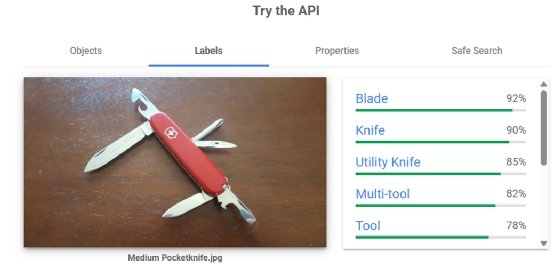
Both Google Lens and Microsoft's Bing Visual Search are visual search tools for general use. Google also provides a tool called Cloud Vision API to help organizations test images for indexing. It processes images and tells organizations what Google sees when it analyzes an image. If the analysis does not meet the desired result, then the image is likely not suitable for strong visual search.
Pinterest has made visual search a key part of its platform. If a person uploads an image, the search function will search its site for matching images on Pinterest. To support those users, organizations need to upload images directly to Pinterest to feed the search engine. These images will subsequently be searched by other search engines, which helps broaden the reach. However, maintaining an additional channel for Pinterest images requires more work, so organizations should ensure that Pinterest demographics match their target audience.
Visual search is growing in importance. Even if people visiting an organization's site may be less technically savvy, they are still seeing AI search results on Google. Those AI results are partially generated using visual search. Being part of those results is an important opportunity that organizations should not miss.
Laurence Hart is director of consulting services at CGI Federal and has more than 20 years of IT experience.