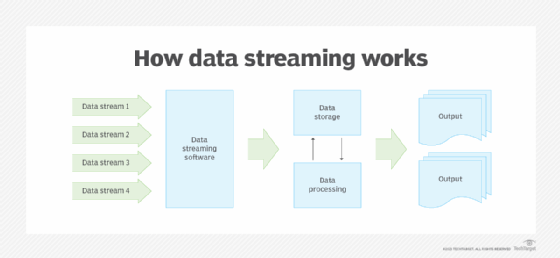
With stream processing now frequently used to feed agents and other AI applications the contextual data they require to perform as intended, Redpanda on Tuesday launched a new engine designed to provide a unified real-time data foundation for AI workloads.
Redpanda One, which was released as part of Redpanda Streaming 26.1, is a multimodal streaming engine that enables customers to unify different types of real-time data ingestion workloads rather than develop separate, specialized clusters for each workload type.
Previously, users had to create clusters for operational applications such as ERP and CRM systems, and other clusters for observability data or ingestion into a lakehouse.
Given that Redpanda One not only supports all streaming workloads in a single environment, but represents Redpanda's evolution beyond event brokering to stream processing -- the simple delivery of real-time data from system to another versus filtering and analyzing real-time data -- it is a valuable addition for the vendor's customers, according to Stewart Bond, an analyst at IDC.
"The significance is less about a single feature and more about what it signals strategically -- Redpanda is moving beyond event brokering into stream processing and analytics," he said. "That gives users a more unified way to move, process and analyze streaming data in one environment, which is increasingly necessary to stay competitive in event-driven automation and analytics."
William McKnight, president of McKnight Consulting, likewise called Redpanda One a significant addition for the vendor's users, noting that, if it performs as intended, it shifts the control pane from the cluster level to the topic level.
"If this works, organizations can stop being cluster managers and start being more data architects, choosing exactly how much they want to spend on speed versus storage for every single data feed," he said.
Based in San Francisco, Redpanda provides a platform for capturing and processing streaming data to fuel real-time analysis. Competitors include specialists such as Confluent, which was recently acquired by IBM for $11 billion, and Aiven, as well as broad-based data platform vendors such as AWS and Google Cloud that provide streaming data capabilities.
An engine for AI
Agents, chatbots and other AI applications have different data requirements than traditional analytics tools such as reports and dashboards.
The significance is less about a single feature and more about what it signals strategically -- Redpanda is moving beyond event brokering into stream processing and analytics. That gives users a more unified way to move, process and analyze streaming data in one environment.
Stewart BondAnalyst, IDC
AI tools aggregate data to reach outcomes. As a result, they require far greater volumes of data than data products, which can be based on a small series of data points, to be accurate. Without enough high-quality data, AI applications are prone to hallucinations.
In addition, to keep applications current as they inform an enterprise's employees and autonomously perform business processes, they require the most up-to-date information available, making streaming data more fundamental than when it merely informed real-time analysis.
IBM's acquisition of Confluent was done to bolster the tech giant's AI development capabilities. Redpanda, meanwhile, has made enabling developers to develop AI applications with streaming data a priority.
Last October the vendor launched its Agentic Data Plane, a set of features -- including support for the Model Context Protocol (MCP) and Agent2Agent Protocol (A2A) frameworks -- that connects agents with real-time data sources. In February, Redpanda added features to the Agentic Data Plane that enable users to create a unified governance layer for managing connections between agents and data sources.
Now, driven by customer feedback, according to Redpanda CEO Alex Gallego, Redpanda One is part of the Agentic Data Plane to simplify and streamline the streaming data workloads that feed AI applications.
"The journey for Redpanda was very much influenced by customer conversations and continuously pushing the design space [by asking], 'Why can't it be done?'" Gallego said. "It was a technical truth-seeking journey that landed us in a multimodal engine that can adapt to any workload. … We had great fun building this."
Specific Redpanda One features that enable users to configure data streams include the following:
Write Caching, a format that enables users to build high-speed workflows for performance-critical applications with an in-memory storage layer.
Tiered Storage, a method that balances speed and cost by including local disk and cloud object storage.
Iceberg Topics, which automatically converts selectable data streams to Apache Iceberg tables to enable real-time access and avoid extract, transform and load pipelines.
Cloud Topics, a cloud-first approach that writes streaming data to object storage and is ideal for cost efficiency.
Cloud Topics is perhaps the most valuable feature of Redpanda One, given that it addresses the cost of stream processing, according to McKnight.
"Cloud Topics is a fundamental shift in unit economics," he said. "It allows an organization to approve a massive streaming project that would have previously been killed by the projected cost of cross-AZ networking fees. By writing message contents directly to object storage [such as] AWS S3 while only using the expensive network for small metadata bits, organizations will see a reduction in networking fees."
In addition, the multimodal nature of the new streaming engine could be a differentiator for Redpanda, McKnight continued.
"I am not aware of any other multi-modal capability in the streaming market," he said. "While competitors … offer similar individual features, Redpanda is the first to consolidate them into a single, software-defined engine that can be tuned at the topic level."
Bond named Iceberg Topics as the most valuable Redpanda One feature because it enables more direct queries of streaming data. Meanwhile, the new engine itself could be help Redpanda distinguish itself from streaming data competitors such as Confluent if Redpanda can deliver its features in a more integrated manner than its peers, he continued.
"The underlying functions are not unique in the market but simplifying how users get them can be meaningful for adoption and operations," Bond said.
In addition, he noted that as Redpanda adds new capabilities, it is becoming a more viable competitor to Confluent, which is in a state of transition as it becomes part of the IBM ecosystem.
"For buyers that are considering alternatives with streamlined architectures, Redpanda is becoming a platform to watch," Bond said.
In addition to Redpanda One, version 26.1 of the vendor's platform includes added security capabilities such as group-based access control and unified identity, a feature that combines security across the Redpanda Console development environment and the broader Redpanda Streaming platform.
Looking ahead
With Redpanda One now available, data unification remains a focus for the vendor, according to Gallego.
In October 2025, Redpanda acquired Oxla to add a SQL engine. Using Oxla's capabilities, Redpanda plans to launch Redpanda SQL to enable users to perform SQL joins across live streaming data, as well as historical Iceberg tables.
"Our immediate focus is on deeper data unification through the launch of Redpanda SQL," Gallego said. "This will enable a complete Redpanda Data Platform. ... By bridging the gap between real-time streams and long-term storage without moving data, we are making the entire data lifecycle instantly queryable and actionable."
Beyond launching Redpanda SQL, Bond suggested that Redpanda add streaming intelligence capabilities such as observability and access control that continuously analyze and govern data as it’s generated rather than when it's processed in batches.
"As organizations use more real-time data pipelines for automation and analytics, they will need more intelligence about the streams themselves to manage risk, performance and compliance," Bond said.
McKnight, meanwhile, recommended that Redpanda embed automated data lineage and other data quality tools into its console to help ensure that AI outputs based on streaming data can be trusted. In particular, customers in highly regulated industries such as banking and healthcare could benefit from more transparent audit trails, he noted.
"As agentic AI moves into the mainstream, one of the biggest concerns isn't the model itself, it's trust," McKnight said. "The opportunity is for data streamers to embed automated data lineage and quality directly into the console, so every data stream feeding an agent is traceable and continuously validated."
Eric Avidon is a senior news writer for Informa TechTarget and a journalist with more than three decades of experience. He covers analytics and data management.